House Centipede vs Earwig: How to Tell Them Apart Fast
Quick ID Verdict: If it has rear pincers and six legs on a slender, flattened dark reddish-brown body, it's an earwig. If it has 15 pairs of long, hair-like legs and a yellowish-gray body with three dark lengthwise stripes, it's a house centipede (Scutigera coleoptrata). Both love damp spots indoors, but neither is considered a serious threat to people.
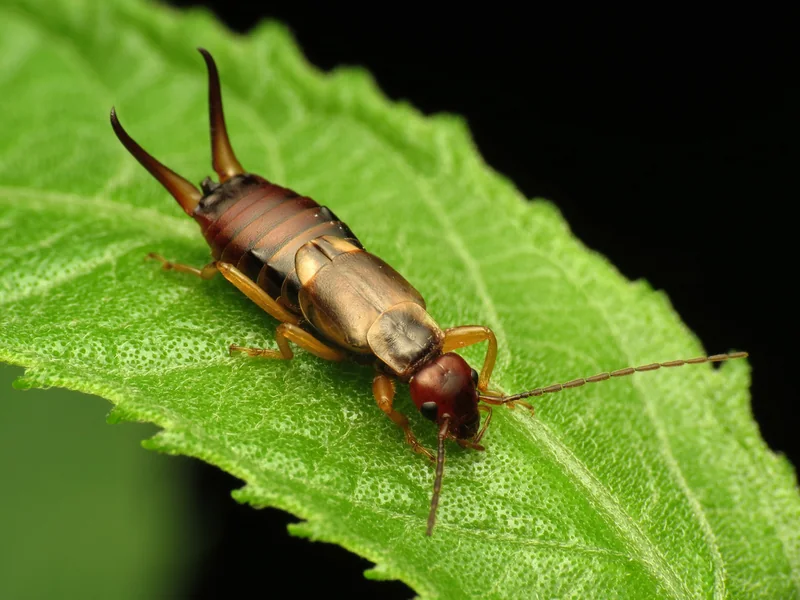
Earwig
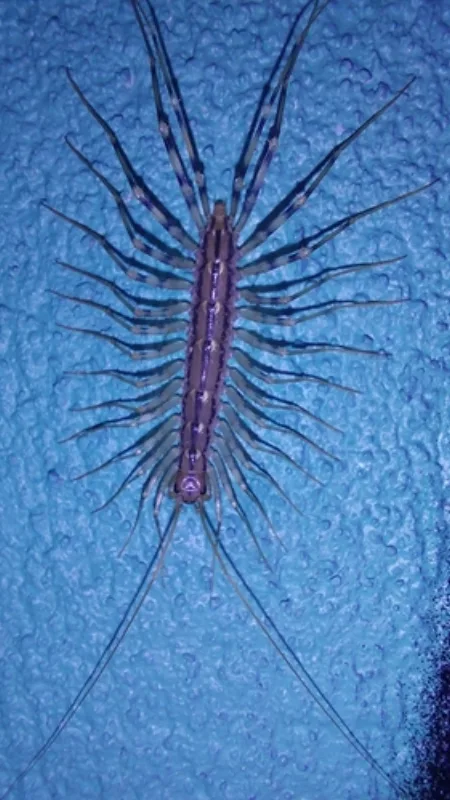
House Centipede
Side-by-Side Comparison Table
| Trait | Earwig | House Centipede |
|---|---|---|
| Scientific Group | Dermaptera | Scutigera coleoptrata |
| Category | Insect | Myriapod |
| Typical Size | 12–22 mm | 25–40 mm |
| Danger Level | Nuisance | None |
| Bites or Stings? | No | No |
| Peak US Months | June, July, August, September | May, July, September, October |
| Key ID Trait | Slender, flattened dark reddish-brown body | Yellowish-gray body with three dark lengthwise stripes |
Earwig vs. House Centipede: True Size Comparison
Side-by-Side Anatomy Blueprint
Compare body segments, antennae, leg count, and key markings directly before treating or removing either species.
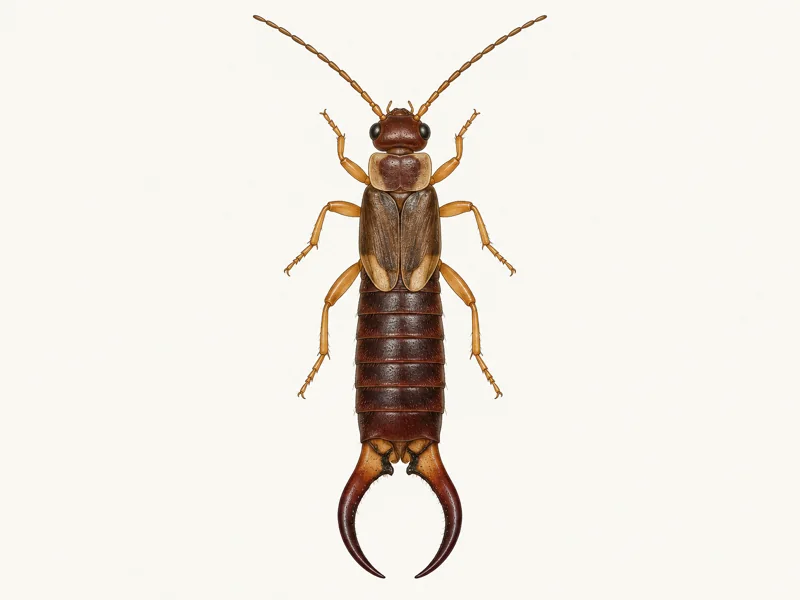
- Thread-like antennae: Segmented medium-length antennae on a flat chestnut-brown head.
- Short wing covers: Compact leathery forewings (tegmina) leave most of the flexible abdomen exposed.
- Six amber legs: Three pairs of slender pale tan legs suited for damp mulch and baseboard crevices.
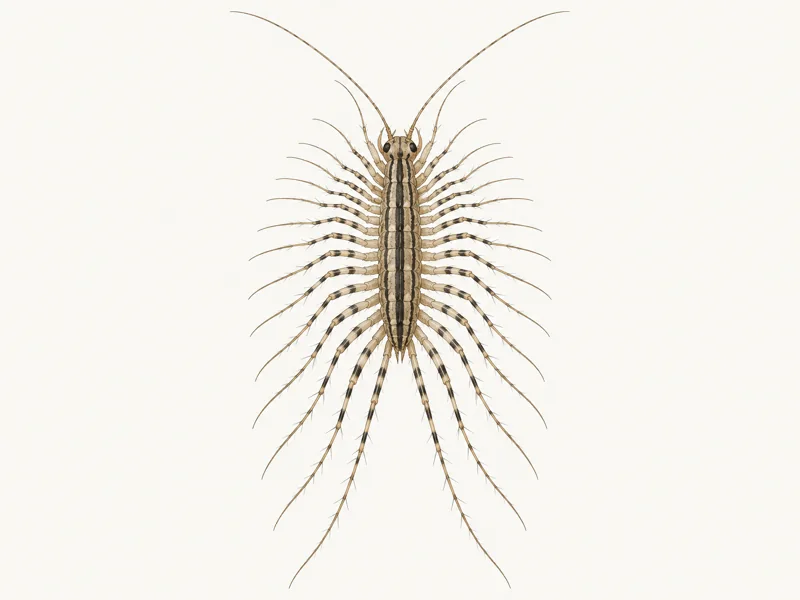
- Sweeping front antennae: Extraordinarily long hair-thin antennae detect silverfish, roaches, and spiders.
- Three dark dorsal stripes: Compact yellowish-gray 25–38 mm trunk striped lengthwise in three dark bands.
- 15 pairs of wispy legs: Delicate, banded, spider-like legs fan symmetrically outward for lightning speed.
Quick Answer: If it has rear pincers and six legs on a slender, flattened dark reddish-brown body, it's an earwig. If it has 15 pairs of long, hair-like legs and a yellowish-gray body with three dark lengthwise stripes, it's a house centipede (Scutigera coleoptrata). Both love damp spots indoors, but neither is considered a serious threat to people.
Key Visual & Physical Differences
The difference between an earwig and a house centipede is easy to see once you know what to check. Earwigs (order Dermaptera) look like compact beetles with tail pincers, while house centipedes look like a blur of legs racing across the floor.
Body Shape and Color
- Earwigs: Slender, flattened, dark reddish-brown body with a shiny, segmented abdomen.
- House centipedes: Yellowish-gray body marked with three dark stripes running lengthwise down the back.
Size
- Earwigs: 12-22 mm long, roughly the length of a fingernail.
- House centipedes: 25-40 mm in body length, and their long legs make them look much bigger.
Legs, Antennae and Rear End
Earwigs are true insects with six short legs and a pair of forceps-like pincers (cerci) at the tail. House centipedes have 15 pairs of very long, banded legs and extremely long antennae, with the last pair of legs often trailing behind like a second set of antennae. For quick earwig vs house centipede identification, look at the back end: pincers mean earwig.
How They Move
Earwigs walk at a moderate pace and may raise their pincers when disturbed. House centipedes are among the fastest crawlers you'll see indoors, darting across walls and ceilings in quick bursts.
Behavior, Habitat & Danger Comparison
Both pests are mostly active at night and are drawn to moisture, which is why homeowners often find them in the same rooms. Their diets and habits, however, are very different.
Earwigs
- Diet: Scavengers that eat decaying plant matter, small insects, and sometimes tender seedlings, flowers, and soft fruit.
- Habitat: Mulch, leaf litter, under stones, boards, and pots, then indoors through gaps near the foundation.
- Danger level: Nuisance. Their pincers can give a mild pinch if handled, but they don't carry venom and don't infest wood or food stores.
House Centipedes
- Diet: Predators that hunt spiders, silverfish, cockroaches, and other small pests, including earwigs.
- Habitat: Basements, bathrooms, laundry rooms, crawl spaces, and floor drains where humidity stays high.
- Danger level: None for most people. They rarely bite, and a bite from one is typically compared to a minor bee sting.
If anyone has an unusual reaction after contact with any pest, call US Poison Control at 1-800-222-1222 or contact a doctor rather than trying home remedies.
Which One Is Worse for Homeowners?
When deciding whether you have an earwig or a house centipede problem, earwigs are usually the bigger annoyance. They can damage garden plants, show up in large numbers after rain, and may hitchhike indoors on cut flowers or produce. House centipedes are unsettling to look at, but they actually eat other household pests.
That said, finding many house centipedes is a sign of two things: excess moisture and a steady supply of prey. Treat them as a warning light for a larger humidity or insect issue.
Non-Chemical IPM Steps That Work for Both
- Control moisture: Run a dehumidifier in basements, fix leaky pipes, and vent bathrooms well.
- Seal entry points: Caulk foundation cracks, add door sweeps, and repair torn window screens.
- Clean up the perimeter: Pull mulch, leaf litter, and firewood a few feet from the foundation.
- Reduce clutter: Store items in sealed plastic bins instead of cardboard boxes on damp floors.
- Trap earwigs: Rolled damp newspaper or shallow oil traps placed in the garden overnight collect them easily.
- Remove individuals: Use a vacuum or sticky traps to catch strays indoors.
If problems persist, a targeted perimeter treatment may help. Always choose a product labeled for the specific pest and follow EPA product label directions exactly, or hire a licensed pest professional.
Frequently Asked Questions
Do earwigs or house centipedes bite?
Earwigs can pinch with their tail forceps but don't bite in a harmful way. House centipedes can bite in self-defense, but it's rare and usually mild.
Why do I see both in my basement?
Basements are damp and dark, which suits both pests. House centipedes may also be there hunting earwigs and other insects.
Should I kill house centipedes?
They're harmless and eat other pests, so some homeowners leave them alone. If they bother you, reduce humidity and seal gaps so fewer move in.
Do earwigs crawl into people's ears?
No, that's a myth. Earwigs seek tight, damp hiding spots outdoors and have no special attraction to human ears.