Black Widows in Maryland: Identification, Habitat, and Prevention
Quick Answer: Yes, black widows live in Maryland, and they are common. GBIF records include 630 verified sightings of two species: the northern black widow (Latrodectus variolus) and the southern black widow (Latrodectus mactans). They are shy spiders that hide in sheltered, undisturbed spots, and most encounters happen when someone reaches into a woodpile, shed, or cluttered corner.
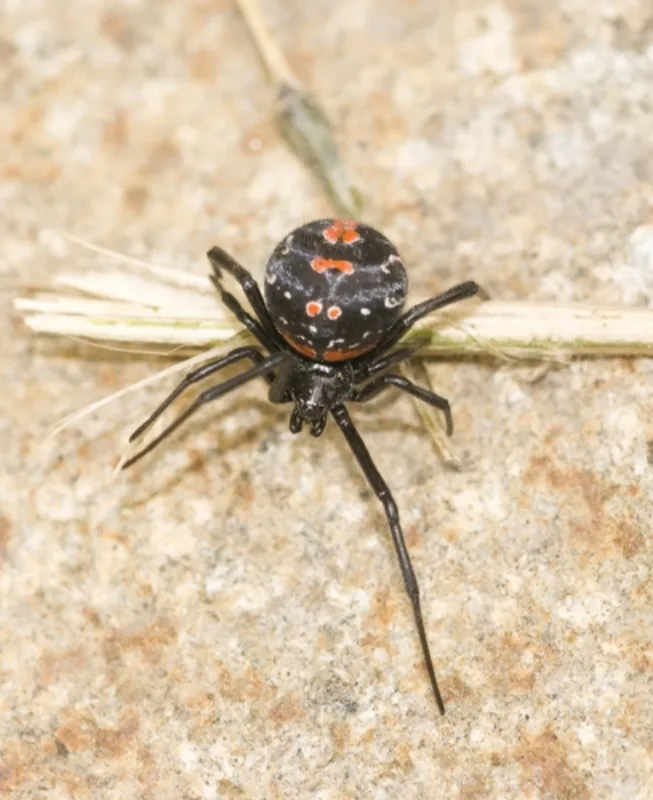
When Black Widows Are Most Active in Maryland
Now (November): Lower Outdoor ActivityVerified Maryland Counties, Species & US Range
Counties with Verified Observations
- Montgomery
- Anne Arundel
- Washington
- Frederick
- Prince George's
- Baltimore
- Saint Mary's
- Worcester
- Allegany
- Calvert
Species Recorded in Maryland
| Species | Scientific Name | GBIF Records |
|---|---|---|
| Northern Black Widow | Latrodectus variolus | 339 |
| southern black widow | Latrodectus mactans | 289 |
How Maryland Compares to Neighboring States
Note: Wildlife does not follow state or county lines. GBIF totals reflect verified citizen and museum records, so low counts in a neighboring county do not guarantee absence.
How to Identify Black Widows
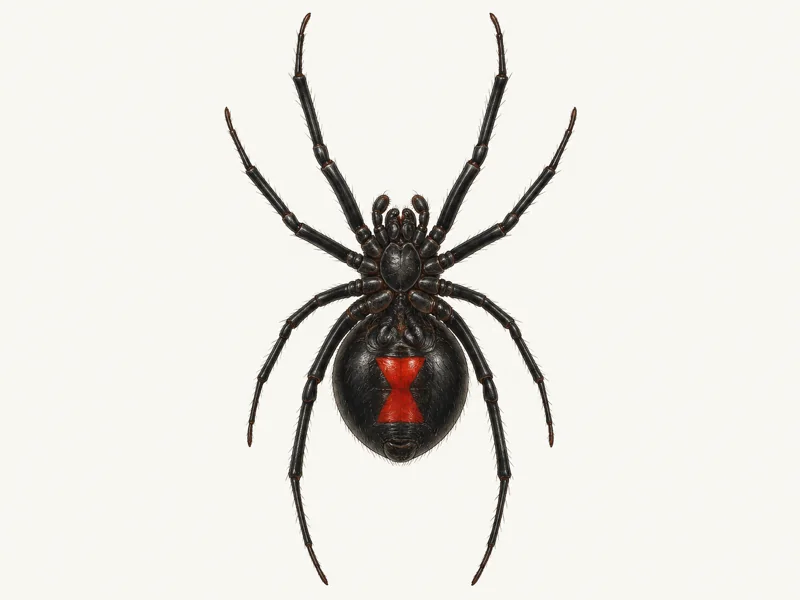
Annotated Anatomy Key (Black Widow)
- Compact cephalothorax: Small glossy jet-black front body segment with no dorsal markings.
- Slender black legs: Eight long, glossy, tapered jet-black legs (third pair noticeably shorter than front/rear pairs).
- Globular abdomen: Large, rounded, shiny jet-black bulbous abdomen proportional to the slender legs.
- Red hourglass mark: Diagnostic vivid crimson or orange-red hourglass marking on the underside of the female's abdomen.
Black Widows Field Checklist
- Glossy jet-black globular abdomen with long slender black legs
- Distinctive red or orange hourglass marking on the underside of the female's abdomen
- Spins irregular, tangled, remarkably strong cobwebs close to the ground
- Egg sacs are smooth, papery, off-white teardrop spheres
Side-by-Side Look-Alike Comparisons
Black Widows Size at True Relative Scale
Where Black Widows Live in Maryland
Maryland sits in the Mid-Atlantic, with a humid subtropical climate along the Chesapeake Bay and cooler Appalachian highlands in the west (USDA zones 5b-8a). Black widows adapt to both. The counties with the most recorded sightings are Montgomery, Anne Arundel, Washington, Frederick, and Prince George's.
Outdoors, the northern black widow favors woodpiles, hollow stumps, rock walls, and brush. The southern black widow is also recorded in the state and favors similar dry, sheltered sites. Both build irregular, tangled, sticky webs close to the ground.
Around homes, the likeliest hiding places include:
- Woodpiles and stacked lumber
- Sheds, garages, and detached outbuildings
- Meter boxes, utility enclosures, and crawl space vents
- Under patio furniture, grill covers, and planters
- Stored boxes, flowerpots, and firewood left against walls
When Black Widows Are Most Active in Maryland
Maryland black widow season runs through the warm months. GBIF sighting records peak in May, June, August, and October. Spring and summer bring more activity as spiders mature and build webs, and fall sightings often follow as spiders move into sheltered spots, including structures, ahead of cold weather.
Females spend most of their time in or near the web, usually hidden by day. Bites are uncommon and typically happen when a spider is pressed against skin, such as inside a glove or shoe.
Maryland Black Widow Identification
Adult females are the ones most people notice. Key features include:
- Shiny, round, black abdomen, about the size of a pea, with a body length near half an inch
- A red or orange hourglass marking on the underside of the abdomen, which may be partial or broken in northern black widows
- Northern black widows often show red spots along the top of the abdomen, sometimes with a stripe
- A messy, irregular web low to the ground, with strong, springy silk
- Tan, round egg sacs hanging in the web
Males and juveniles look different. They are smaller and often brownish with pale stripes or spots, so they are easy to misidentify.
Look-Alikes Frequently Mistaken for Black Widows
Many harmless spiders in Maryland get mistaken for black widows, especially dark, glossy ones or those in tangled webs. Check the abdomen shape, the web style, and the hourglass before assuming the worst.
- Cellar spiders: They have very long, thin legs and small bodies. They hang upside down in loose webs in basements, crawl spaces, and corners. They lack the round, glossy black abdomen.
- Other common house and cobweb spiders: Many are dark or brown and build messy webs. Most lack the bold red hourglass and shiny black body.
If you are unsure, take a clear photo from a safe distance. Do not handle the spider. Your local cooperative extension office can help confirm an identification.
How to Keep Black Widows Out of Your Maryland Home
For how to prevent black widows in Maryland, start with non-chemical Integrated Pest Management (IPM). General entomology guidance from US university extension programs emphasizes reducing hiding places and the insects that spiders feed on.
Non-Chemical Steps First
- Exclusion: Seal gaps around doors, windows, vents, and utility lines. Install door sweeps and repair torn screens.
- Sanitation: Clear clutter in garages, sheds, and basements. Store items in sealed plastic bins instead of cardboard boxes.
- Firewood and debris: Stack wood off the ground and away from the house. Trim vegetation and remove leaf piles near the foundation.
- Moisture and lighting: Fix leaks and improve crawl space ventilation. Reduce outdoor lights that attract insects, which in turn draw spiders.
- Safe handling: Wear gloves and shake out shoes, gardening tools, and stored items before use.
- Removal: Vacuum webs and egg sacs, then empty the vacuum outdoors in a sealed bag.
If you use any insecticide or dust in a targeted spot, choose a product labeled for spiders and follow the EPA-approved label directions exactly. Keep children and pets away from treated areas.
When to Call a Licensed Maryland Pest Professional
- You find multiple black widows or several egg sacs
- Spiders keep returning after cleanup
- Webs appear in play areas, crawl spaces, or around entry points you cannot safely reach
- Someone in the household is a young child, is elderly, or is otherwise at higher risk
Bite Safety
Black widows are medically significant. If you suspect a bite, wash the area, then call US Poison Control at 1-800-222-1222 and seek care from a doctor or emergency provider. This article is general information and is not medical advice or a diagnosis.
IPM Prevention Checklist for Maryland Homes
- Wear thick leather gloves when moving firewood, bricks, or stored garage boxes
- Declutter garages and elevate storage bins off the floor
- Seal foundation vents, gaps, and door sweeps
 EXCLUSION BLUEPRINT
Inspect eaves, screens, door sweeps, foundation cracks, and utility penetrations around Maryland homes before peak season.
Black Widows in Maryland: Frequently Asked Questions
Are there black widows in Maryland?
Yes. GBIF records show 630 verified sightings, including the northern black widow and the southern black widow. Montgomery, Anne Arundel, Washington, Frederick, and Prince George's counties lead the totals.
What does a black widow look like in Maryland?
Adult females are shiny and black with a round abdomen and a red or orange hourglass underneath. Northern black widows may also show red markings on top. Males and juveniles are smaller and paler.
When are black widows most active in Maryland?
Sightings peak in May, June, August, and October. Warm months bring more web-building, while fall can bring spiders into sheltered areas.
What should I do after a suspected black widow bite?
Call US Poison Control at 1-800-222-1222 and contact a doctor or emergency service promptly. Do not rely on home remedies for venom.
Sources & Verification
- UC IPM — Black Widow and Other Widow Spiders
- UF/IFAS Extension — Widow Spiders
- GBIF Global Biodiversity Occurrence Records
Data refreshed · Editorial & GBIF Methodology