Black Widow vs Cellar Spider: How to Tell Them Apart Fast
Quick ID Verdict: A black widow (Latrodectus) has a glossy, jet-black, globular abdomen on a compact 8-15 mm body. A cellar spider (Pholcidae) is a very pale tan, peanut-shaped spider of 6-10 mm with extraordinarily long, thread-thin legs spanning up to 50 mm. Shiny and black means caution. Pale and spindly means a harmless cellar spider.
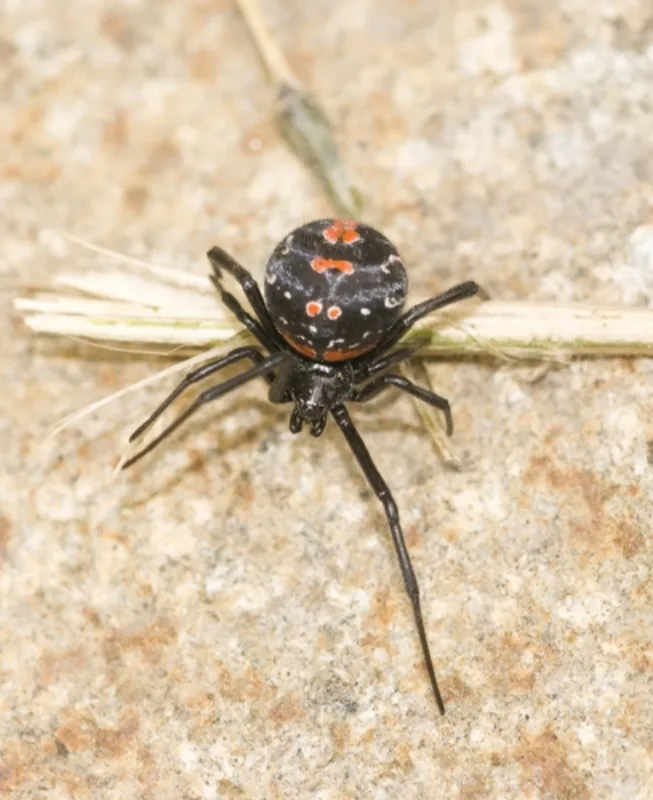
Black Widow
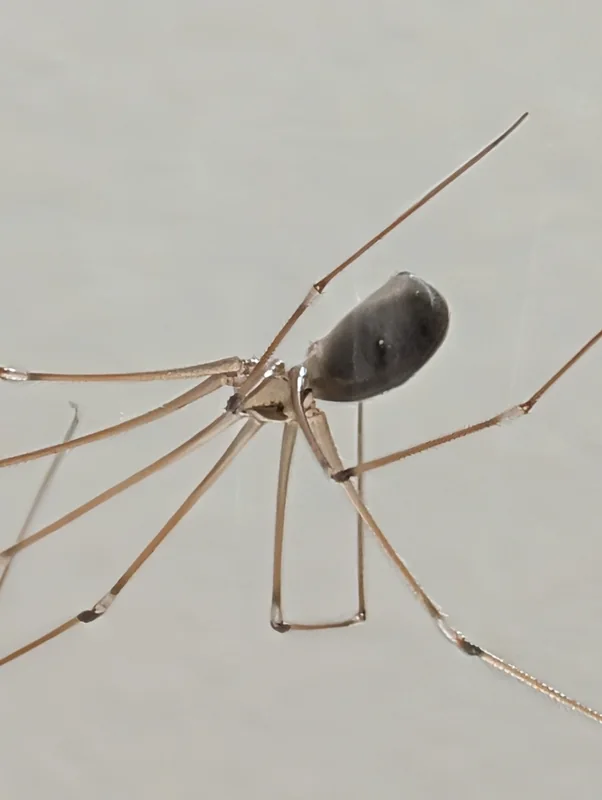
Cellar Spider
Side-by-Side Comparison Table
| Trait | Black Widow | Cellar Spider |
|---|---|---|
| Scientific Group | Latrodectus | Pholcidae |
| Category | Spider | Spider |
| Typical Size | 8–15 mm | 6–10 mm |
| Danger Level | Medically Significant | None |
| Bites or Stings? | Yes | No |
| Peak US Months | July, August, September, October | May, June, July, August |
| Key ID Trait | Glossy jet-black globular abdomen with long slender black legs | Very pale tan peanut-shaped body with extraordinarily long, thread-thin legs (up to 50mm span) |
Black Widow vs. Cellar Spider: True Size Comparison
Side-by-Side Anatomy Blueprint
Compare body segments, antennae, leg count, and key markings directly before treating or removing either species.
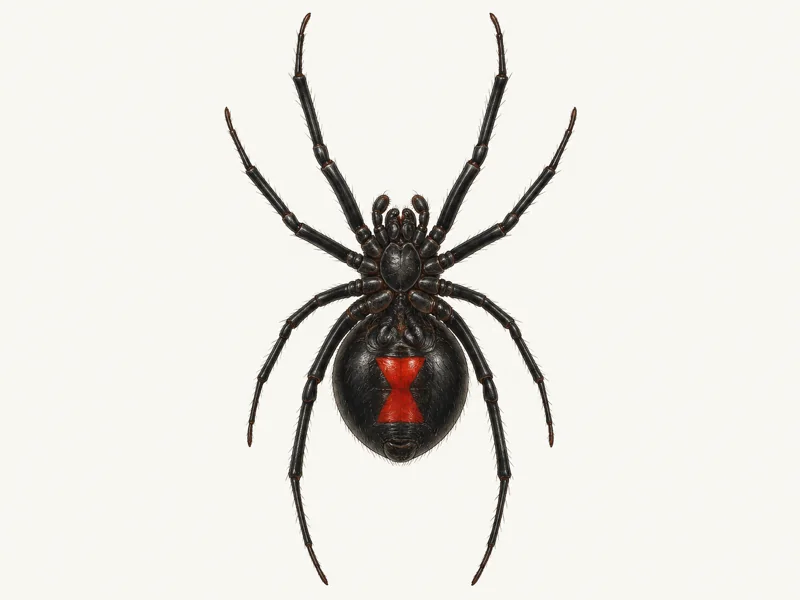
- Compact cephalothorax: Small glossy jet-black front body segment with no dorsal markings.
- Slender black legs: Eight long, glossy, tapered jet-black legs (third pair noticeably shorter than front/rear pairs).
- Globular abdomen: Large, rounded, shiny jet-black bulbous abdomen proportional to the slender legs.
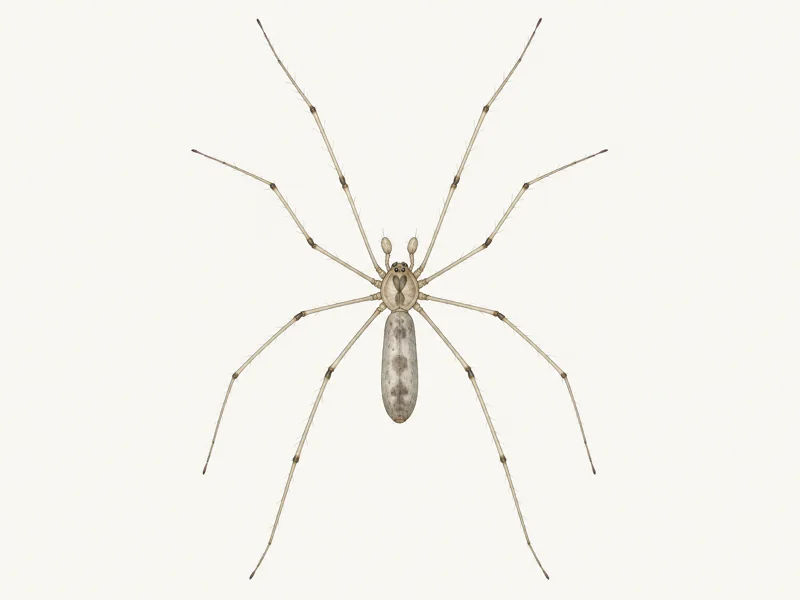
- Tiny pale carapace: Small translucent beige cephalothorax with a faint gray heart smudge (not a violin).
- Hair-thin long legs: Eight extraordinarily long, spindly thread-like legs up to 5× body length.
- Dark knee joints: Subtle dusky bands mark the delicate femur-tibia joints on pale legs.
Quick Answer: A black widow (Latrodectus) has a glossy, jet-black, globular abdomen on a compact 8-15 mm body. A cellar spider (Pholcidae) is a very pale tan, peanut-shaped spider of 6-10 mm with extraordinarily long, thread-thin legs spanning up to 50 mm. Shiny and black means caution. Pale and spindly means a harmless cellar spider.
Quick ID Verdict: Telling Them Apart in 3 Seconds
Look at body color and shape first. If the spider is shiny black with a round, marble-like abdomen, treat it as a possible black widow and keep your hands away. If it is pale beige with a small peanut-shaped body suspended on hair-thin legs, it is almost certainly a cellar spider.
Key Visual & Physical Differences
The difference between a black widow and a cellar spider is easy to see once you know what to check. Black widows look heavy and glossy. Cellar spiders look fragile and almost see-through.
Black Widows (Latrodectus)
- Size: 8-15 mm body length.
- Color: Glossy jet-black.
- Abdomen: Globular and rounded, like a shiny bead.
- Legs: Long and slender, also black, but in proportion to the body.
Cellar Spiders (Pholcidae)
- Size: 6-10 mm body length, with a leg span reaching up to 50 mm.
- Color: Very pale tan to grayish beige.
- Body shape: Elongated and peanut-shaped.
- Legs: Extraordinarily long and thread-thin, much longer than the body.
For black widow vs cellar spider identification, the legs are a reliable clue. A cellar spider's legs look like strands of thread, while a black widow's legs are sturdier and match its dark, polished body.
Behavior, Habitat & Danger Comparison
These spiders choose different hiding spots and react differently when disturbed. Knowing their habits helps homeowners predict where each one turns up.
Webs and Behavior
- Black widows build irregular, tangled webs with strong, sticky silk, usually low to the ground. They stay hidden in a retreat during the day and are reclusive rather than aggressive.
- Cellar spiders spin loose, messy webs in ceiling corners. When disturbed, many vibrate or shake rapidly in their webs, which makes them appear blurry.
Where They Live
- Black widows prefer dark, undisturbed spaces such as woodpiles, garages, sheds, crawl spaces, outdoor furniture, and the gaps around utility boxes.
- Cellar spiders favor basements, cellars, closets, and the upper corners of quiet rooms.
Danger Level
Black widows are medically significant. Their venom can cause serious symptoms, though bites are uncommon and usually happen when a spider is pressed against skin. Cellar spiders pose no danger to people, and their fangs are not a health concern.
If a black widow bite is suspected, call US Poison Control at 1-800-222-1222 and contact a doctor promptly. Seek emergency care for severe symptoms, and do not rely on home remedies.
Which One Is Worse for Homeowners?
The black widow is clearly the bigger concern because of its medically significant venom. Cellar spiders are mostly a cosmetic nuisance, since their webs collect dust and leave corners looking cluttered. Some homeowners tolerate a few cellar spiders because they eat other spiders and small insects.
Non-Chemical IPM Steps First
- Exclusion: Seal cracks, gaps around pipes, and door sweeps. Repair torn window screens.
- Sanitation: Reduce clutter in garages, basements, and closets. Store items in sealed plastic bins instead of cardboard.
- Moisture control: Run a dehumidifier in damp basements and fix leaks. Dry spaces attract fewer insects for spiders to eat.
- Outdoor cleanup: Move woodpiles and debris away from the foundation. Wear gloves when handling stored items.
- Vacuuming: Remove cellar spiders, webs, and egg sacs with a vacuum, then empty it outdoors.
If chemical control becomes necessary, choose a product labeled for spiders and follow the EPA product label exactly. For established black widow activity near children or pets, a licensed pest professional is a sensible choice.
Frequently Asked Questions
Is a cellar spider the same as a daddy longlegs?
Many people call cellar spiders "daddy longlegs," but the name also refers to harvestmen, which are not true spiders. Both are harmless to people.
Can a young black widow look pale like a cellar spider?
Juvenile black widows can show lighter markings, but they keep the rounded abdomen and sturdier legs. A peanut-shaped body on thread-thin legs points to a cellar spider.
Do cellar spiders kill black widows?
Cellar spiders are known to prey on other spiders, sometimes including larger ones. They are not a dependable control method for black widows, though.
How can I tell if I'm looking at a black widow or a cellar spider in a dark garage?
Use a flashlight from a safe distance. A glossy black reflection on a round abdomen suggests a black widow. A dull, pale, spindly spider is a cellar spider.