German Cockroaches in Michigan: ID, Season and Prevention
Quick Answer: Yes, German cockroaches are common in Michigan, with 52 verified GBIF sightings concentrated in Kent, Ingham, Berrien, Crawford and Delta counties. These small, tan roaches live almost entirely indoors, and Michigan records peak in December, when heated buildings shelter them from lake-effect winters.
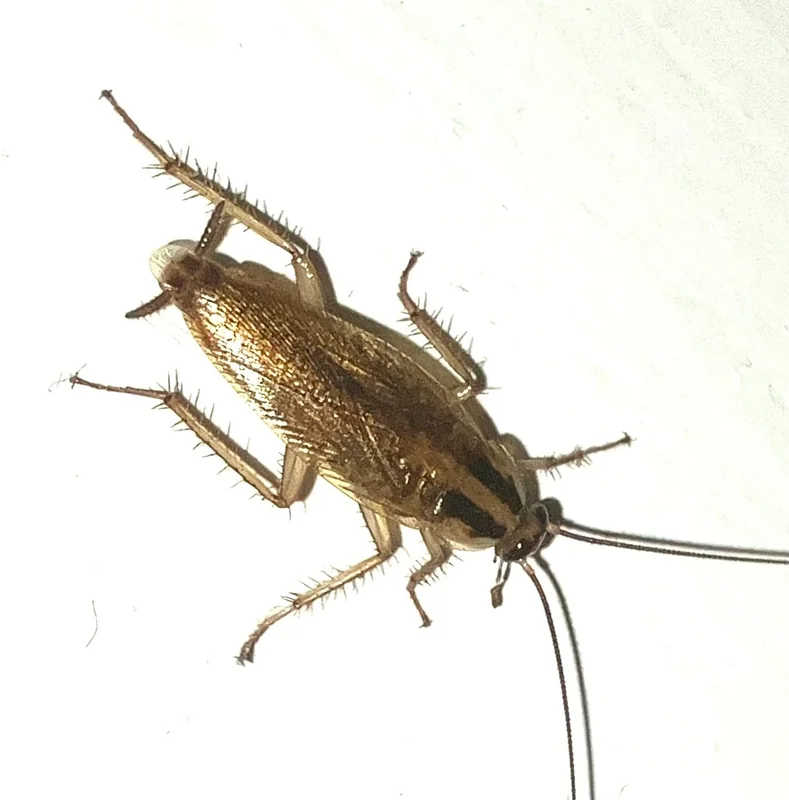
When German Cockroaches Are Most Active in Michigan
Now (November): Lower Outdoor ActivityVerified Michigan Counties, Species & US Range
Counties with Verified Observations
- Kent
- Ingham
- Berrien
- Crawford
- Delta
- Macomb
- Washtenaw
- Wayne
- Kalamazoo
- Barry
Species Recorded in Michigan
| Species | Scientific Name | GBIF Records |
|---|---|---|
| German Cockroach | Blattella germanica | 52 |
How Michigan Compares to Neighboring States
Note: Wildlife does not follow state or county lines. GBIF totals reflect verified citizen and museum records, so low counts in a neighboring county do not guarantee absence.
How to Identify German Cockroaches
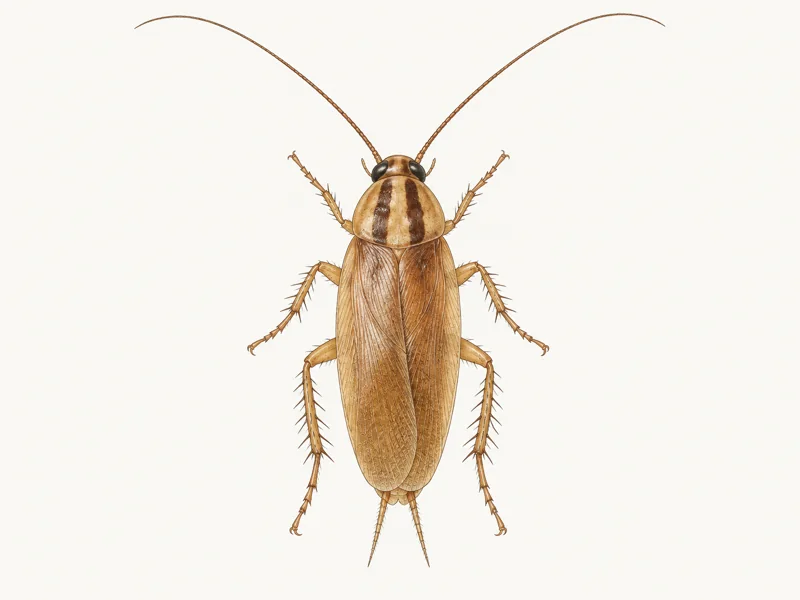
Annotated Anatomy Key (German Cockroach)
- Whip-like antennae: Very long, delicate filiform antennae sweeping forward to detect air currents and food.
- Two dark stripes: Unmistakable pair of dark parallel lengthwise bars on the tan shield (pronotum) behind the head.
- Spiny running legs: Six bristle-lined legs built for rapid sprinting into cabinet hinges and appliance voids.
- Paired rear cerci: Two sensory tail-like projections at the abdomen tip beneath folded light amber-tan wings.
German Cockroaches Field Checklist
- Small light-tan to amber cockroach with two unmistakable dark parallel lengthwise stripes behind the head
- Nymphs are darker brown with a pale tan stripe down the middle of the back
- Reproduces faster than any other US structural cockroach
- Strictly indoor pest spread via groceries, cardboard boxes, and shared apartment walls
Side-by-Side Look-Alike Comparisons
German Cockroaches Size at True Relative Scale
Quick Answer: Yes, German cockroaches are common in Michigan, with 52 verified GBIF sightings concentrated in Kent, Ingham, Berrien, Crawford and Delta counties. These small, tan roaches live almost entirely indoors, and Michigan records peak in December, when heated buildings shelter them from lake-effect winters. They are a nuisance pest rather than a dangerous one, and steady sanitation and exclusion work prevents most problems.
Where German Cockroaches Live in Michigan
If you are wondering whether there are German cockroaches in Michigan, the short answer is yes, and they are found statewide wherever people live and cook. The German cockroach (Blattella germanica) cannot survive Michigan's outdoor winters in USDA zones 4a through 6b. It depends entirely on heated human structures, so infestations follow buildings, not forests or fields.
Verified GBIF records cluster in a few counties, which partly reflects where people live and report sightings:
- Kent County: Grand Rapids apartments, restaurants and multi-unit housing
- Ingham County: Lansing and East Lansing, including student rentals
- Berrien County: Southwest Michigan homes and businesses near Lake Michigan
- Crawford County: Northern Lower Peninsula residences and seasonal properties
- Delta County: Upper Peninsula communities such as Escanaba
Inside a building, German cockroaches prefer warm, humid, tight spaces near food and water. Common hiding spots include gaps behind refrigerators and stoves, under sinks, inside cabinet hinges, dishwasher voids, and the motors of small appliances like coffee makers and microwaves.
When German Cockroaches Are Most Active in Michigan
The Michigan German cockroach season runs year-round indoors, but verified GBIF sightings peak in December. Cold weather keeps windows closed, holiday cooking increases food residue, and furnaces create the steady warmth these roaches need to breed quickly.
German cockroaches reproduce faster than any other common household roach. Each female carries an egg capsule holding roughly 30 to 40 eggs until just before hatching, and a single infestation can grow through several generations in a year. Because they are nocturnal, seeing them in daylight often signals a large, crowded population.
New infestations usually start when roaches hitchhike in grocery bags, cardboard boxes, used appliances, or furniture. In apartment buildings, they also travel between units through shared walls, plumbing chases and electrical lines.
Look-Alikes Frequently Mistaken for German Cockroaches
Accurate Michigan German cockroach identification starts with size and markings. Adults measure about 1/2 to 5/8 inch long, are light brown to tan, and have two dark parallel stripes on the shield behind the head. Both sexes have wings but rarely fly.
American Cockroach
American cockroaches are much larger, often 1 1/2 inches or more, and reddish brown with a pale yellowish band around the head shield. In Michigan they are usually tied to basements, sewers, steam tunnels and commercial buildings rather than kitchen cabinets.
Oriental Cockroach
Oriental cockroaches are about 1 inch long and shiny dark brown to nearly black. They favor cool, damp areas like basements, crawl spaces and floor drains, and they move more slowly than German cockroaches.
Other Cockroaches
Michigan homeowners may also find other roaches carried in on firewood or from outdoor leaf litter. These occasional invaders generally do not establish indoors. A small tan roach with two dark stripes found in a kitchen or bathroom is almost always a German cockroach.
How to Keep German Cockroaches Out of Your Michigan Home
Learning how to prevent German cockroaches in Michigan comes down to Integrated Pest Management (IPM). University extension IPM guidance consistently ranks sanitation, moisture control and exclusion ahead of any chemical treatment.
Sanitation and Moisture Control
- Wipe counters, stovetops and floors nightly, and avoid leaving dishes in the sink.
- Store food, including pet food, in sealed glass or hard plastic containers.
- Take trash out daily and use lidded bins.
- Fix dripping faucets and leaky pipes, and dry sinks and tubs before bed.
- Clean grease buildup behind and under appliances.
Exclusion and Inspection
- Seal gaps around pipes, outlets and baseboards with caulk or copper mesh.
- Inspect groceries, boxes and secondhand appliances before bringing them inside.
- Recycle cardboard promptly, since roaches hide and lay eggs in corrugated folds.
- Place sticky monitoring traps under sinks and behind appliances to detect activity early.
Targeted Treatment
If monitoring shows activity, gel baits and bait stations are generally more effective than sprays, which can scatter roaches into walls. Always read and follow the EPA-registered product label exactly, and keep baits away from children and pets.
When to Call a Licensed Michigan Pest Professional
- You see roaches during the day or in multiple rooms.
- Activity continues after two to three weeks of consistent sanitation and baiting.
- You live in an apartment or multi-unit building with shared walls.
- You run a food business or rental property with inspection requirements.
- Anyone in the home has asthma or allergies that may be worsened by roach allergens.
Choose a pest control company licensed through the Michigan Department of Agriculture and Rural Development.
IPM Prevention Checklist for Michigan Homes
- Unpack cardboard deliveries immediately and inspect secondhand appliances
- Eliminate all overnight water, grease, and crumb sources
- Caulk plumbing escutcheons and cabinet cracks
 EXCLUSION BLUEPRINT
Inspect eaves, screens, door sweeps, foundation cracks, and utility penetrations around Michigan homes before peak season.
German Cockroaches in Michigan: Frequently Asked Questions
Are German cockroaches dangerous in Michigan?
They are a nuisance pest, not a venomous one, and they do not sting. However, their droppings and shed skins can trigger allergies and asthma, and they can contaminate food. Ask a doctor about health concerns.
Can German cockroaches survive Michigan winters outside?
No. They cannot survive Michigan's cold outdoor winters and live almost entirely inside heated buildings, which is why sightings peak in December.
Why do I see German cockroaches in a clean house?
They often arrive in grocery bags, boxes or used appliances, or move in from neighboring units. Even a clean home offers warmth and small amounts of water and food.
How long does it take to eliminate German cockroaches?
Light infestations often clear in a few weeks with steady sanitation and baiting. Heavy or multi-unit infestations may take several months and usually need professional help.
Sources & Verification
- UF/IFAS Extension — German Cockroach
- US EPA — Cockroaches IPM
- GBIF Global Biodiversity Occurrence Records
Data refreshed · Editorial & GBIF Methodology