German Cockroaches in Florida: Identification, Season and Prevention
Quick Answer: Yes, German cockroaches in Florida are common, with 142 verified GBIF sightings concentrated in Palm Beach, Miami-Dade, Broward, Duval, and Hillsborough counties. Records peak in June, July, September, and October. The German cockroach (Blattella germanica) is a nuisance pest rather than a dangerous one, but it can contaminate food and trigger allergies.
When German Cockroaches Are Most Active in Florida
Now (November): Moderate ActivityVerified Florida Counties, Species & US Range
Counties with Verified Observations
- Palm Beach
- Miami-Dade
- Broward
- Duval
- Hillsborough
- Osceola
- Seminole
- Suwannee
- Brevard
- Indian River
Species Recorded in Florida
| Species | Scientific Name | GBIF Records |
|---|---|---|
| German Cockroach | Blattella germanica | 142 |
How Florida Compares to Neighboring States
Note: Wildlife does not follow state or county lines. GBIF totals reflect verified citizen and museum records, so low counts in a neighboring county do not guarantee absence.
How to Identify German Cockroaches
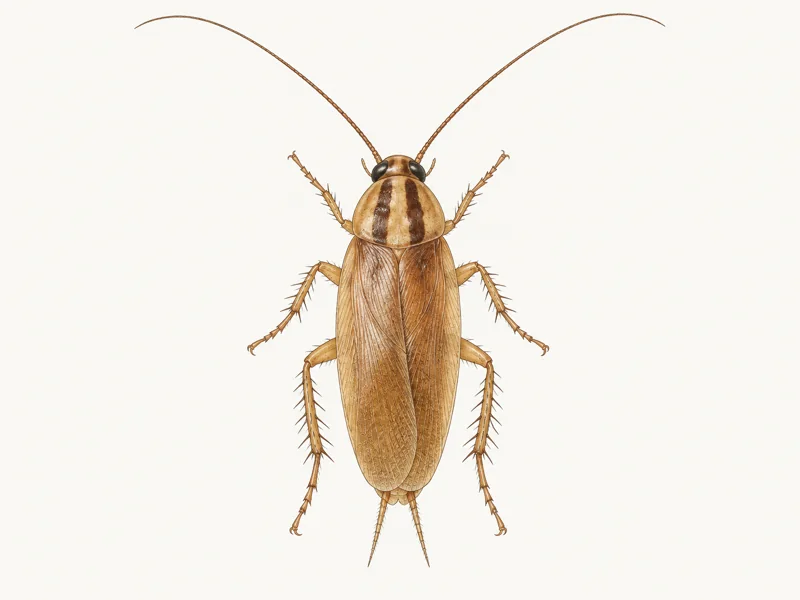
Annotated Anatomy Key (German Cockroach)
- Whip-like antennae: Very long, delicate filiform antennae sweeping forward to detect air currents and food.
- Two dark stripes: Unmistakable pair of dark parallel lengthwise bars on the tan shield (pronotum) behind the head.
- Spiny running legs: Six bristle-lined legs built for rapid sprinting into cabinet hinges and appliance voids.
- Paired rear cerci: Two sensory tail-like projections at the abdomen tip beneath folded light amber-tan wings.
German Cockroaches Field Checklist
- Small light-tan to amber cockroach with two unmistakable dark parallel lengthwise stripes behind the head
- Nymphs are darker brown with a pale tan stripe down the middle of the back
- Reproduces faster than any other US structural cockroach
- Strictly indoor pest spread via groceries, cardboard boxes, and shared apartment walls
Side-by-Side Look-Alike Comparisons
German Cockroaches Size at True Relative Scale
Where German Cockroaches Live in Florida
For anyone asking whether there are German cockroaches in Florida, verified records confirm the species is well established across the state. Most sightings cluster in the densely populated counties of South Florida, including Palm Beach, Miami-Dade, and Broward, along with Duval County in the northeast and Hillsborough County on the Gulf Coast.
Unlike many outdoor roaches, German cockroaches live almost entirely indoors. Florida's humid subtropical to tropical climate (USDA zones 8a-11b) helps them, but they depend on human structures for food, water, and shelter. Common hiding spots include:
- Kitchen cabinets, especially near sinks and dishwashers
- Gaps behind refrigerators, stoves, and microwaves
- Bathroom vanities and areas around leaky plumbing
- Apartment buildings, restaurants, and other multi-unit structures where roaches move through shared walls
Infestations often begin when roaches hitchhike in grocery bags, cardboard boxes, used appliances, or secondhand furniture.
When German Cockroaches Are Most Active in Florida
Because they live indoors, German cockroaches breed year-round in Florida. Even so, the Florida German cockroach season shows clear peaks in verified GBIF records during June, July, September, and October. These months line up with the hottest, most humid stretch of the year and heavy seasonal rainfall.
A single female carries an egg capsule holding roughly 30 to 40 eggs until just before they hatch, according to university extension IPM guidance. Under warm conditions, a new generation can mature in a few months, so a small problem in early summer can become a heavy infestation by fall. German cockroaches are mostly nocturnal, so seeing them in daylight often signals a crowded population.
Look-Alikes Frequently Mistaken for German Cockroaches
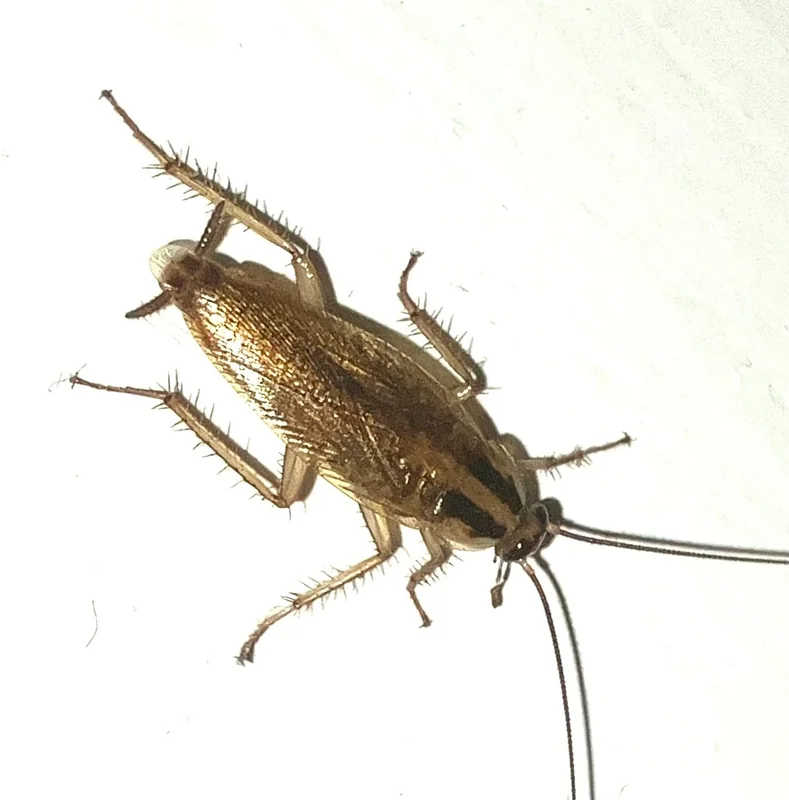
Accurate Florida German cockroach identification starts with size and markings. Adults are small, about 1/2 to 5/8 inch long, light brown to tan, with two dark parallel stripes running lengthwise behind the head. Several other roaches found in Florida are often confused with them.
American Cockroaches
American cockroaches are much larger, reaching about 1.5 to 2 inches. They are reddish-brown with a yellowish band around the area behind the head. Floridians often encounter them near drains, sewers, mulch, and garages rather than kitchen cabinets.
Oriental Cockroaches
Oriental cockroaches are about 1 inch long and shiny dark brown to nearly black. They prefer cool, damp areas such as basements, crawl spaces, and floor drains. They move more slowly and lack the twin stripes of the German cockroach.
Other Cockroaches
Florida hosts a range of other cockroach species, both indoor visitors and outdoor wood-dwelling types. If a roach is small, tan, and double-striped and appears in a kitchen or bathroom, it is most likely a German cockroach. Collecting a specimen for a local extension office or licensed professional can confirm the identification.
How to Keep German Cockroaches Out of Your Florida Home
Learning how to prevent German cockroaches in Florida comes down to Integrated Pest Management (IPM). Non-chemical steps such as sanitation, moisture control, and exclusion should come first, since they remove what roaches need to survive.
Sanitation
- Wipe counters and stovetops nightly and sweep up crumbs.
- Store food, including pet food, in sealed containers.
- Take out trash daily and use lidded bins.
- Avoid leaving dirty dishes in the sink overnight.
Moisture Control
- Fix dripping faucets and leaky pipes under sinks.
- Run bathroom fans and dry wet areas after use.
- Check dishwasher and refrigerator drip pans regularly.
Exclusion
- Seal cracks around plumbing, baseboards, and cabinets with caulk.
- Inspect grocery bags, boxes, and used appliances before bringing them inside.
- Recycle cardboard promptly, since roaches hide in corrugated folds.
Targeted Treatment
If roaches persist, gel baits, bait stations, and insect growth regulators are often more effective than sprays for this species. Always read and follow the EPA product label exactly, and keep products away from children, pets, and food-prep surfaces. Repellent sprays can scatter roaches deeper into walls.
When to Call a Licensed Florida Pest Professional
- Roaches appear during the day or in multiple rooms.
- You see egg capsules, droppings resembling black pepper, or a musty odor.
- Activity continues after several weeks of sanitation and baiting.
- You live in a multi-unit building where neighbors also report roaches.
Choose a company licensed by the Florida Department of Agriculture and Consumer Services.
IPM Prevention Checklist for Florida Homes
- Unpack cardboard deliveries immediately and inspect secondhand appliances
- Eliminate all overnight water, grease, and crumb sources
- Caulk plumbing escutcheons and cabinet cracks
 EXCLUSION BLUEPRINT
Inspect eaves, screens, door sweeps, foundation cracks, and utility penetrations around Florida homes before peak season.
German Cockroaches in Florida: Frequently Asked Questions
Are German cockroaches common in Florida?
Yes. They are common statewide, with 142 verified GBIF sightings led by Palm Beach, Miami-Dade, Broward, Duval, and Hillsborough counties.
What months are German cockroaches worst in Florida?
Verified records peak in June, July, September, and October, though indoor populations can breed all year in Florida's warm climate.
Are German cockroaches dangerous in Florida?
They are considered a nuisance pest. They do not bite people in typical situations, but they can contaminate food and their droppings may aggravate allergies or asthma.
Can German cockroaches live outside in Florida?
They rarely establish outdoors. German cockroaches depend on indoor food, water, and warmth, so most infestations stay inside homes, apartments, and businesses.
Sources & Verification
- UF/IFAS Extension — German Cockroach
- US EPA — Cockroaches IPM
- GBIF Global Biodiversity Occurrence Records
Data refreshed · Editorial & GBIF Methodology