Flying Ants in Missouri: Species, Season, and Prevention Guide
Quick Answer: Flying ants in Missouri are common, with 3,573 verified GBIF sightings statewide. These winged ants are reproductive males and queens (alates) leaving a mature colony to mate, and they are a nuisance rather than a danger. Swarms peak in April, May, June, and August, and indoor swarmers often point to a colony nearby.
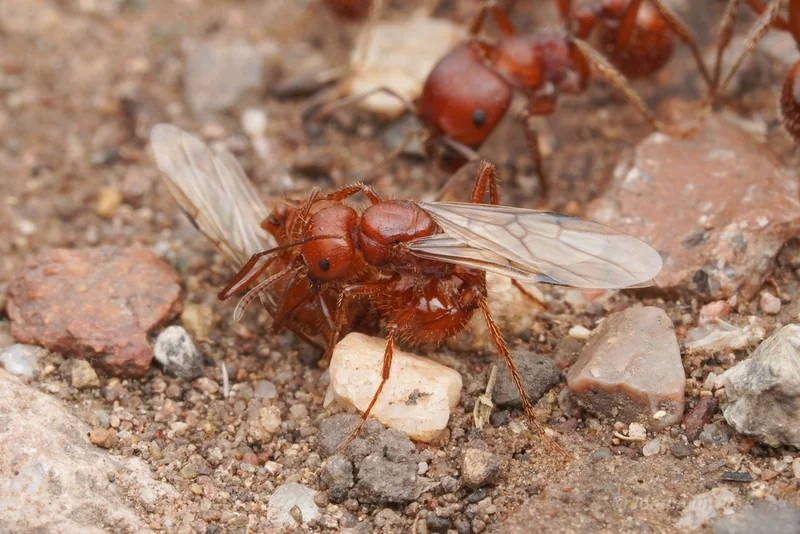
When Flying Ants Are Most Active in Missouri
Now (November): Lower Outdoor ActivityVerified Missouri Counties, Species & US Range
Counties with Verified Observations
- Saint Louis
- Franklin
- Cole
- Boone
- Newton
- Iron
- Jefferson
- Jackson
- Christian
- Barton
Species Recorded in Missouri
| Species | Scientific Name | GBIF Records |
|---|---|---|
| Black Carpenter Ant | Camponotus pennsylvanicus | 467 |
| American Winter Ant | Prenolepis imparis | 267 |
| Chestnut Carpenter Ant | Camponotus castaneus | 207 |
How Missouri Compares to Neighboring States
Note: Wildlife does not follow state or county lines. GBIF totals reflect verified citizen and museum records, so low counts in a neighboring county do not guarantee absence.
How to Identify Flying Ants
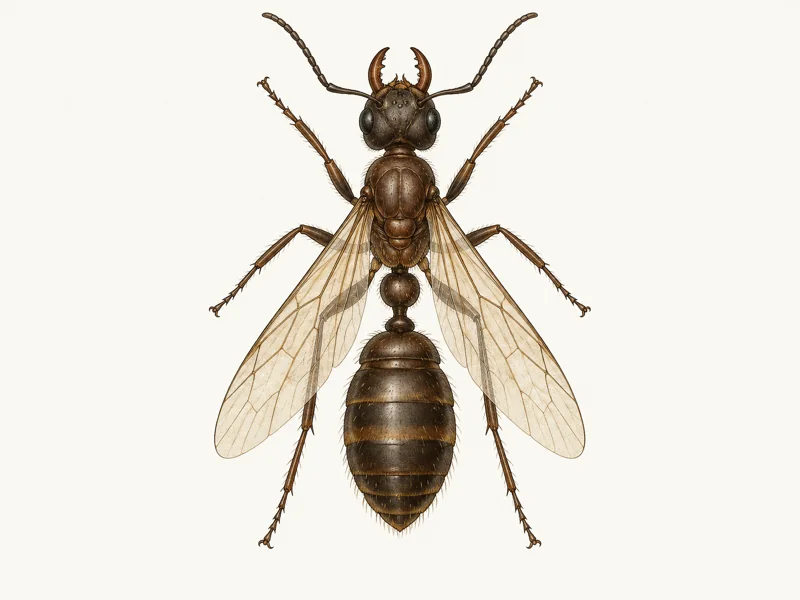
Annotated Anatomy Key (Flying Ant)
- Elbowed antennae: Sharply bent antennae on a distinct head with mandibles—termites always have straight antennae.
- Unequal wings: Front wings are noticeably longer and wider than hind wings (termites have 4 equal wings).
- Pinched waist: Sharp narrow constriction (1 or 2 tiny petiole nodes) separating thorax from abdomen.
- Segmented oval abdomen: Dark glossy rear gaster; winged reproductive ants swarm briefly on warm humid days.
Flying Ants Field Checklist
- Winged reproductive ants (alates) emerging in warm humid swarms to establish new colonies
- Key ID vs termites: distinctly ELBOWED antennae, pinched narrow waist, and unequal wings (front wings longer than hind wings)
- Color varies from yellow-amber (citronella ants) to black (pavement/carpenter ants)
- Swarms last only a few days after rain
Side-by-Side Look-Alike Comparisons
Flying Ants Size at True Relative Scale
Where Flying Ants Live in Missouri
So, are there flying ants in Missouri? Yes, across the whole state. GBIF records are densest in Saint Louis, Franklin, Cole, Boone, and Newton counties, which span the eastern metro, the central Missouri River valley, and the southwest corner.
Missouri has a humid continental to humid subtropical climate (USDA zones 5b-7b), with hot summers and variable winters. That mix suits many ant species, especially those that nest in moist wood and soil. Three species appear in the recorded sightings:
- Black Carpenter Ant (Camponotus pennsylvanicus): large and dark, nesting in damp or decayed wood, including trees, stumps, and house framing.
- Chestnut Carpenter Ant (Camponotus castaneus): reddish-brown front body with a darker rear, often found in dead limbs and hollow trunks.
- American Winter Ant (Prenolepis imparis): a smaller, slender, brown ant that stays active in cool weather and nests in soil.
When Flying Ants Are Most Active in Missouri
Missouri flying ant season runs mainly from spring into summer. Recorded sightings peak in April, May, June, and August. Swarms often follow warm, humid days, especially after rain, when conditions favor mating flights.
A swarm outdoors is usually brief and harmless. Winged ants found inside in winter or early spring deserve more attention, because they may have emerged from a colony within the structure.
Look-Alikes Frequently Mistaken for Flying Ants
Missouri flying ant identification starts with three body features. Ants have elbowed antennae, a pinched waist, and forewings noticeably longer than hind wings. Termite swarmers look different on each point, and the distinction matters because termites damage wood far more seriously.
Termites
Termite swarmers have straight, bead-like antennae, a thick waist, and four wings of nearly equal length. They also shed their wings quickly, so piles of discarded wings near windows or doors are a common clue.
Carpenter Ants
Carpenter ants are both a look-alike and a source of flying ants. Winged carpenter ants are large, and workers leave smooth, sawdust-like frass near galleries. They excavate wood rather than eat it.
Pavement Ants
Pavement ants are small, brown to blackish, and nest under slabs, sidewalks, and driveways. Their winged reproductives sometimes emerge from cracks in warm weather and are often mistaken for a larger infestation.
If you cannot tell which insect you have, capture a few in a sealed container or tape and compare them with university extension identification guides.
How to Keep Flying Ants Out of Your Missouri Home
How to prevent flying ants in Missouri comes down to exclusion, sanitation, and moisture control. Start with non-chemical steps before considering any product.
- Repair leaking pipes, gutters, and roof flashing, since carpenter ants favor damp wood.
- Seal gaps around windows, doors, utility lines, and siding with caulk or weatherstripping.
- Trim branches that touch the house and keep mulch and firewood several inches away from the foundation.
- Remove stumps, rotting logs, and dead limbs near the structure.
- Reduce moisture in crawl spaces and attics with ventilation and dehumidifiers.
- Switch outdoor lights to yellow bulbs or turn them off during swarm periods, and close window screens tightly.
- Vacuum swarmers indoors and empty the bag outside.
If a product is needed, use only those labeled for the target pest and site, and follow all EPA label directions. Sprays on swarmers do not solve the problem, because the colony is the source.
When to Call a Licensed Missouri Pest Professional
- Winged ants appear indoors repeatedly, especially outside the usual spring and summer window.
- You find sawdust-like frass, hollow-sounding wood, or rustling sounds inside walls.
- Discarded wings pile up near doors and windows, which may indicate termites.
- Large numbers of workers trail into the home from a damp or decayed area.
Flying ants are not considered medically significant. If anyone has an unusual reaction to a bite or sting, call US Poison Control at 1-800-222-1222 and consult a doctor.
IPM Prevention Checklist for Missouri Homes
- Seal foundation cracks and window frames; fix moisture leaks that attract indoor carpenter ant colonies
 EXCLUSION BLUEPRINT
Inspect eaves, screens, door sweeps, foundation cracks, and utility penetrations around Missouri homes before peak season.
Flying Ants in Missouri: Frequently Asked Questions
Are flying ants in Missouri dangerous?
No. They are a nuisance. Carpenter ants can damage wood over time, but swarmers themselves do not threaten people.
Do flying ants mean I have termites?
Not necessarily. Check the antennae, waist, and wings. Ants have elbowed antennae and a narrow waist, while termites have straight antennae and a broad waist.
Why do flying ants appear after rain?
Warm, humid conditions and moist soil favor mating flights. Colonies often release alates together so they can find mates.
How long do flying ant swarms last?
Outdoor swarms usually last from a few minutes to a few hours. Repeated indoor emergence suggests a nearby or hidden colony needing inspection.
Sources & Verification
Data refreshed · Editorial & GBIF Methodology