Flying Ants in Minnesota: Identification, Season, and Prevention
Quick Answer: Yes, flying ants are common in Minnesota. GBIF records include 3,651 verified sightings, with activity peaking in May, June, and August. They are a nuisance rather than a danger, but indoor swarms can signal a nest in or near the home.
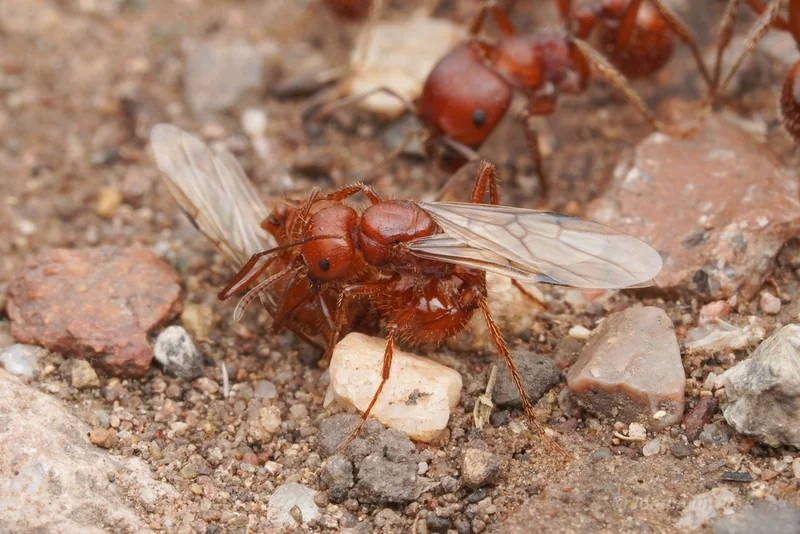
When Flying Ants Are Most Active in Minnesota
Now (November): Lower Outdoor ActivityVerified Minnesota Counties, Species & US Range
Counties with Verified Observations
- Hennepin
- Blue Earth
- Ramsey
- Dakota
- Anoka
- Buffalo
- Carver
- Scott
- Polk
- Washington
Species Recorded in Minnesota
| Species | Scientific Name | GBIF Records |
|---|---|---|
| Black Carpenter Ant | Camponotus pennsylvanicus | 385 |
| Ulke's Field Ant | Formica ulkei | 310 |
| American Winter Ant | Prenolepis imparis | 310 |
How Minnesota Compares to Neighboring States
Note: Wildlife does not follow state or county lines. GBIF totals reflect verified citizen and museum records, so low counts in a neighboring county do not guarantee absence.
How to Identify Flying Ants
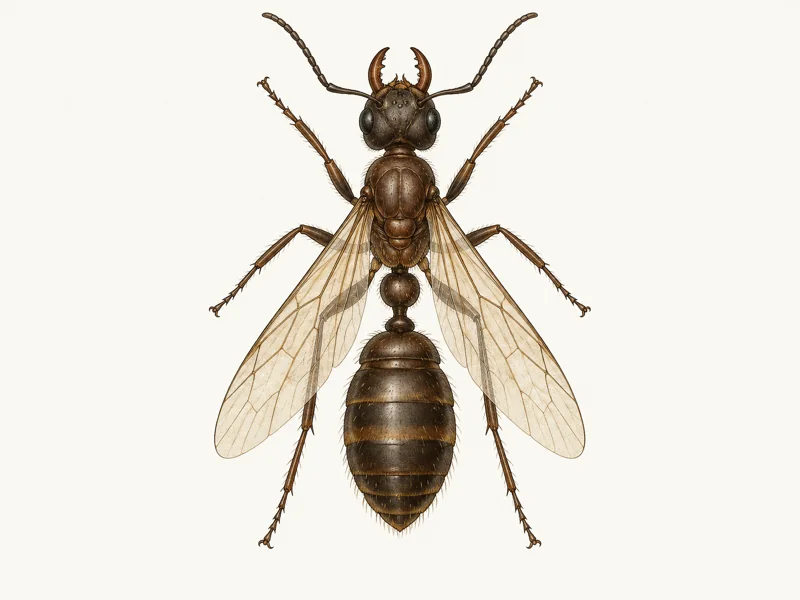
Annotated Anatomy Key (Flying Ant)
- Elbowed antennae: Sharply bent antennae on a distinct head with mandibles—termites always have straight antennae.
- Unequal wings: Front wings are noticeably longer and wider than hind wings (termites have 4 equal wings).
- Pinched waist: Sharp narrow constriction (1 or 2 tiny petiole nodes) separating thorax from abdomen.
- Segmented oval abdomen: Dark glossy rear gaster; winged reproductive ants swarm briefly on warm humid days.
Flying Ants Field Checklist
- Winged reproductive ants (alates) emerging in warm humid swarms to establish new colonies
- Key ID vs termites: distinctly ELBOWED antennae, pinched narrow waist, and unequal wings (front wings longer than hind wings)
- Color varies from yellow-amber (citronella ants) to black (pavement/carpenter ants)
- Swarms last only a few days after rain
Side-by-Side Look-Alike Comparisons
Flying Ants Size at True Relative Scale
Quick Answer: Yes, flying ants are common in Minnesota. GBIF records include 3,651 verified sightings, with activity peaking in May, June, and August. They are a nuisance rather than a danger, but indoor swarms can signal a nest in or near the home.
Where Flying Ants Live in Minnesota
Flying ants are not a separate species. They are the winged reproductive males and queens (alates) of ordinary ant colonies, which leave the nest to mate and start new colonies. Minnesota's continental northern climate, with warm lake summers and severe subzero winters (USDA zones 3a to 5a), shapes when and where they appear.
GBIF records place the most sightings in Hennepin, Blue Earth, Ramsey, Dakota, and Anoka counties. That pattern likely reflects both the Twin Cities metro's dense housing and the number of people reporting observations there. Recorded species in the state include:
- Black Carpenter Ant (Camponotus pennsylvanicus), which nests in moist or decaying wood
- Ulke's Field Ant (Formica ulkei), a mound-building ant of open ground and lawns
- American Winter Ant (Prenolepis imparis), a cool-weather ant that nests in soil
When Flying Ants Are Most Active in Minnesota
Minnesota flying ant season centers on May, June, and August in the occurrence records. Swarms often follow warm, humid days after rain, when conditions favor mating flights. Different species fly at different times, so a homeowner may see more than one wave.
A swarm outdoors is usually brief and harmless. Winged ants appearing inside in large numbers, especially in late winter or early spring, suggest a mature colony nesting within the structure. That is the situation worth investigating.
Look-Alikes Frequently Mistaken for Flying Ants
Correct Minnesota flying ant identification matters because the look-alikes call for different responses. Check three features: waist, antennae, and wings.
- Flying ants: pinched, narrow waist; elbowed antennae; front wings longer than hind wings.
- Termites: thick, straight-sided waist; straight, beadlike antennae; four wings of nearly equal length.
Termites
Swarming termites are the most important mix-up, since they feed on wood structurally and need a different treatment plan. Discarded wings piled on windowsills are a clue worth saving for a professional.
Carpenter Ants
Carpenter ants are large, often black, and can be winged during swarms. They do not eat wood but excavate it for nesting, leaving smooth galleries and fine sawdust-like frass. Black Carpenter Ants are recorded in Minnesota.
Pavement Ants
Pavement ants are small, brown to blackish, and nest under slabs, sidewalks, and foundations. Their winged swarms can emerge from cracks in paving or from basement floors, and they are often mistaken for something more serious.
How to Keep Flying Ants Out of Your Minnesota Home
If you are wondering how to prevent flying ants in Minnesota, start with non-chemical steps. Cooperative extension IPM guidance for ants generally emphasizes exclusion, sanitation, and moisture control before any pesticide.
- Seal gaps around windows, doors, utility lines, and foundation cracks with caulk and weatherstripping.
- Fix leaky pipes, gutters, and roof flashing, and dry out damp crawl spaces and basements. Carpenter ants favor wet wood.
- Replace moisture-damaged wood and keep firewood, mulch, and debris away from the foundation.
- Trim branches and shrubs that touch the house, since they serve as bridges for ants.
- Store food in sealed containers and clean up crumbs and spills promptly.
- Vacuum swarmers indoors and empty the bag outside. Swarmers do not bite or damage anything, and removal is enough in many cases.
If you use any insecticide or bait, read and follow the EPA-registered product label exactly. Spraying swarmers rarely solves the problem because the nest remains untouched.
When to Call a Licensed Minnesota Pest Professional
- Winged ants keep appearing indoors over several days or weeks.
- You find sawdust-like frass, hollow-sounding wood, or rustling sounds in walls.
- You cannot tell whether the insects are ants or termites.
- Mud tubes appear on foundation walls, or you find piles of shed wings.
- Moisture-damaged structural wood is present near suspected activity.
Flying ants are a nuisance and are not considered medically significant. If someone has a reaction to an insect bite or sting, contact US Poison Control at 1-800-222-1222 and a doctor.
IPM Prevention Checklist for Minnesota Homes
- Seal foundation cracks and window frames; fix moisture leaks that attract indoor carpenter ant colonies
 EXCLUSION BLUEPRINT
Inspect eaves, screens, door sweeps, foundation cracks, and utility penetrations around Minnesota homes before peak season.
Flying Ants in Minnesota: Frequently Asked Questions
Are there flying ants in Minnesota?
Yes. GBIF holds 3,651 verified Minnesota sightings, and the top counties are Hennepin, Blue Earth, Ramsey, Dakota, and Anoka.
When is flying ant season in Minnesota?
Records peak in May, June, and August. Swarms often follow warm, humid weather and rain.
Are flying ants dangerous?
They are a nuisance. Swarmers do not damage structures themselves, but carpenter ants swarming indoors may point to a nest in damp wood.
How can I tell flying ants from termites?
Ants have a pinched waist, elbowed antennae, and unequal wing pairs. Termites have a thick waist, straight antennae, and wings of equal length.
Sources & Verification
Data refreshed · Editorial & GBIF Methodology