Carpet Beetles in California: Identification, Season, and Prevention
Quick Answer: Carpet beetles in California are common household nuisance pests. GBIF records include 3,280 verified sightings, with the Varied Carpet Beetle (Anthrenus verbasci) among the recorded species. The larvae, not the adults, damage wool, fur, feathers, and stored goods.
When Carpet Beetles Are Most Active in California
Now (November): Lower Outdoor ActivityVerified California Counties, Species & US Range
Counties with Verified Observations
- San Diego
- Los Angeles
- Santa Clara
- Ventura
- Santa Barbara
- Yolo
- Santa Cruz
- Placer
- Riverside
- Sonoma
Species Recorded in California
| Species | Scientific Name | GBIF Records |
|---|---|---|
| Varied Carpet Beetle | Anthrenus verbasci | 2,169 |
| Anthrenus lepidus | Anthrenus lepidus | 1,000 |
| Common Carpet Beetle | Anthrenus scrophulariae | 38 |
How California Compares to Neighboring States
Note: Wildlife does not follow state or county lines. GBIF totals reflect verified citizen and museum records, so low counts in a neighboring county do not guarantee absence.
How to Identify Carpet Beetles
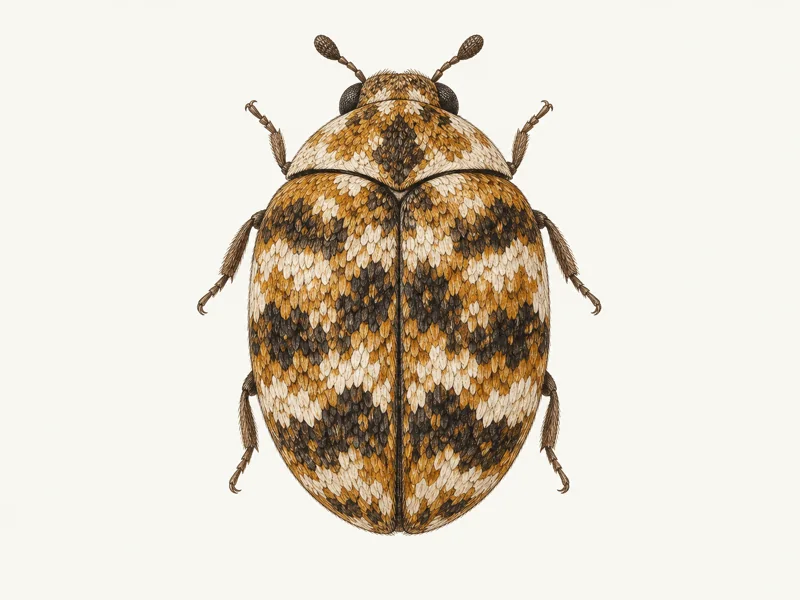
Annotated Anatomy Key (Carpet Beetle)
- Short clubbed antennae: Tiny tucked head and short clubbed feelers—completely different from bed bugs.
- Rounded oval dome: Plump ladybug-like 2–3.5 mm silhouette; adults fly to windowsills for pollen.
- Six short tucked legs: Delicate brownish legs pull tightly beneath the armored body when disturbed.
- Mottled calico scales: Irregular wavy bands of cream-white, golden-tan, and charcoal scales on elytra.
Carpet Beetles Field Checklist
- Tiny round beetle mottled in white, brown, and yellow scales (varied carpet beetle)
- Larvae are fuzzy, bristled, carrot-shaped 'woolly bears' that shed hollow skins
- Larval bristles can cause itchy contact rash often mistaken for bed bug bites
- Larvae feed on wool, silk, pet hair, lint, leather, and dried pantry goods
Side-by-Side Look-Alike Comparisons
Carpet Beetles Size at True Relative Scale
Where Carpet Beetles Live in California
So, are there carpet beetles in California? Yes, and they turn up statewide. The top counties for verified records are San Diego, Los Angeles, Santa Clara, Ventura, and Santa Barbara. California's range of Mediterranean coastal climates, arid inland deserts, and alpine mountain zones (USDA zones 5a-11a) gives them suitable habitat almost anywhere people live.
Three species are recorded in the state:
- Varied Carpet Beetle (Anthrenus verbasci)
- Common Carpet Beetle (Anthrenus scrophulariae)
- Anthrenus lepidus
Quick identification
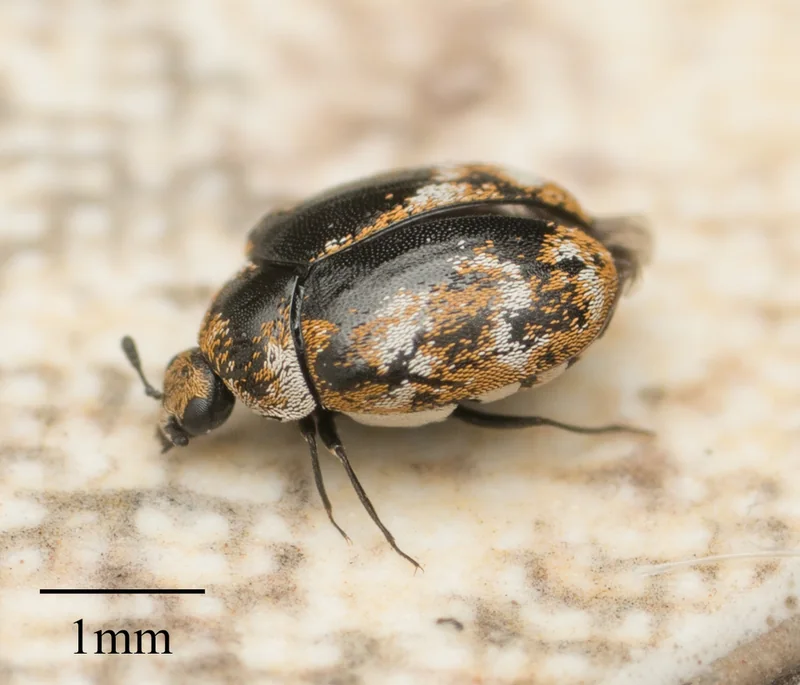
For California carpet beetle identification, start with size and pattern. Adults are tiny, about 1/8 inch long, round to oval, and mottled with white, brown, and yellowish scales. Larvae are small, hairy, and bristly, often called "woolly bears," and they are what usually gets found in closets and drawers.
Signs of an infestation include:
- Shed, tan, bristly larval skins
- Irregular holes in wool, silk, or fur
- Adults gathering on sunny windowsills
- Fine, sand-like fecal pellets near damaged items
Outdoors, adults feed on pollen and nectar. Indoors, larvae live in lint, pet hair, dead insects, and animal-based fibers, often in spots that rarely get cleaned.
When Carpet Beetles Are Most Active in California
The California carpet beetle season peaks in March and April, according to GBIF occurrence records. That fits their biology: adults emerge in spring and fly to flowering plants, and they often enter homes on cut flowers or through gaps around windows and doors.
Indoors, larvae can feed year-round in heated, sheltered spaces. Many homeowners notice adults in spring, but the actual damage builds quietly over months in undisturbed areas.
Carpet beetles are a nuisance pest. They do not bite or sting and are not known to transmit disease. Some people develop skin irritation from contact with larval hairs, so anyone with a persistent rash should talk with a doctor.
Look-Alikes Frequently Mistaken for Carpet Beetles
Several other household pests found in California get confused with carpet beetles. Correct identification matters because each needs a different response.
- Bed bugs: Flat, reddish-brown, and oval, with no mottled pattern. They feed on blood and leave bites, spotting, and shed skins near sleeping areas. Carpet beetles do not feed on people.
- Asian lady beetles: Larger (about 1/4 inch), orange to red, with a white "M" marking behind the head. They often cluster on sunny walls and enter homes in fall.
- Clothes moths: Adults are small, buff-colored, and fly or flutter. Their larvae are smooth and creamy, spin silk, and feed on similar fabrics, so damage looks alike. Carpet beetle larvae are hairy and bristled.
If a specimen is hard to identify, tape it to a card and take a clear photo. A local pest professional or a UC Cooperative Extension office can confirm it.
How to Keep Carpet Beetles Out of Your California Home
Knowing how to prevent carpet beetles in California starts with sanitation and exclusion, following general IPM guidance from US university extension programs.
- Vacuum often: Focus on baseboards, closets, under furniture, air vents, and along carpet edges. Empty the vacuum outside afterward.
- Wash and dry-clean: Launder infested fabrics in hot water when the label allows, or dry-clean them. Heat and freezing both kill larvae.
- Store items properly: Keep wool, silk, fur, and heirlooms in sealed plastic bins or garment bags after cleaning.
- Clear hidden food sources: Remove pet hair and lint buildup, dead insects in light fixtures, and old bird or rodent nests in attics and wall voids.
- Seal entry points: Repair window screens, weatherstrip doors, and close gaps around vents and utility lines.
- Check flowers and plants: Shake out cut flowers before bringing them inside during spring.
- Inspect pantry goods: Some species also feed on dry pet food, grains, and cereal. Discard infested items.
If you use an insecticide, choose a product labeled for carpet beetles and follow the EPA label exactly. Spot treat cracks, crevices, and closet edges rather than spraying broadly, and never apply products to clothing or bedding unless the label allows it.
When to call a licensed professional
Contact a licensed California pest control professional if you notice:
- Larvae or damage that keeps returning after thorough cleaning
- Activity in multiple rooms or inside wall voids and attics
- Damage to valuable rugs, antiques, or collections
- Uncertainty about whether the pest is a carpet beetle or a bed bug
IPM Prevention Checklist for California Homes
- Store wool, cashmere, and silk in sealed airtight containers after dry-cleaning or laundering
- Vacuum baseboards, closets, and pet-hair hotspots weekly
- Remove old bird nests from eaves and attic vents
 EXCLUSION BLUEPRINT
Inspect eaves, screens, door sweeps, foundation cracks, and utility penetrations around California homes before peak season.
Carpet Beetles in California: Frequently Asked Questions
Are there carpet beetles in California?
Yes. GBIF lists 3,280 verified sightings, with the most records in San Diego, Los Angeles, Santa Clara, Ventura, and Santa Barbara counties.
Do carpet beetles bite people?
No. They are a nuisance pest that damages fabrics and stored goods. Larval hairs may irritate sensitive skin, so see a doctor for persistent reactions. For urgent concerns about exposure, call US Poison Control at 1-800-222-1222.
When are carpet beetles most noticeable in California?
Records peak in March and April, when adults emerge and enter homes. Larvae can still feed indoors at other times of year.
What is the best first step for getting rid of them?
Find and remove the source, then vacuum thoroughly and launder or dry-clean affected items. Use insecticides only as a targeted follow-up, and follow the EPA label.
Sources & Verification
- UC IPM — Carpet Beetles
- University of Kentucky Entomology — Carpet Beetles
- GBIF Global Biodiversity Occurrence Records
Data refreshed · Editorial & GBIF Methodology