Carpet Beetle vs Clothes Moth: How to Tell Them Apart Fast
Quick ID Verdict: A tiny round beetle mottled in white, brown, and yellow scales is a varied carpet beetle (Anthrenus verbasci). A slender, uniformly shiny pale-gold moth with a reddish-gold head tuft is a webbing clothes moth (Tineola bisselliella). Both are nuisance pests, not dangerous ones, but their larvae can quietly ruin wool, silk, fur, and feathers.
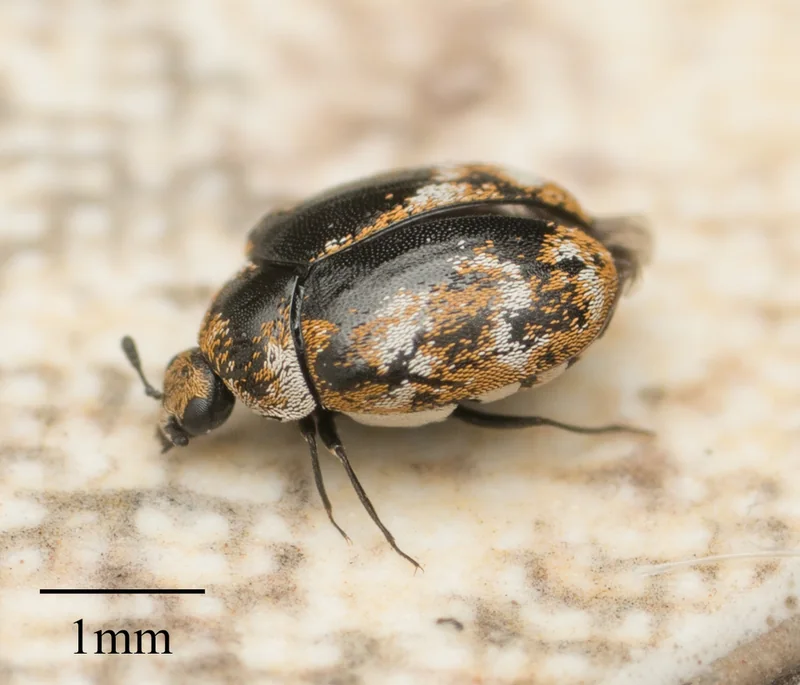
Carpet Beetle
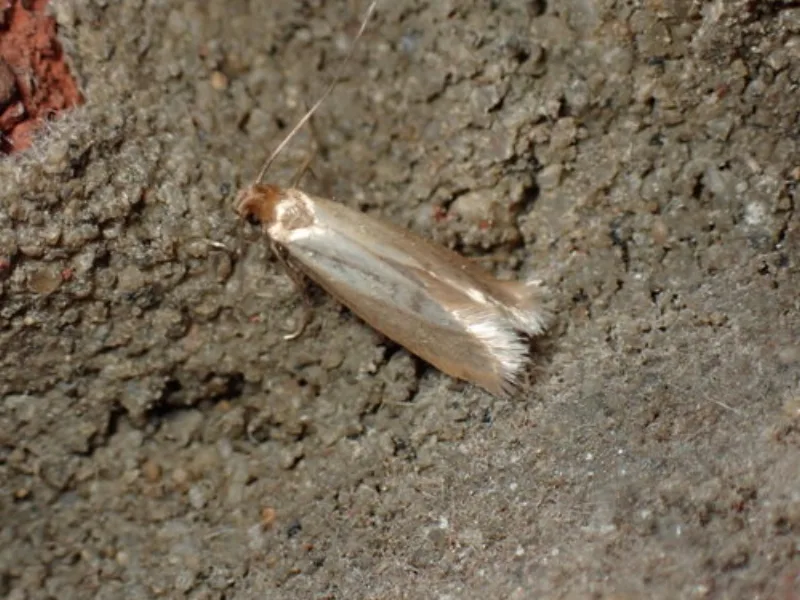
Clothes Moth
Side-by-Side Comparison Table
| Trait | Carpet Beetle | Clothes Moth |
|---|---|---|
| Scientific Group | Anthrenus verbasci | Tineola bisselliella |
| Category | Insect | Insect |
| Typical Size | 2–4 mm | 6–8 mm |
| Danger Level | Nuisance | Nuisance |
| Bites or Stings? | No | No |
| Peak US Months | March, April, May | February, March, May, September |
| Key ID Trait | Tiny round beetle mottled in white, brown, and yellow scales (varied carpet beetle) | Tiny uniformly shiny pale-gold moth with fringed narrow wings and reddish-gold head tuft |
Carpet Beetle vs. Clothes Moth: True Size Comparison
Side-by-Side Anatomy Blueprint
Compare body segments, antennae, leg count, and key markings directly before treating or removing either species.
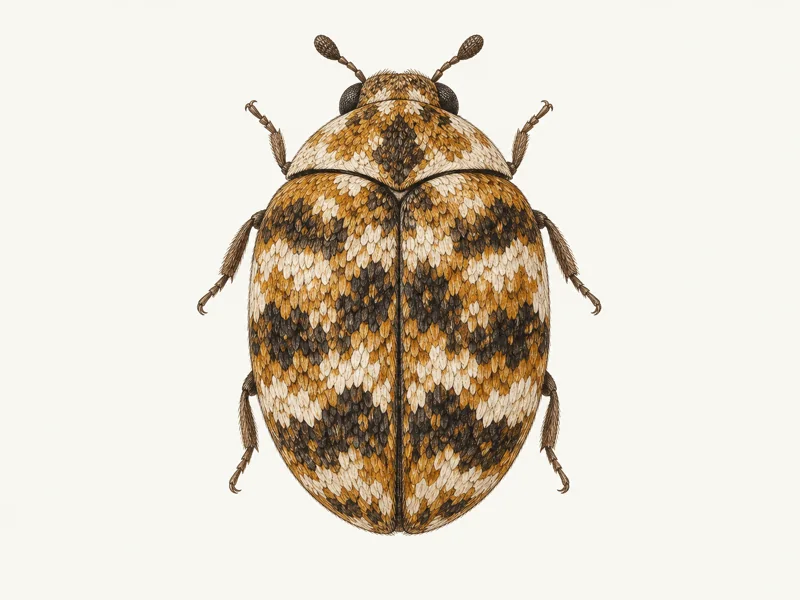
- Short clubbed antennae: Tiny tucked head and short clubbed feelers—completely different from bed bugs.
- Rounded oval dome: Plump ladybug-like 2–3.5 mm silhouette; adults fly to windowsills for pollen.
- Six short tucked legs: Delicate brownish legs pull tightly beneath the armored body when disturbed.
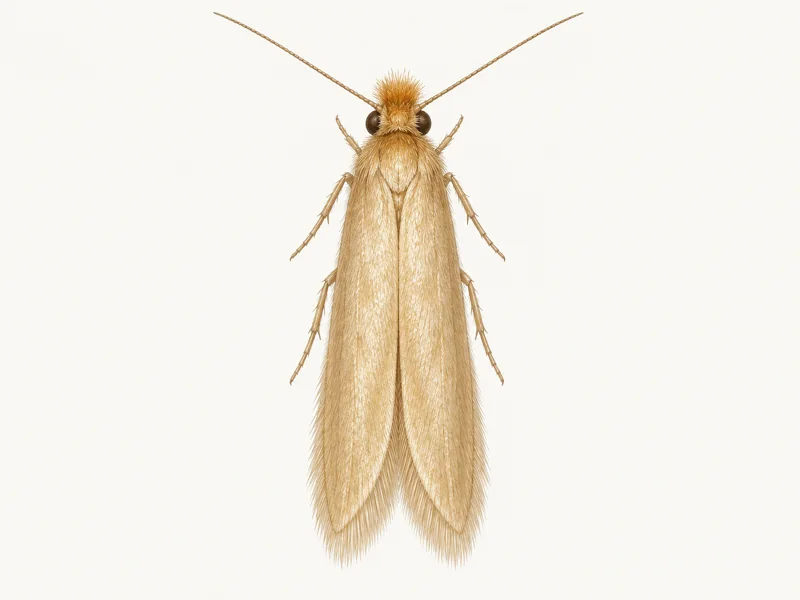
- Reddish-gold head tuft: Tiny spiky tuft of reddish-orange hairs crowns the head between fine antennae.
- Solid satin-gold wings: Uniformly shiny pale golden-buff narrow wings (6–8 mm)—zero spots or two-tone bands.
- Light-shy closet habit: Avoids bright lights; creeps into dark wool, cashmere, and felt storage folds.
Quick Answer: A tiny round beetle mottled in white, brown, and yellow scales is a varied carpet beetle (Anthrenus verbasci). A slender, uniformly shiny pale-gold moth with a reddish-gold head tuft is a webbing clothes moth (Tineola bisselliella). Both are nuisance pests, not dangerous ones, but their larvae can quietly ruin wool, silk, fur, and feathers.
In three seconds, check the shape. A hard, round, speckled dot that crawls is a carpet beetle. A narrow, golden insect that flutters or scurries away from light is a clothes moth.
Key Visual & Physical Differences
The difference between a carpet beetle and a clothes moth is easiest to see in adults, which look nothing alike. Size, body shape, and coloring settle most identifications without a magnifier.
Varied Carpet Beetle (Anthrenus verbasci)
- Size: 2-4 mm, about the size of a pinhead or sesame seed.
- Shape: Round to oval, convex, and hard-bodied like a miniature ladybug.
- Color: Mottled patchwork of white, brown, and yellow scales.
- Larvae: Fuzzy, carrot-shaped "woolly bears" with bristly tufts. They leave behind shed skins that look like tiny brown husks.
Webbing Clothes Moth (Tineola bisselliella)
- Size: 6-8 mm, noticeably longer than the beetle.
- Shape: Slender, with narrow wings edged in delicate fringe.
- Color: Uniform shiny pale gold, with a tuft of reddish-gold hairs on the head.
- Larvae: Creamy white caterpillars with dark heads that spin silky webbing or tubes as they feed.
For carpet beetle vs clothes moth identification from damage alone, look for webbing. Silk trails and frass-filled tunnels point to clothes moths. Scattered, irregular holes with shed larval skins nearby point to carpet beetles.
Behavior, Habitat & Danger Comparison
Both insects feed on keratin, the animal protein found in wool, fur, feathers, and silk. Only the larvae cause damage. The adults mainly mate and lay eggs.
Where They Live and Travel
- Carpet beetles: Adults fly well and are drawn to sunlight, so they often show up on windowsills. Larvae wander widely, hiding under baseboards, in rug edges, in lint, and in stored pet food or dried flowers.
- Clothes moths: Adults are weak fliers that avoid light. They stay in dark closets, under furniture, and in stored boxes of woolens, rarely straying far from food.
Health and Danger Level
Both species are rated as nuisance pests. Neither bites or stings, and neither spreads disease. Some people report itchy skin after contact with carpet beetle larval hairs; anyone with a persistent skin reaction should see a doctor rather than self-treat.
Which One Is Worse for Homeowners?
Clothes moths often cause more concentrated damage to one valuable item, like a wool sweater or heirloom rug. Carpet beetles tend to be harder to eliminate because their larvae roam and feed on a wider range of materials, including dust, lint, and pantry goods.
For most homes, carpet beetles are the more persistent problem. Clothes moths are the more destructive one in closets full of natural fibers. Either way, the same Integrated Pest Management (IPM) steps work for both.
Non-Chemical IPM Steps First
- Vacuum thoroughly: Focus on rug edges, baseboards, under furniture, and closet corners, then discard the bag outside.
- Launder or dry-clean: Wash infested fabrics in hot water or dry-clean them to kill eggs and larvae.
- Freeze small items: Bag delicate pieces and freeze them for at least a week.
- Store smart: Keep clean woolens in sealed plastic bins or zippered garment bags.
- Exclude adults: Repair window screens and remove old bird or wasp nests that can host carpet beetles.
- Monitor: Use pheromone traps for clothes moths and sticky traps near windows for carpet beetles.
If infestations continue, targeted insecticides labeled for fabric pests may help. Always follow the EPA product label exactly, and never spray directly on clothing unless the label allows it. A licensed pest professional can handle heavy or recurring cases.
Frequently Asked Questions
How can I tell if I have a carpet beetle or clothes moth problem?
Check the adults and the damage. Round, speckled beetles on windowsills and shed larval skins suggest carpet beetles. Golden moths in dark closets and silky webbing on fabric suggest clothes moths.
Do carpet beetles or clothes moths bite people?
No. Neither species bites or stings. Carpet beetle larval hairs may irritate sensitive skin, so a doctor should evaluate any lasting rash.
Can carpet beetles and clothes moths damage synthetic fabrics?
They rarely eat pure synthetics. However, they may chew through blends or synthetic fabric stained with food, sweat, or body oils while seeking protein.
Do mothballs work on both pests?
Mothballs only work in tightly sealed containers and release fumes that can be harmful to people and pets. Sealed storage, cleaning, and freezing are safer first steps, and any product used must follow its EPA label.