Flea vs Carpet Beetle: How to Tell Them Apart Fast
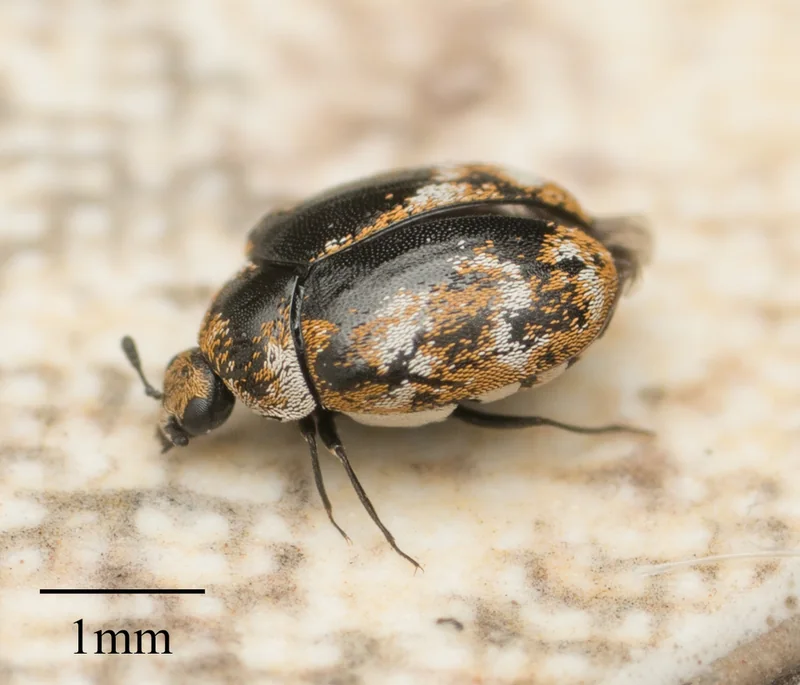
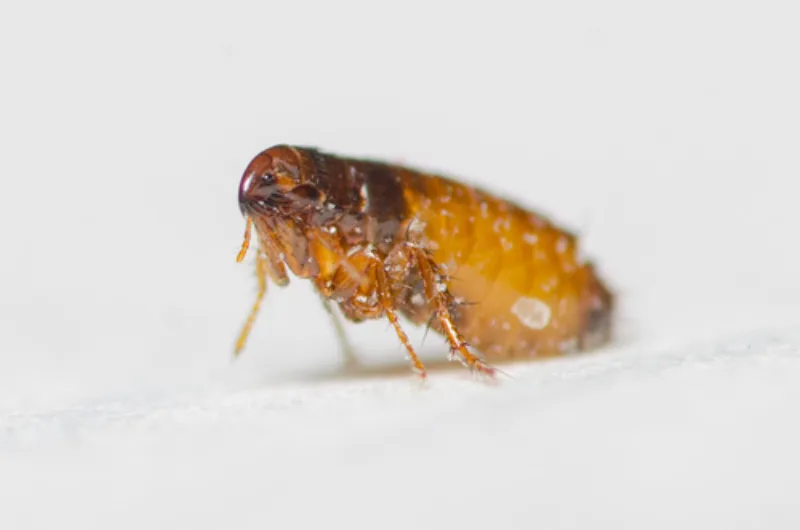
Quick ID Verdict: A carpet beetle is a tiny, round beetle (2-4 mm) mottled with white, brown, and yellow scales, while a flea is a wingless, dark reddish-brown insect (1-3 mm) flattened from side to side. If it jumps and looks like a thin brown sliver, it's a flea. If it crawls slowly and looks like a speckled dot, it's a carpet beetle.
Carpet Beetle
Flea
Side-by-Side Comparison Table
| Trait | Carpet Beetle | Flea |
|---|---|---|
| Scientific Group | Anthrenus verbasci | Siphonaptera |
| Category | Insect | Insect |
| Typical Size | 2–4 mm | 1–3 mm |
| Danger Level | Nuisance | Nuisance |
| Bites or Stings? | No | Yes |
| Peak US Months | March, April, May | June, July, August, September |
| Key ID Trait | Tiny round beetle mottled in white, brown, and yellow scales (varied carpet beetle) | Tiny, wingless, dark reddish-brown insect compressed side-to-side |
Carpet Beetle vs. Flea: True Size Comparison
Side-by-Side Anatomy Blueprint
Compare body segments, antennae, leg count, and key markings directly before treating or removing either species.
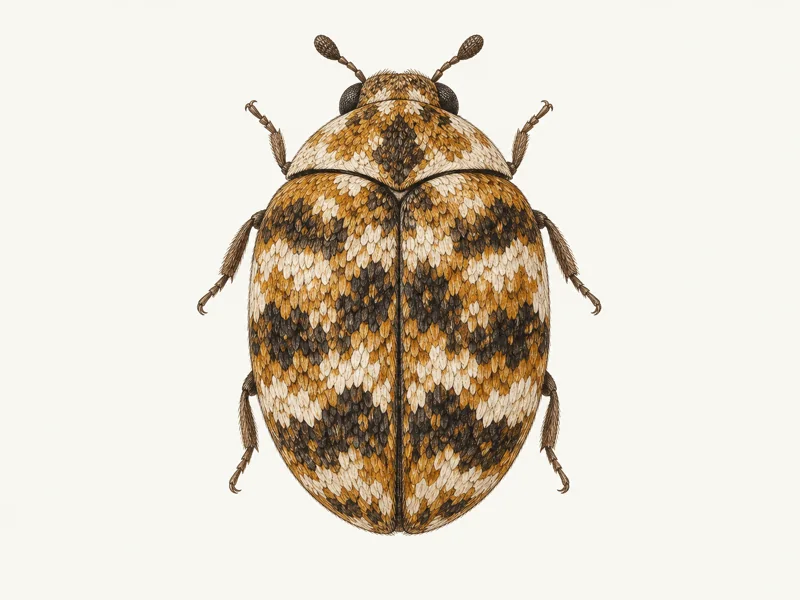
- Short clubbed antennae: Tiny tucked head and short clubbed feelers—completely different from bed bugs.
- Rounded oval dome: Plump ladybug-like 2–3.5 mm silhouette; adults fly to windowsills for pollen.
- Six short tucked legs: Delicate brownish legs pull tightly beneath the armored body when disturbed.
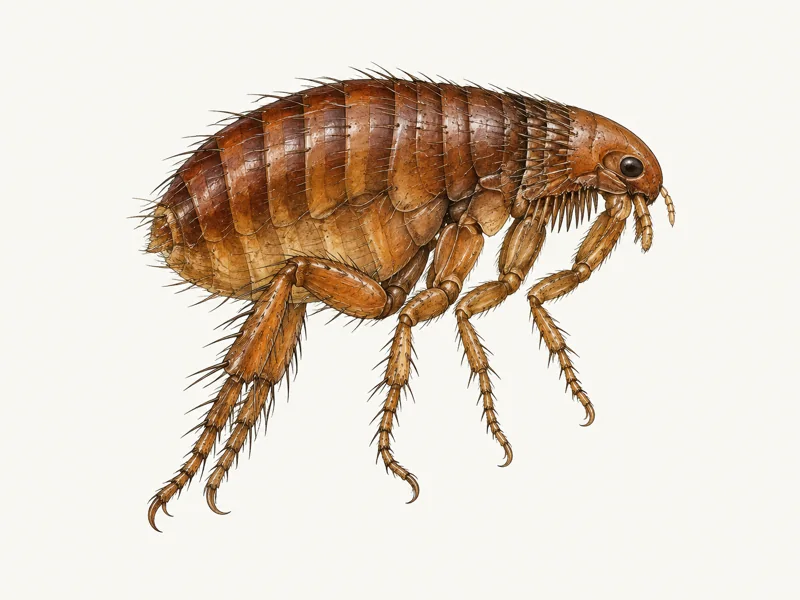
- Flattened armored plates: Laterally compressed wingless 1.5–3 mm glossy mahogany body glides effortlessly through fur.
- Head comb (ctenidia): Tiny eye, tucked antennae, and backward-pointing bristle comb anchor tightly in pet hair.
- Massive hind jumping legs: Powerfully enlarged muscular hind legs launch fleas up to 150× their body length.
Quick Answer: A carpet beetle is a tiny, round beetle (2-4 mm) mottled with white, brown, and yellow scales, while a flea is a wingless, dark reddish-brown insect (1-3 mm) flattened from side to side. If it jumps and looks like a thin brown sliver, it's a flea. If it crawls slowly and looks like a speckled dot, it's a carpet beetle.
Quick ID Verdict: Carpet Beetle or Flea?
Look at the shape and the movement. Fleas are narrow, glossy, and launch themselves several inches in a split second, while carpet beetles are oval to round, patterned, and walk or fly short distances.
That three-second check settles most cases. The difference between carpet beetle and flea becomes even clearer once the insect is examined up close with a magnifying glass or a phone camera on zoom.
Key Visual & Physical Differences
Both pests are small enough to be confused at a glance, but their bodies are built for completely different lifestyles. Fleas are designed to slip between hairs on a host, while carpet beetles are built to feed on dry organic material.
Carpet Beetles (Anthrenus verbasci)
- Size: 2-4 mm long
- Shape: Tiny, round to oval beetle with a hard shell
- Color: Mottled white, brown, and yellow scales on the varied carpet beetle
- Wings: Present under hard wing covers; adults can fly
- Movement: Slow crawling; does not jump
Fleas (Order Siphonaptera)
- Size: 1-3 mm long
- Shape: Compressed side-to-side, so they look thin from above
- Color: Dark reddish-brown and slightly shiny
- Wings: None
- Movement: Powerful jumping legs; moves quickly through fur and fabric
For carpet beetle vs flea identification, the larvae also help. Carpet beetle larvae are fuzzy, bristly, and often found with shed skins, while flea larvae are pale, wormlike, and hidden deep in pet bedding or carpet fibers.
Behavior, Habitat & Danger Comparison
Where Each Pest Lives
Carpet beetle adults often show up on windowsills because they are drawn to light, and they feed on pollen outdoors. Their larvae do the damage indoors, feeding on wool, silk, feathers, pet hair, lint, and stored dry goods in closets, under furniture, and along baseboards.
Fleas live on or near animal hosts. They concentrate where pets sleep and rest, including bedding, rugs, couches, and shaded outdoor spots where wildlife or pets spend time.
Feeding Habits
- Carpet beetles: Larvae chew natural fibers and debris; they do not feed on blood.
- Fleas: Adults feed on the blood of pets and sometimes people.
Danger Level
Both are classified as nuisance pests. Flea bites typically cause itchy red bumps, often around the ankles, and some pets react strongly to flea saliva. Carpet beetle larvae do not bite, though their tiny hairs may irritate sensitive skin in some people. Anyone with a persistent rash or concerning reaction should see a doctor rather than self-diagnose, and questions about pesticide exposure can go to US Poison Control at 1-800-222-1222.
Which One Is Worse for Homeowners?
It depends on what's at stake. Fleas are usually the more urgent problem because they bite, multiply fast, and affect pets and people directly. Carpet beetles are slower, but they can quietly ruin wool rugs, sweaters, upholstery, and heirloom textiles over months.
Non-Chemical Control First
- Vacuum thoroughly: Target carpets, furniture seams, baseboards, and pet areas, then empty the vacuum outdoors.
- Wash in hot water: Launder pet bedding, throws, and affected fabrics, and dry on high heat.
- Treat pets through a vet: Fleas cannot be controlled without addressing the animal host.
- Store textiles smartly: Keep wool and silk clean and sealed in airtight containers.
- Exclude entry: Repair window screens and seal gaps where adult carpet beetles enter.
- Reduce food sources: Clear lint, pet hair, dead insects, and old bird or rodent nests.
If problems persist, targeted insecticides or a licensed pest professional may help. Always read and follow the EPA product label exactly, especially in homes with children and pets.
Frequently Asked Questions
Can carpet beetles jump like fleas?
No. Carpet beetles crawl slowly and adults can fly, but they cannot jump. A tiny brown insect that leaps is almost certainly a flea.
Do carpet beetles bite people?
Carpet beetles do not bite. Their larvae have bristly hairs that may cause skin irritation in some people, which is sometimes mistaken for bites.
Why do I find carpet beetles on my windowsills?
Adult carpet beetles are attracted to light and try to get outside to feed on pollen. Finding them on sills often means larvae are developing somewhere indoors.
Can I have fleas without pets?
Yes, though it's less common. Fleas can arrive with wildlife, rodents, or a previous owner's pets, and they may persist in carpets until a host returns.