Fungus Gnats in Arizona: Identification, Season, and Prevention
Quick Answer: Fungus gnats (family Sciaridae) are common in Arizona, with 51 verified GBIF sightings and a peak in May through August. They are harmless nuisance flies that breed in damp potting soil and other moist, decaying organic matter. Controlling moisture is the most effective way to stop them.
When Fungus Gnats Are Most Active in Arizona
Now (November): Lower Outdoor ActivityFungus Gnats Range in Arizona vs. Neighboring States
How Arizona Compares to Neighboring States
Note: Wildlife does not follow state or county lines. GBIF totals reflect verified citizen and museum records, so low counts in a neighboring county do not guarantee absence.
How to Identify Fungus Gnats
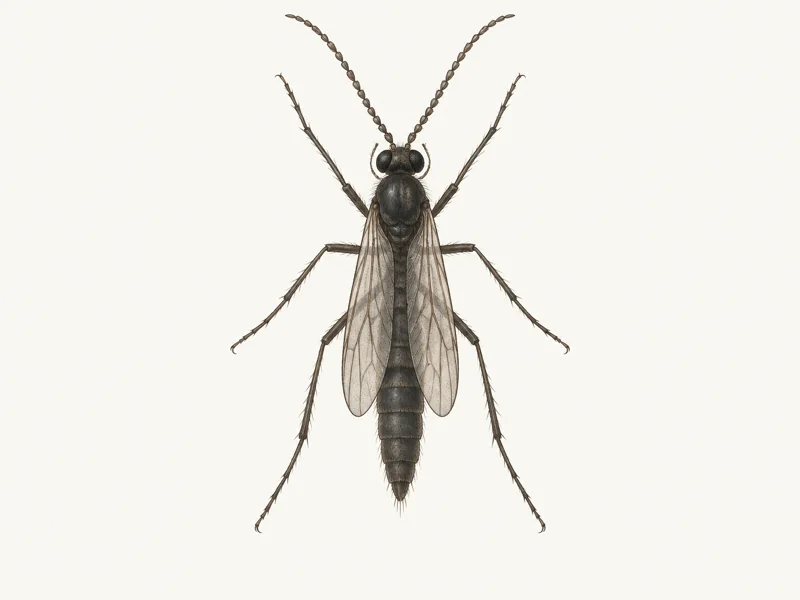
Annotated Anatomy Key (Fungus Gnat)
- Long beaded antennae: Curved segmented antennae with NO needle-like biting mosquito proboscis.
- Smoky Y-vein wings: Narrow tinted translucent wings showing a distinct Y-shaped fork vein near tip.
- Six long spindly legs: Delicate mosquito-like legs crawl rapidly across damp houseplant potting soil.
- Slender dark abdomen: Tapered charcoal-gray 2–4 mm body—harmless non-biting houseplant nuisance.
Fungus Gnats Field Checklist
- Delicate dark gray-black mosquito-like miniature fly with long slender legs and beaded antennae
- Weak erratic flier often seen running across potting soil or gathering at sunny windows
- Translucent white larvae with shiny black heads live in overwatered potting mix
- Harmless to humans; heavy larval numbers can nip fine houseplant roots
Side-by-Side Look-Alike Comparisons
Fungus Gnats Size at True Relative Scale
Where Fungus Gnats Live in Arizona
People often ask, are there fungus gnats in Arizona? Yes. GBIF records show the family Sciaridae statewide, though county-level records are limited. Arizona spans arid desert lowlands in the south, monsoon humidity in summer, and cooler highlands in the north (USDA zones 5a to 10a), so gnats turn up in very different settings.
In the dry desert, outdoor populations are patchy because the soil dries out quickly. Indoors and in irrigated spaces, conditions are ideal year-round. Typical breeding sites include:
- Overwatered houseplants and potting mix
- Greenhouses, nurseries, and seedling trays
- Irrigated planters, shaded garden beds, and mulch
- Areas near leaking pipes, drip lines, or evaporative coolers
When Fungus Gnats Are Most Active in Arizona
Arizona fungus gnat season peaks from May through August, based on GBIF occurrence records. Monsoon moisture, frequent irrigation, and warm temperatures speed up their life cycle, which can finish in roughly three to four weeks under warm conditions.
Indoors, activity can continue all year if soil stays wet. Heavy watering of houseplants in winter can still produce small flare-ups, especially in cooler highland homes where soil dries slowly.
Arizona Fungus Gnat Identification
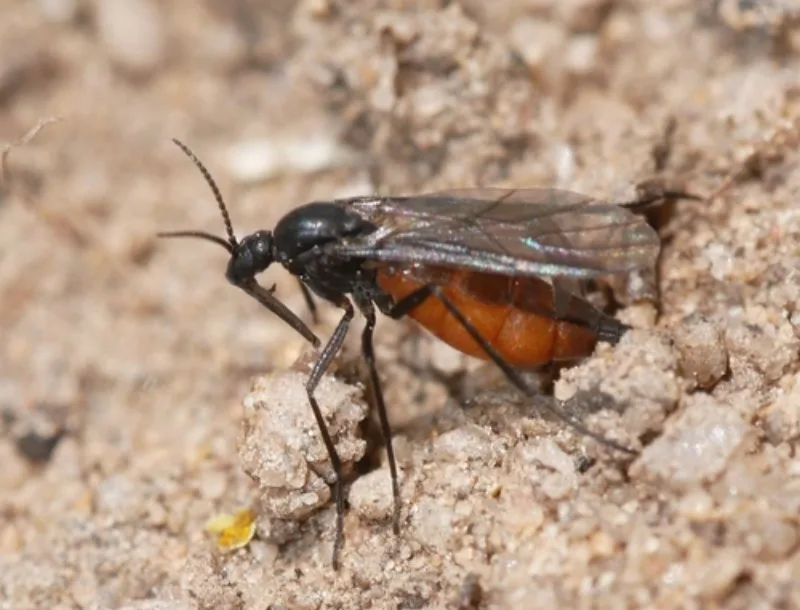
Adults are slender, dark gray to black flies about 1/8 inch long, with long legs, long antennae, and a weak, wobbly flight. They tend to rest on soil, windows, or walls near plants and are drawn to light.
The larvae live in the soil. They are tiny, translucent, and wormlike with shiny black heads. Large larval numbers can nibble roots and harm seedlings, but adults do not bite and pose no health danger.
Look-Alikes Frequently Mistaken for Fungus Gnats
Several small flies in Arizona resemble fungus gnats. Where they hover and breed is the best clue.
- Fruit flies: Tan to orange with red eyes and a rounder body. They gather around ripe produce, trash, and recycling, not houseplants.
- Drain flies (moth flies): Fuzzy, moth-like wings held roofwise over the body. They breed in sink and floor drains and appear near bathrooms and kitchens.
- Mosquitoes: Larger, with a long mouthpart and a biting habit. Fungus gnats never bite.
A simple test: set a slice of raw potato on the soil surface for a day or two. Larvae will often gather underneath, confirming a soil infestation.
How to Keep Fungus Gnats Out of Your Arizona Home
Learning how to prevent fungus gnats in Arizona starts with sanitation and moisture control. Start with these non-chemical steps before considering any product.
- Let the top 1 to 2 inches of potting soil dry between waterings.
- Empty saucers and drip trays so water does not pool.
- Use well-draining potting mix and pots with drainage holes.
- Inspect new plants and soil bags before bringing them indoors.
- Fix leaks and reduce standing moisture near evaporative coolers and drip irrigation.
- Remove dead leaves, rotting plant matter, and excess mulch near the foundation.
- Place yellow sticky traps at soil level to catch adults and track the problem.
- Add a layer of dry sand or fine gravel on top of the soil to discourage egg laying.
If gnats persist, products containing Bacillus thuringiensis israelensis (Bti) are commonly used against larvae in soil. Always follow the EPA-approved label for use, rates, and safety, and keep products away from pets and children.
When to Call a Licensed Arizona Pest Professional
- Gnats keep returning after several weeks of drier soil and trap use
- You cannot find the source, or flies appear far from any plants
- A greenhouse, nursery, or commercial growing space has a widespread infestation
- Gnats seem to come from walls, crawl spaces, or plumbing problems
A licensed professional can confirm the species, trace hidden moisture, and recommend label-compliant treatment.
IPM Prevention Checklist for Arizona Homes
- Allow the top 1–2 inches of houseplant soil to dry completely between waterings and empty saucers
- Use well-draining potting mix
 EXCLUSION BLUEPRINT
Inspect eaves, screens, door sweeps, foundation cracks, and utility penetrations around Arizona homes before peak season.
Fungus Gnats in Arizona: Frequently Asked Questions
Are fungus gnats dangerous?
No. They are a nuisance only and do not bite or spread disease. Larvae can damage roots of seedlings and stressed plants.
Why do I have fungus gnats in dry Arizona?
Indoor watering creates a humid microclimate even in the desert. Overwatered pots, irrigated beds, and leaks give larvae the damp organic matter they need.
How long do fungus gnats last?
The life cycle takes about three to four weeks in warm conditions. Without fixing moisture, new generations keep emerging.
Do fungus gnats come from outside?
They can enter through doors and screens, especially during summer, but most indoor outbreaks start in infested potting soil or new plants.
Sources & Verification
Data refreshed · Editorial & GBIF Methodology