Fungus Gnat vs Mosquito: How to Tell Them Apart Fast
Quick ID Verdict: Fungus gnats (family Sciaridae) are tiny 2-4 mm dark gray-black flies with beaded antennae that hover around houseplants and do not bite. Mosquitoes (family Culicidae) are larger at 3-10 mm, have scaly wings and a long biting proboscis, and are medically significant. If the insect is weakly circling a potted plant, it is almost certainly a fungus gnat.
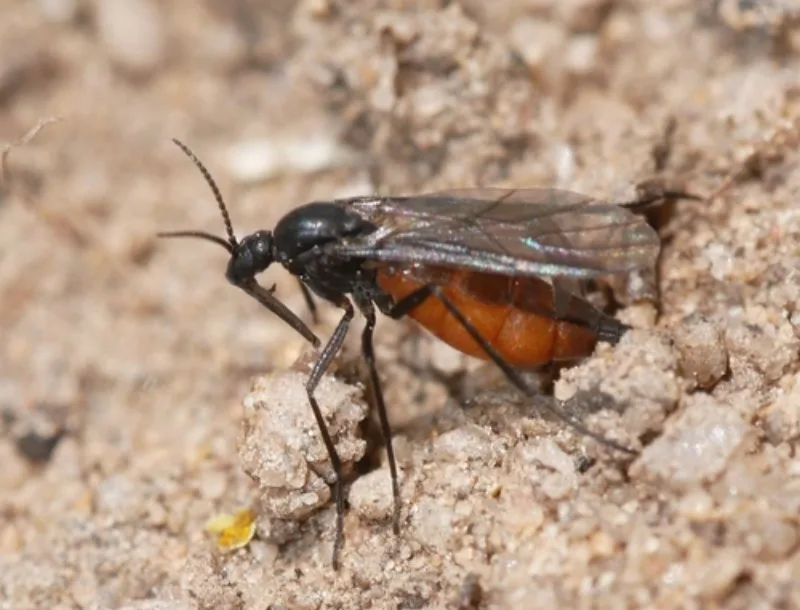
Fungus Gnat
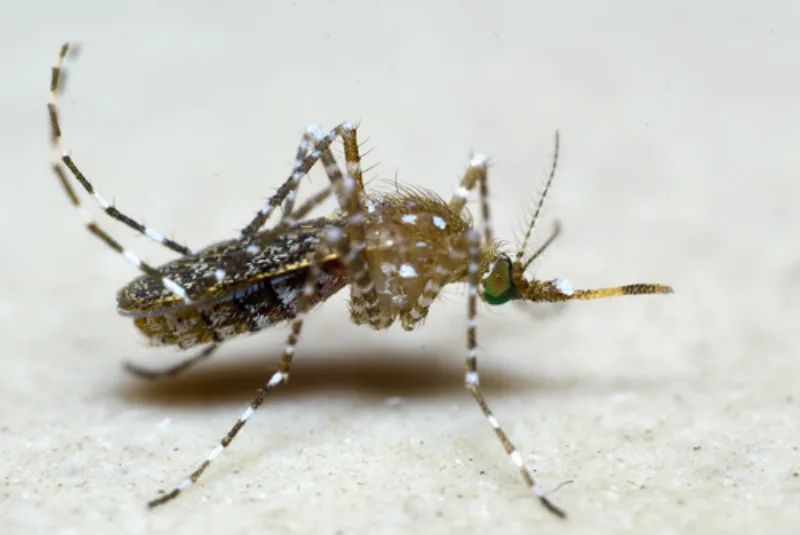
Mosquito
Side-by-Side Comparison Table
| Trait | Fungus Gnat | Mosquito |
|---|---|---|
| Scientific Group | Sciaridae | Culicidae |
| Category | Insect | Insect |
| Typical Size | 2–4 mm | 3–10 mm |
| Danger Level | Nuisance | Medically Significant |
| Bites or Stings? | No | Yes |
| Peak US Months | May, June, July, August | June, July, August, September |
| Key ID Trait | Delicate dark gray-black mosquito-like miniature fly with long slender legs and beaded antennae | Slender, fragile fly with long spindly legs and a single pair of scaly wings |
Fungus Gnat vs. Mosquito: True Size Comparison
Side-by-Side Anatomy Blueprint
Compare body segments, antennae, leg count, and key markings directly before treating or removing either species.
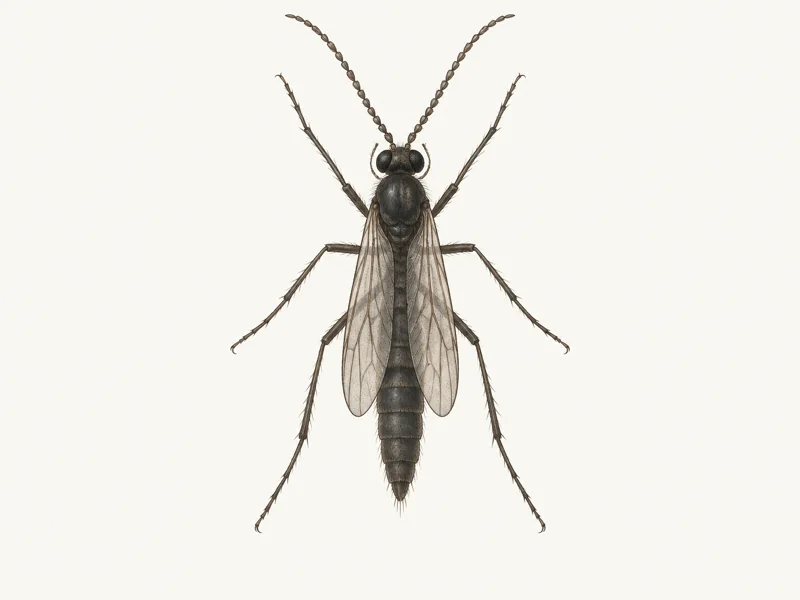
- Long beaded antennae: Curved segmented antennae with NO needle-like biting mosquito proboscis.
- Smoky Y-vein wings: Narrow tinted translucent wings showing a distinct Y-shaped fork vein near tip.
- Six long spindly legs: Delicate mosquito-like legs crawl rapidly across damp houseplant potting soil.
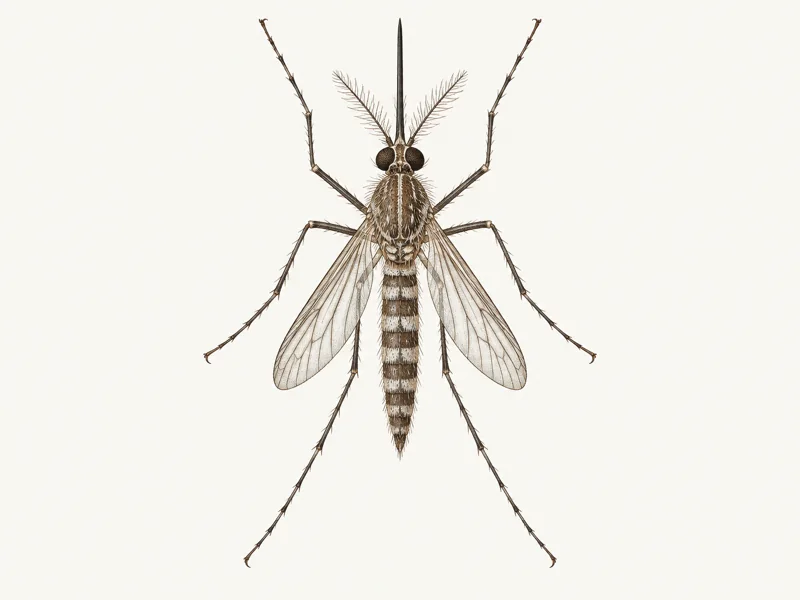
- Needle proboscis: Long straight piercing-sucking mouthpart projecting straight ahead (only females bite).
- Narrow scaled wings: Single pair of delicate translucent veined wings edged with microscopic fringe scales.
- Six long spindly legs: Three pairs of delicate trailing legs (marked with crisp white bands on Aedes tiger species).
Quick Answer: Fungus gnats (family Sciaridae) are tiny 2-4 mm dark gray-black flies with beaded antennae that hover around houseplants and do not bite. Mosquitoes (family Culicidae) are larger at 3-10 mm, have scaly wings and a long biting proboscis, and are medically significant. If the insect is weakly circling a potted plant, it is almost certainly a fungus gnat. If it lands on skin to feed, it is a mosquito.
Key Visual & Physical Differences
At a glance, both insects look like delicate flies with long legs, which explains the common confusion. A closer look reveals clear differences in size, wings, antennae, and mouthparts. These traits make fungus gnat vs mosquito identification straightforward, even without a magnifier.
Fungus Gnats (Sciaridae)
- Size: 2-4 mm, roughly the size of a sesame seed or smaller.
- Color: Delicate dark gray to black.
- Body shape: A miniature, mosquito-like fly with long slender legs.
- Antennae: Beaded, segmented antennae that often look longer than the head.
- Mouthparts: No piercing proboscis, so they cannot bite people.
Mosquitoes (Culicidae)
- Size: 3-10 mm, noticeably larger in most cases.
- Body shape: A slender, fragile fly with long spindly legs.
- Wings: A single pair of wings covered in tiny scales along the veins and edges.
- Mouthparts: A long, needle-like proboscis extending forward from the head.
- Posture: Many species rest with the body angled and hind legs raised.
The fastest field mark is the proboscis. A mosquito's forward-pointing "beak" is visible without magnification, while a fungus gnat's head looks blunt and rounded.
Behavior, Habitat & Danger Comparison
The difference between fungus gnat and mosquito behavior is often more telling than appearance. Where the insect shows up, how it flies, and whether it seeks out people all point to its identity.
Fungus Gnat Behavior and Habitat
Fungus gnats breed in damp, organic-rich soil, especially in overwatered houseplants, seed trays, and greenhouse pots. Adults are weak fliers that run across soil surfaces or flutter near windows and plant saucers. Their larvae feed on fungi and decaying organic matter in the soil, and heavy populations can damage tender roots of seedlings.
Mosquito Behavior and Habitat
Mosquitoes lay eggs in or near standing water, such as clogged gutters, birdbaths, old tires, and plant saucers left outdoors. Their larvae, called wrigglers, live in the water before emerging as adults. Female mosquitoes seek a blood meal to produce eggs, which leads to the familiar whine and itchy bites around dusk, dawn, or in shaded areas.
Danger Level
- Fungus gnats: Rated a nuisance. They do not bite, sting, or transmit disease to people.
- Mosquitoes: Rated medically significant. Some species can transmit diseases such as West Nile virus to humans and heartworm to pets.
Anyone who develops fever, severe headache, unusual swelling, or other concerning symptoms after mosquito bites should contact a doctor. For questions about an exposure or a reaction, call US Poison Control at 1-800-222-1222.
Which One Is Worse for Homeowners?
When deciding whether a pest is a fungus gnat or mosquito, the stakes differ sharply. Mosquitoes are the more serious problem because of their bites and disease potential. Fungus gnats are mostly an indoor annoyance and a threat to young plants.
Controlling Fungus Gnats (IPM First)
- Let the top 1-2 inches of potting soil dry between waterings.
- Empty drainage saucers and avoid overwatering.
- Use yellow sticky cards near pots to trap and monitor adults.
- Repot heavily infested plants in fresh, sterile potting mix.
- Consider biological products containing Bacillus thuringiensis israelensis (Bti) for soil drenches.
Controlling Mosquitoes (IPM First)
- Dump, scrub, or cover any container holding water at least weekly.
- Clean gutters and fix leaky outdoor faucets.
- Repair window and door screens to keep adults outside.
- Use Bti mosquito dunks in ponds, rain barrels, or water features that cannot be drained.
- Wear EPA-registered repellents and long sleeves during peak biting times.
If chemical treatments become necessary for either pest, always read and follow the EPA product label exactly. Large or persistent mosquito problems may warrant help from a licensed pest professional or a local mosquito control district.
Frequently Asked Questions
Do fungus gnats bite people?
No. Fungus gnats lack biting mouthparts and are considered a nuisance only. Bites felt indoors usually come from mosquitoes or other insects.
Why are there tiny mosquito-like bugs around my houseplants?
Those are most likely fungus gnats breeding in moist potting soil. Allowing soil to dry between waterings and using sticky traps usually brings them under control.
Can mosquitoes breed in houseplant soil?
Mosquitoes need standing water, not damp soil. However, water left sitting in plant saucers or vases can support mosquito larvae, so empty them regularly.
What is the quickest way to tell a fungus gnat from a mosquito?
Look at the head and size. Mosquitoes are usually larger, up to 10 mm, with a long forward-pointing proboscis, while fungus gnats are 2-4 mm with a blunt head and beaded antennae.