Fruit Fly vs Fungus Gnat: How to Tell Which Tiny Pest Is Invading Your Home
Quick ID Verdict: A cloud of tiny flies drifting over the kitchen counter looks like one problem, but it's often one of two very different pests. Telling a fruit fly or fungus gnat apart matters, because each breeds in a different place and needs a different fix.
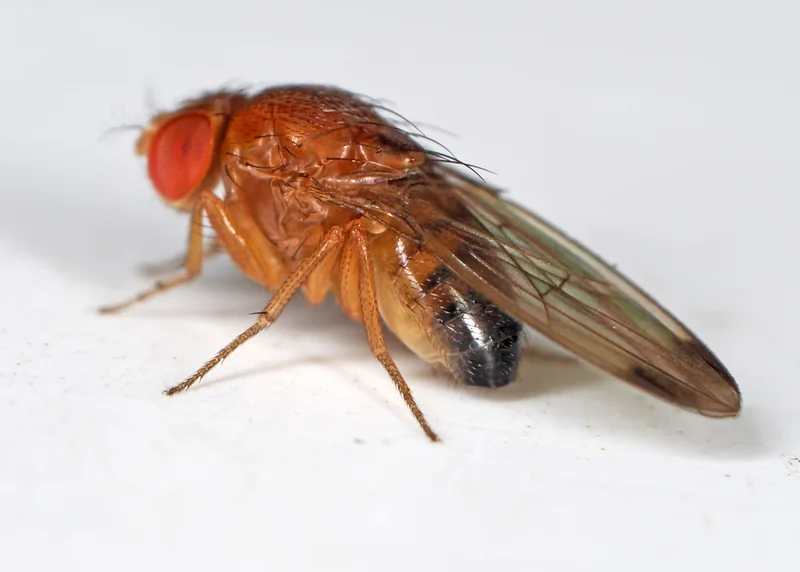
Fruit Fly
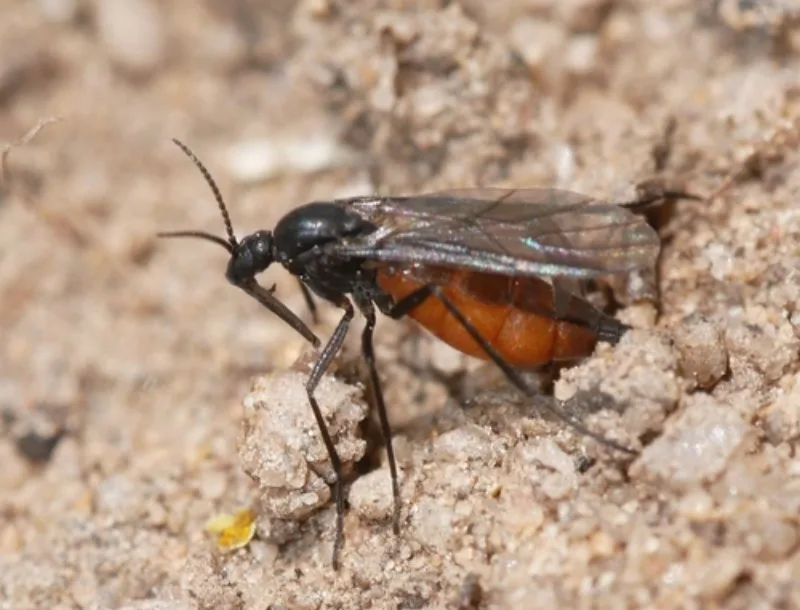
Fungus Gnat
Side-by-Side Comparison Table
| Trait | Fruit Fly | Fungus Gnat |
|---|---|---|
| Scientific Group | Drosophila melanogaster | Sciaridae |
| Category | Insect | Insect |
| Typical Size | 2–4 mm | 2–4 mm |
| Danger Level | Nuisance | Nuisance |
| Bites or Stings? | No | No |
| Peak US Months | April, June, July, August | May, June, July, August |
| Key ID Trait | Tiny tan-to-brown hovering fly with bright red eyes (in common Drosophila species) | Delicate dark gray-black mosquito-like miniature fly with long slender legs and beaded antennae |
Fruit Fly vs. Fungus Gnat: True Size Comparison
Side-by-Side Anatomy Blueprint
Compare body segments, antennae, leg count, and key markings directly before treating or removing either species.
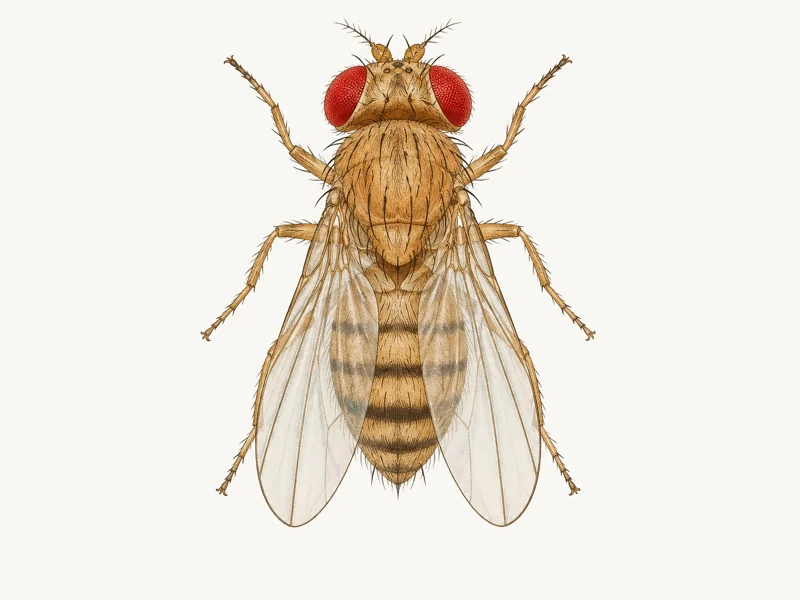
- Bright crimson-red eyes: Large unmistakable ruby-red compound eyes distinguish fruit flies from gnats.
- Arched honey-tan thorax: Compact plump tan-brown body (2–4 mm) drawn to ripe fruit and fermenting spills.
- Six slender tan legs: Short pale bristled legs—far shorter and sturdier than spindly fungus gnats.
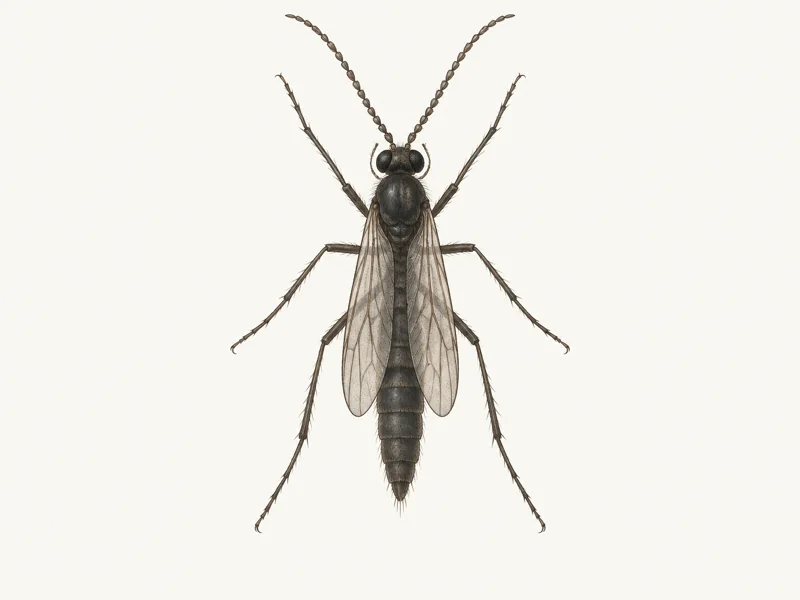
- Long beaded antennae: Curved segmented antennae with NO needle-like biting mosquito proboscis.
- Smoky Y-vein wings: Narrow tinted translucent wings showing a distinct Y-shaped fork vein near tip.
- Six long spindly legs: Delicate mosquito-like legs crawl rapidly across damp houseplant potting soil.
The 3-second ID verdict: If it's tan with bright red eyes and hovers near fruit or the trash, it's a fruit fly. If it's dark gray-black, leggy, looks like a miniature mosquito, and flutters around houseplants, it's a fungus gnat.
Fruit Fly or Fungus Gnat? Quick Identification Guide
Both insects measure about 2–4 mm, so size won't settle the question. The real difference between fruit fly and fungus gnat comes down to color, body shape, and where they hang out.
FeatureFruit Fly (Drosophila melanogaster)Fungus Gnat (Sciaridae)Size2–4 mm2–4 mmColorTan to brownDark gray to blackEyesBright red (common species)Dark, not prominentBuildCompact, roundedSlender, mosquito-likeDanger levelNuisanceNuisance
Body Shape, Color, and Eye Differences
Fruit flies look like stubby little houseflies. They have a rounded tan-to-brown body and, in common Drosophila species, strikingly red eyes that are visible with a phone camera zoom.
Fungus gnats are built more delicately. Look for:
- A dark gray-black body
- Long, slender, dangling legs
- Beaded antennae that are longer than a fruit fly's
- Clear or smoky wings with a mosquito-like silhouette
Flight Patterns and Where They Gather
Fruit flies are steady hoverers. They circle ripe bananas, recycling bins, and wine glasses, and they're fairly agile when someone tries to swat them.
Fungus gnats are weak, clumsy flyers. They tend to run across soil surfaces, flutter short distances from potted plants, and drift toward windows. For quick fruit fly vs fungus gnat identification, note the location: food points to fruit flies, while plant pots point to gnats.
Breeding Sites, Life Cycles, and Seasonal Activity
Fruit flies breed in fermenting organic matter. Overripe produce, sticky drain buildup, damp mop heads, and residue in recycling bins all work. A female can lay several hundred eggs, and in a warm kitchen the cycle from egg to adult takes roughly 8–10 days.
Fungus gnats lay eggs in moist, organic-rich soil. Their tiny, translucent larvae with shiny black heads feed on fungi and decaying plant material, and the full cycle runs about three to four weeks.
Both pests occur across the continental US. Fruit flies peak in late summer and fall when produce is abundant, while fungus gnats often surge indoors in fall and winter, when houseplants come inside and get overwatered.
Are They Harmful to Your Home, Plants, or Health?
Both species are classified as nuisance pests. Neither bites, stings, or damages a home's structure.
That said, each carries a minor risk worth knowing:
- Fruit flies land on garbage and drains, then on food, so they can move bacteria onto kitchen surfaces.
- Fungus gnats are harmless to people, but heavy larval populations can chew on fine roots, stunting seedlings and young plants.
So which one is worse for homeowners? Fruit flies are usually the bigger day-to-day annoyance because they multiply fast and gather around food. Fungus gnats are the bigger concern for anyone raising seedlings or a large houseplant collection.
Safe IPM Strategies to Get Rid of Each Pest
Integrated Pest Management starts with removing the breeding source. Traps and products only help once the source is gone.
For fruit flies:
- Toss or refrigerate overripe produce.
- Scrub drains with a brush and boiling water, then check the garbage disposal.
- Set a trap: a small dish of apple cider vinegar with a drop of dish soap.
- Rinse recyclables and empty bins often.
For fungus gnats:
- Let the top 1–2 inches of soil dry out between waterings.
- Place yellow sticky cards near pots to catch adults.
- Push a raw potato slice into the soil for a few days. Larvae under it confirm an infestation.
- If needed, use a soil drench containing Bacillus thuringiensis israelensis (BTi).
When using any insecticide or biological product, always follow the EPA-registered label exactly. The label is the law.
Prevention Tips to Keep Both Pests From Returning
A few steady habits keep both flies from coming back:
- Wipe up spills and keep counters dry.
- Store ripe fruit in the refrigerator during warm months.
- Clean drains monthly.
- Water houseplants from the bottom, and empty saucers after 30 minutes.
- Top-dress potting soil with a thin layer of sand to discourage egg-laying.
- Inspect new plants and bagged potting mix before bringing them indoors.
- Repair window screens and seal gaps around doors.
Moisture control and sanitation do most of the work. When the breeding spots disappear, so do the flies.
Frequently Asked Questions
What's the fastest way to identify a fruit fly vs fungus gnat?
Look at color and location: fruit flies are tan with bright red eyes and hover near fruit or trash. Fungus gnats are dark gray-black, leggy, and flutter around houseplants or soil. Both are 2–4 mm, but their appearance and behavior differ significantly.
Where do fruit flies and fungus gnats breed?
Fruit flies breed in fermenting organic matter like overripe produce, drains, and recycling bins. Fungus gnats lay eggs in moist, organic-rich soil around houseplants. Knowing the breeding site helps determine which pest you're dealing with and how to eliminate it.
How quickly do fruit flies multiply indoors?
Fruit flies have a rapid life cycle: from egg to adult takes roughly 8–10 days in a warm kitchen. A single female can lay several hundred eggs, allowing populations to explode quickly if the breeding source isn't removed.
Can fungus gnats damage houseplants?
Yes, though they're harmless to people. Heavy fungus gnat larval populations can feed on fine roots, stunting seedlings and young plants. Fruit flies are more of a food-safety nuisance, while fungus gnats threaten plant health.
What's the best way to eliminate fruit flies?
Remove breeding sources first: toss overripe produce, scrub drains with boiling water, and empty trash bins. Then set a trap using apple cider vinegar with a drop of dish soap. Traps only work after sources are eliminated, not as a standalone solution.
How do you get rid of fungus gnats in houseplants?
Let soil dry out between waterings, use yellow sticky cards to catch adults, and place raw potato slices in soil to confirm infestation. For severe cases, use a Bacillus thuringiensis israelensis (BTi) soil drench following EPA label instructions exactly.