Oriental Cockroaches in Illinois: Identification, Season, and Prevention
Quick Answer: Yes, oriental cockroaches (Blatta orientalis) are common in Illinois, with 219 verified GBIF sightings statewide. They are a nuisance pest rather than a medical threat, and they favor damp, cool, dark spaces. Moisture control, sealing entry points, and sanitation are the best first steps.
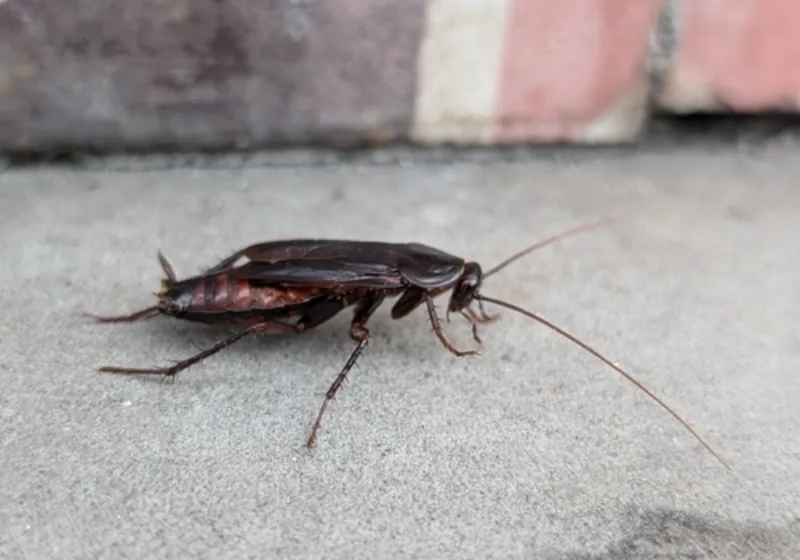
When Oriental Cockroaches Are Most Active in Illinois
Now (November): Lower Outdoor ActivityVerified Illinois Counties, Species & US Range
Counties with Verified Observations
- Cook
- Coles
- Saint Clair
- Champaign
- Grundy
- Kankakee
- Dupage
- Lake
- Crawford
- Kane
Species Recorded in Illinois
| Species | Scientific Name | GBIF Records |
|---|---|---|
| Common Cockroach | Blatta orientalis | 219 |
How Illinois Compares to Neighboring States
Note: Wildlife does not follow state or county lines. GBIF totals reflect verified citizen and museum records, so low counts in a neighboring county do not guarantee absence.
How to Identify Oriental Cockroaches
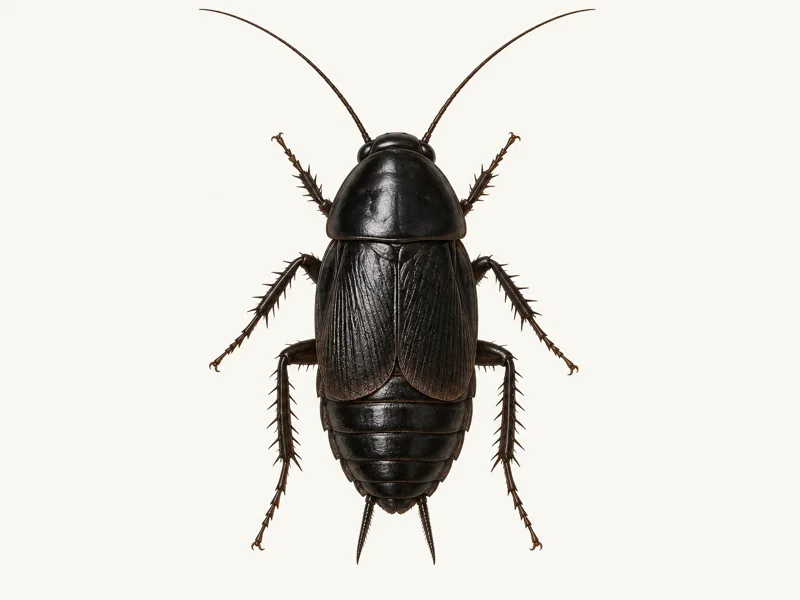
Annotated Anatomy Key (Oriental Cockroach)
- Long thin antennae: Delicate filiform antennae detecting damp basement drafts and drain moisture.
- Solid jet-black shield: Smooth, glossy black pronotum with zero pale halos or yellow stripes.
- Short truncated wings: Stubby leathery wing covers stop short (males ~2/3 length; females tiny pads).
- Glossy dark segments: Heavy shiny black oval abdomen; sluggish ground runner that cannot fly.
Oriental Cockroaches Field Checklist
- Glossy jet-black to dark mahogany broad-bodied cockroach
- Cannot fly; females have tiny wing pads and males have short wings covering 75% of the abdomen
- Sluggish compared to German or American roaches and prefers cooler damp spaces
- Emits a noticeable musty odor in heavy populations
Side-by-Side Look-Alike Comparisons
Oriental Cockroaches Size at True Relative Scale
Quick Answer: Yes, oriental cockroaches (Blatta orientalis) are common in Illinois, with 219 verified GBIF sightings statewide. They are a nuisance pest rather than a medical threat, and they favor damp, cool, dark spaces. Moisture control, sealing entry points, and sanitation are the best first steps.
Where Oriental Cockroaches Live in Illinois
Are there oriental cockroaches in Illinois? GBIF occurrence records say yes, and the sightings are spread widely. The top counties are Cook, Coles, Saint Clair, Champaign, and Grundy, which covers both the Chicago area and central and southern Illinois.
The state has a humid continental climate with hot, humid summers and cold, windy winters (USDA zones 5a to 7a). Those summers suit this species well, and the cold winters push it toward sheltered, damp spots near buildings.
Typical hiding places include:
- Basements, crawl spaces, and floor drains
- Under sinks and around leaking pipes
- Mulch beds, leaf litter, and woodpiles near the foundation
- Water meter boxes, window wells, and garbage areas
- Laundry rooms and other cool, damp ground-level rooms
When Oriental Cockroaches Are Most Active in Illinois
The Illinois oriental cockroach season runs warm to hot. GBIF records show peaks in May, July, August, and September, when outdoor populations are at their highest and insects wander toward buildings.
Hot, dry spells can push them indoors in search of water. Heavy rains can also flood them out of sewers, drains, and mulch. Indoors, they may be seen year-round in damp basements and other protected areas.
Quick Identification Guide
For Illinois oriental cockroach identification, start with color and body shape. Adults are about 1 to 1.25 inches long, dark brown to nearly black, and glossy. Males have short wings that leave the abdomen partly uncovered. Females have only tiny wing stubs.
- They move slowly and tend to stay low to the ground.
- They cannot climb smooth vertical surfaces like glass or glazed porcelain well, so they are often trapped in sinks and tubs.
- They give off a musty odor in larger infestations.
- Egg cases (oothecae) are dark, purse-shaped, and about 3/8 inch long.
Look-Alikes Frequently Mistaken for Oriental Cockroaches
Several insects in Illinois resemble oriental cockroaches, and "water bug" is a common local nickname for them. Telling them apart helps you choose the right response.
- American cockroaches: Larger, reddish-brown, with a pale yellowish band behind the head. Adults have fully developed wings that cover the body and can fly short distances.
- Water bugs: The name is used loosely for oriental cockroaches themselves. It can also refer to true aquatic insects found in ponds and streams, which have different body shapes and are not household pests.
- Other cockroaches: Smaller species are usually lighter in color and often have two dark stripes behind the head. Oriental cockroaches are uniformly dark and glossy.
If you are unsure, trap one in a jar and compare it with photos from a university extension service, or ask a licensed professional to confirm it.
How to Keep Oriental Cockroaches Out of Your Illinois Home
How to prevent oriental cockroaches in Illinois comes down to integrated pest management (IPM): remove water, food, and shelter, then block entry. Start with these non-chemical steps.
- Fix moisture: Repair leaking pipes and faucets, run a dehumidifier in basements, and keep drains flowing.
- Seal entry points: Caulk foundation cracks and gaps around utility lines, install door sweeps, and repair damaged window screens.
- Clean up outside: Pull mulch and leaf litter back from the foundation, stack firewood away from the house, and clear gutters.
- Manage food and trash: Store food in sealed containers, take out garbage often, and use lidded outdoor bins.
- Monitor: Place sticky traps along basement walls and under sinks to learn where activity is concentrated.
If you use baits, gels, or insecticides, choose products labeled for cockroaches and follow the EPA-registered label exactly. Keep them away from children and pets.
When to Call a Licensed Illinois Pest Professional
- You see roaches in daylight or in large numbers.
- Activity continues after you fix moisture and seal gaps.
- You find multiple egg cases or smell a persistent musty odor.
- Roaches appear to be entering from sewer lines or shared walls in multi-unit housing.
Cockroaches can contaminate surfaces and may aggravate allergies or asthma. If you have health concerns, contact a doctor. For accidental ingestion of a pest product, call US Poison Control at 1-800-222-1222.
IPM Prevention Checklist for Illinois Homes
- Fix foundation drainage, leaking exterior spigots, and basement humidity
- Caulk foundation cracks and weatherstrip garage/basement doors
 EXCLUSION BLUEPRINT
Inspect eaves, screens, door sweeps, foundation cracks, and utility penetrations around Illinois homes before peak season.
Oriental Cockroaches in Illinois: Frequently Asked Questions
Are oriental cockroaches common in Illinois?
Yes. GBIF lists 219 verified sightings, with Cook, Coles, Saint Clair, Champaign, and Grundy counties reporting the most.
Are oriental cockroaches dangerous?
They are considered a nuisance pest. They do not sting or bite in any meaningful way, but they can contaminate food and surfaces and may worsen allergies.
Why do I find them in my basement or sink?
They seek cool, damp places and often come up through drains or gaps near the foundation. Smooth sink and tub walls make it hard for them to climb back out.
Are oriental cockroaches the same as water bugs?
Often, yes. Many people use "water bug" for oriental cockroaches. True aquatic water bugs live in ponds and streams and are different insects.
Sources & Verification
Data refreshed · Editorial & GBIF Methodology