Oriental Cockroaches in California: Identification, Season, and Prevention
Quick Answer: Yes, oriental cockroaches (Blatta orientalis) are common in California, with 971 verified GBIF sightings statewide. They are a nuisance pest that favors damp, cool spots such as drains, crawl spaces, and basements. Moisture control and exclusion are the most effective first steps.
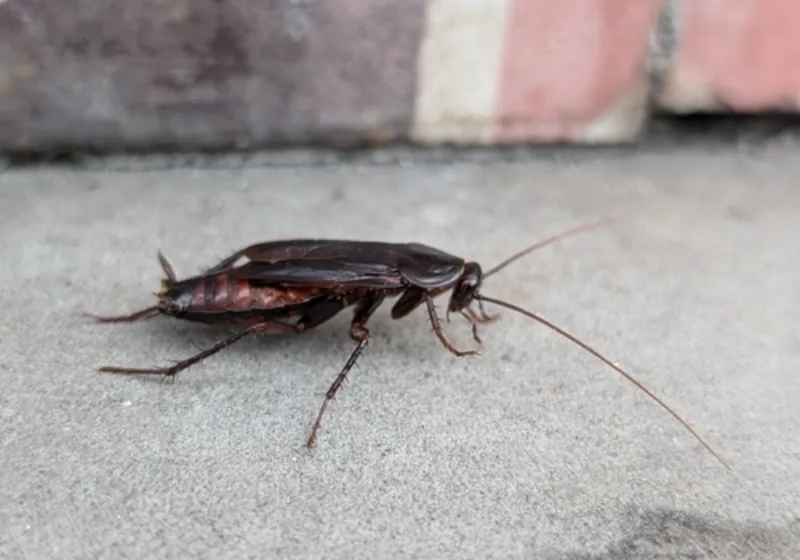
When Oriental Cockroaches Are Most Active in California
Now (November): Lower Outdoor ActivityVerified California Counties, Species & US Range
Counties with Verified Observations
- Los Angeles
- San Diego
- Santa Clara
- Alameda
- Yolo
- Orange
- San Joaquin
Species Recorded in California
| Species | Scientific Name | GBIF Records |
|---|---|---|
| Common Cockroach | Blatta orientalis | 971 |
How California Compares to Neighboring States
Note: Wildlife does not follow state or county lines. GBIF totals reflect verified citizen and museum records, so low counts in a neighboring county do not guarantee absence.
How to Identify Oriental Cockroaches
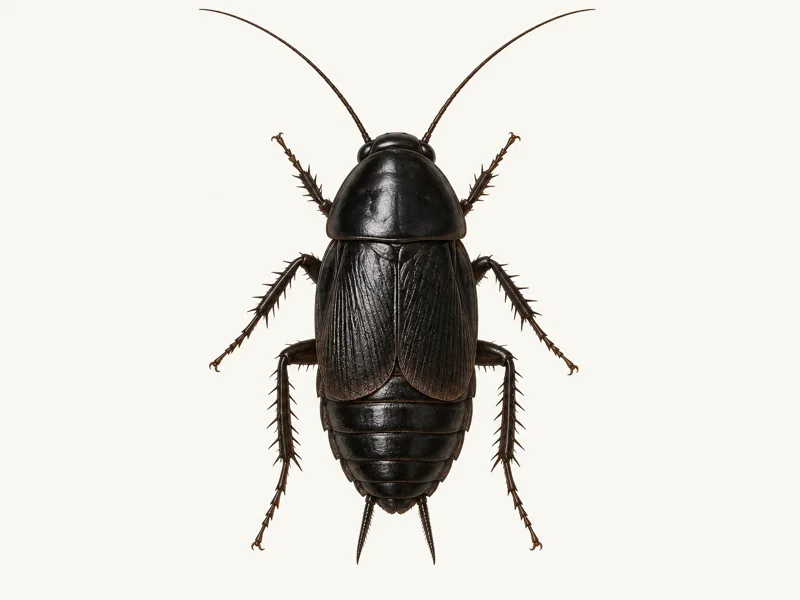
Annotated Anatomy Key (Oriental Cockroach)
- Long thin antennae: Delicate filiform antennae detecting damp basement drafts and drain moisture.
- Solid jet-black shield: Smooth, glossy black pronotum with zero pale halos or yellow stripes.
- Short truncated wings: Stubby leathery wing covers stop short (males ~2/3 length; females tiny pads).
- Glossy dark segments: Heavy shiny black oval abdomen; sluggish ground runner that cannot fly.
Oriental Cockroaches Field Checklist
- Glossy jet-black to dark mahogany broad-bodied cockroach
- Cannot fly; females have tiny wing pads and males have short wings covering 75% of the abdomen
- Sluggish compared to German or American roaches and prefers cooler damp spaces
- Emits a noticeable musty odor in heavy populations
Side-by-Side Look-Alike Comparisons
Oriental Cockroaches Size at True Relative Scale
Quick Answer: Yes, oriental cockroaches (Blatta orientalis) are common in California, with 971 verified GBIF sightings statewide. They are a nuisance pest that favors damp, cool spots such as drains, crawl spaces, and basements. Moisture control and exclusion are the most effective first steps.
Where Oriental Cockroaches Live in California
GBIF occurrence records show the heaviest concentrations in Los Angeles, San Diego, Santa Clara, Alameda, and Yolo counties. These are mostly urban and suburban areas where buildings, irrigation, and mild temperatures give the insects steady moisture and shelter. The records list the species under the name Common Cockroach (Blatta orientalis).
California's climate varies widely, from Mediterranean coast to arid desert to alpine zones (USDA 5a-11a). Oriental cockroaches do best where moisture is reliable, so they tend to turn up around human structures rather than in dry open country.
Typical Hiding Spots
- Floor drains, sewer lines, and water meter boxes
- Crawl spaces and basements
- Under sinks and around leaking pipes
- Mulch beds, leaf litter, and damp areas near foundations
- Garages and laundry rooms
When Oriental Cockroaches Are Most Active in California
GBIF sightings peak from April through July. Warming weather increases activity outdoors, and adults wander more as temperatures rise. Anyone asking about California oriental cockroach season can plan around late spring and early summer.
Indoor activity can continue year-round wherever there is moisture. Cockroaches are mostly nocturnal, so seeing one in daylight can suggest a crowded hiding place.
Identification Basics
For California oriental cockroach identification, look for these features, which are described in general university extension guidance:
- Adults are about 1 to 1.25 inches long, glossy, and dark brown to nearly black.
- Females have short, stubby wing pads and look almost wingless.
- Males have longer wings that cover about two-thirds of the abdomen, but they do not fly well.
- They move slowly and often leave damp areas only briefly.
- Egg cases (oothecae) are dark, purse-shaped capsules.
Look-Alikes Frequently Mistaken for Oriental Cockroaches
Several insects present in California are easy to confuse with this species. Checking size, color, and habitat usually settles it.
- American cockroaches: Larger, reddish-brown, with a pale yellowish band behind the head. Both sexes have fully developed wings and can glide.
- Water bugs: This is a common name homeowners often apply to oriental cockroaches themselves, and sometimes to other large insects. Because the term is loose, identify by physical features rather than the nickname.
- Other cockroaches: Smaller species are usually lighter in color or have distinct markings. Oriental cockroaches are uniformly dark and glossy.
If you are unsure, trap one in a jar and take a photo or bring it to your local cooperative extension office or a licensed pest professional.
How to Keep Oriental Cockroaches Out of Your California Home
For how to prevent oriental cockroaches in California, start with non-chemical Integrated Pest Management (IPM). Moisture is the main draw, so reducing it works better than spraying alone.
Moisture Control
- Repair leaking pipes, faucets, and irrigation near the foundation.
- Improve crawl space ventilation and use dehumidifiers in damp basements.
- Keep drains clean and covered when not in use.
- Direct sprinklers away from walls.
Exclusion
- Seal gaps around pipes, utility lines, and foundation cracks.
- Install door sweeps and repair damaged window screens.
- Keep weatherstripping tight on garage doors.
Sanitation and Yard Care
- Store food in sealed containers and take out trash regularly.
- Clean up pet food and crumbs overnight.
- Pull mulch and leaf litter back several inches from the foundation.
- Store firewood and debris away from the house.
Sticky traps help confirm where cockroaches travel. If you use any insecticide or bait, follow the EPA-registered product label exactly, and keep products away from children and pets.
When to Call a Licensed California Pest Professional
- You see cockroaches during the day or in large numbers.
- Activity continues after you fix moisture and seal entry points.
- You find egg cases or sightings in multiple rooms.
- Infestations appear to come from sewer lines, crawl spaces, or shared walls.
Oriental cockroaches are a nuisance rather than a venomous pest. They can contaminate food and surfaces, though, so contact a doctor with health concerns. For questions about accidental pesticide exposure, call US Poison Control at 1-800-222-1222.
IPM Prevention Checklist for California Homes
- Fix foundation drainage, leaking exterior spigots, and basement humidity
- Caulk foundation cracks and weatherstrip garage/basement doors
 EXCLUSION BLUEPRINT
Inspect eaves, screens, door sweeps, foundation cracks, and utility penetrations around California homes before peak season.
Oriental Cockroaches in California: Frequently Asked Questions
Are there oriental cockroaches in California?
Yes. GBIF has 971 verified sightings, with the most records in Los Angeles, San Diego, Santa Clara, Alameda, and Yolo counties.
When are oriental cockroaches most active in California?
Recorded sightings peak from April through July. Indoor populations can persist year-round in damp areas.
Are oriental cockroaches dangerous?
They are considered a nuisance. They do not sting or bite in a medically significant way, but they can contaminate food and surfaces.
What attracts oriental cockroaches to a house?
Moisture, decaying organic matter, and easy entry points. Leaky pipes, damp crawl spaces, clogged drains, and leaf litter near the foundation are common causes.
Sources & Verification
Data refreshed · Editorial & GBIF Methodology