Fruit Flies in California: Identification, Season, and Prevention
Quick Answer: Yes, fruit flies are common in California. GBIF records include 3,665 verified sightings of Drosophila melanogaster, the common fruit fly, with activity peaking in April, June, July, and August. They are a nuisance pest, not a health danger, and sanitation usually solves the problem.
When Fruit Flies Are Most Active in California
Now (November): Lower Outdoor ActivityFruit Flies Range in California vs. Neighboring States
How California Compares to Neighboring States
Note: Wildlife does not follow state or county lines. GBIF totals reflect verified citizen and museum records, so low counts in a neighboring county do not guarantee absence.
How to Identify Fruit Flies
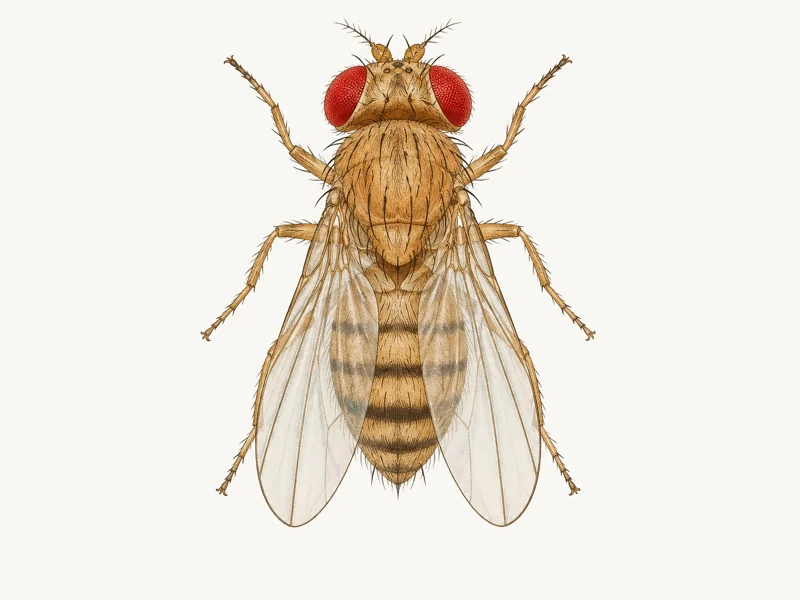
Annotated Anatomy Key (Fruit Fly)
- Bright crimson-red eyes: Large unmistakable ruby-red compound eyes distinguish fruit flies from gnats.
- Arched honey-tan thorax: Compact plump tan-brown body (2–4 mm) drawn to ripe fruit and fermenting spills.
- Six slender tan legs: Short pale bristled legs—far shorter and sturdier than spindly fungus gnats.
- Banded oval abdomen: Clear veined wings rest slightly angled over a dark-striped tan-gold abdomen.
Fruit Flies Field Checklist
- Tiny tan-to-brown hovering fly with bright red eyes (in common Drosophila species)
- Breeds explosively in fermenting produce, wine residue, recycling bins, and damp mops
- Entire egg-to-adult life cycle takes as little as 8–10 days
Side-by-Side Look-Alike Comparisons
Fruit Flies Size at True Relative Scale
Quick Answer: Yes, fruit flies are common in California. GBIF records include 3,665 verified sightings of Drosophila melanogaster, the common fruit fly, with activity peaking in April, June, July, and August. They are a nuisance pest, not a health danger, and sanitation usually solves the problem.
Where Fruit Flies Live in California
Are there fruit flies in California? Yes, statewide. The species spreads across Mediterranean coastal climates, arid inland deserts, and alpine mountain zones (USDA zones 5a-11a). GBIF lists limited county-level detail, so sightings reflect where people report them rather than a true range map.
Indoors, adults gather wherever fermenting food is found. Outdoors, they follow ripening fruit, compost, and garbage.
Common Hot Spots
- Fruit bowls, especially ripe bananas, peaches, and tomatoes
- Recycling bins with residue in cans, bottles, and juice containers
- Trash cans and compost pails
- Sour dishrags, mops, and sink drains with organic film
- Backyard fruit trees with fallen, rotting fruit
- Wineries, restaurants, and grocery produce areas
Quick Identification
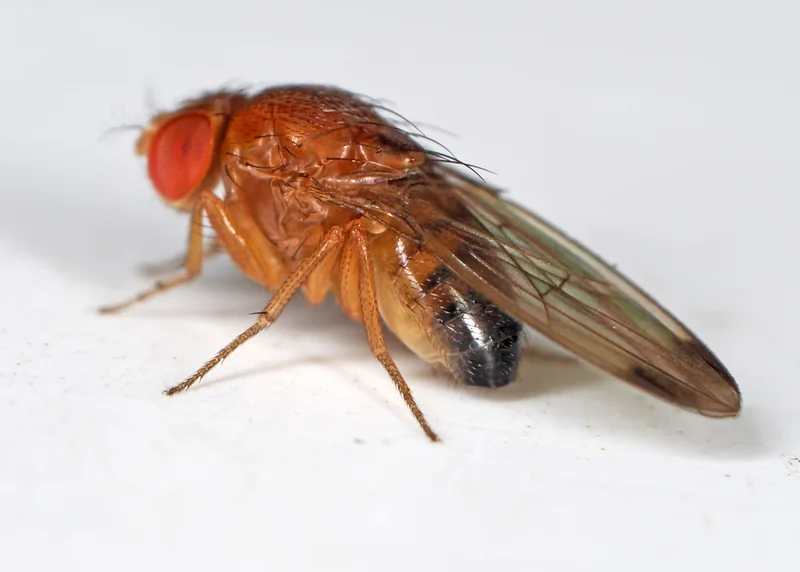
For California fruit fly identification, look for a tiny fly, about 1/8 inch long, with a tan to brown front body and a darker rear. Red eyes are typical of Drosophila melanogaster. Adults hover slowly around produce and drink spills rather than flying fast.
Females lay eggs on fermenting material. Larvae are tiny, pale maggots that feed in the surface film. Under warm conditions, the life cycle can finish in about a week or so, which explains why small problems grow fast.
When Fruit Flies Are Most Active in California
California fruit fly season runs strongest from spring through summer. GBIF sightings peak in April, June, July, and August, matching warm temperatures and heavy fruit ripening. Records come in lower during cooler months.
Indoors, activity can continue year-round. A heated kitchen with a forgotten onion or potato can sustain a population in winter. Harvest time in home orchards and gardens often triggers a sudden surge.
Look-Alikes Frequently Mistaken for Fruit Flies
Several small flies in California get confused with fruit flies. Telling them apart points you to the real breeding source.
Drain Flies (Moth Flies)
Drain flies have fuzzy, moth-like bodies and wings held rooflike over the back. They breed in the slimy film inside drains and sewage-connected fixtures. They tend to rest on bathroom or basement walls.
Fungus Gnats
Fungus gnats are slender, dark, and mosquito-like with long legs. They breed in damp potting soil, so overwatered houseplants are the usual source. They are weak fliers and often walk across soil or windowsills.
Mosquitoes
Mosquitoes are larger, with a long mouthpart and slim body. Unlike fruit flies, they bite and breed in standing water. If you are getting bitten, you are not dealing with fruit flies.
How to Keep Fruit Flies Out of Your California Home
For how to prevent fruit flies in California, start with non-chemical IPM. Removing the breeding material matters more than killing adults.
Sanitation and Exclusion
- Refrigerate ripe produce or eat it promptly.
- Rinse bottles and cans before recycling, and empty bins often.
- Use trash and compost containers with tight lids.
- Clean spills, sink drains, and garbage disposals regularly.
- Wash and air-dry dishrags and mops.
- Pick up fallen fruit in the yard weekly.
- Repair torn window and door screens.
Simple Traps
A jar with a little apple cider vinegar and a drop of dish soap can catch adults. Cover it with a paper cone or plastic wrap with small holes. Traps reduce numbers but will not work unless the source is removed.
Using Insecticides
Sprays are rarely needed and do not fix the cause. If you choose a product, use one labeled for the site and follow all EPA label directions. Never spray over food-prep surfaces unless the label allows it.
When to Call a Licensed California Pest Professional
- Flies keep returning after two weeks of thorough sanitation.
- You suspect a hidden source, such as a leaking drain, wall void, or damaged pipe.
- A restaurant, store, or food facility has repeated infestations.
- Large numbers appear with no visible fruit or food source.
Fruit flies are not considered medically significant, but if anyone has an unusual reaction after contact with any insect, call US Poison Control at 1-800-222-1222 or see a doctor.
IPM Prevention Checklist for California Homes
- Refrigerate ripe produce, empty countertop compost daily, and rinse bottles/cans before recycling
- Clean garbage disposal rubber splash guards and damp mop heads
 EXCLUSION BLUEPRINT
Inspect eaves, screens, door sweeps, foundation cracks, and utility penetrations around California homes before peak season.
Fruit Flies in California: Frequently Asked Questions
Are there fruit flies in California?
Yes. Drosophila melanogaster is common statewide, with 3,665 verified GBIF sightings. It lives in homes, restaurants, and orchards.
When is California fruit fly season?
Records peak in April, June, July, and August. Indoor populations can persist all year if food sources remain.
Are fruit flies dangerous?
No. They are classed as a nuisance. They can contaminate food by landing on it, so discard heavily infested produce.
Why do I still have flies after cleaning?
The breeding site may be hidden, such as a drain film, a damp mop, or forgotten produce. Also check whether the flies are actually drain flies or fungus gnats, which need different fixes.
Sources & Verification
Data refreshed · Editorial & GBIF Methodology