Drain Fly vs Fruit Fly: How to Tell Them Apart and Get Rid of Each for Good
Quick ID Verdict: Tiny flies circling a kitchen sink can belong to two very different pests, and treating the wrong one wastes weeks. Quick ID verdict: if the fly is fuzzy, gray-to-black, and rests with heart-shaped wings folded flat like a little roof, it's a drain fly. If it's tan-to-brown, hovers around fruit, and has bright red eyes, it's a fruit fly.
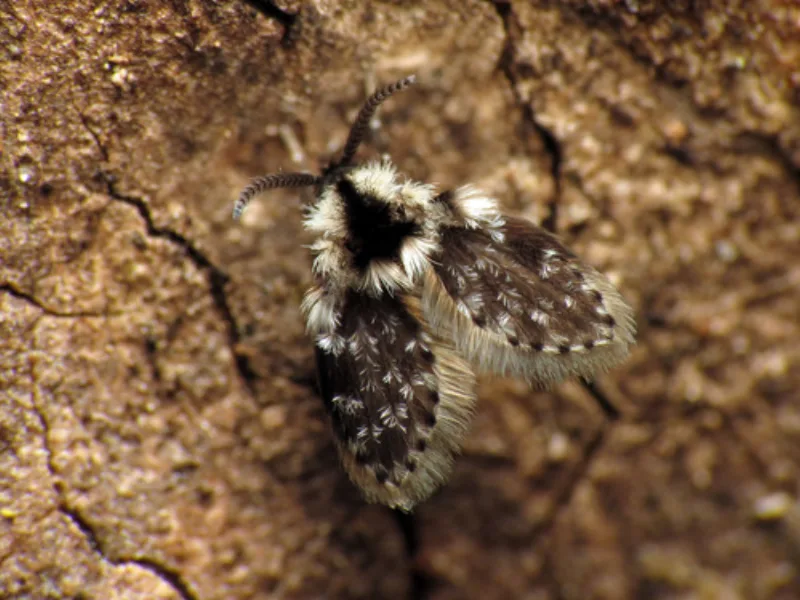
Drain Fly
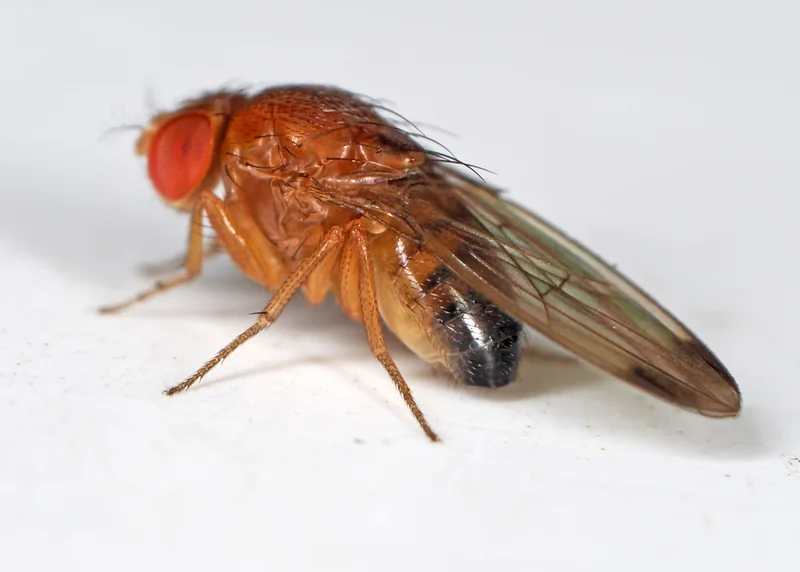
Fruit Fly
Side-by-Side Comparison Table
| Trait | Drain Fly | Fruit Fly |
|---|---|---|
| Scientific Group | Psychodidae | Drosophila melanogaster |
| Category | Insect | Insect |
| Typical Size | 2–5 mm | 2–4 mm |
| Danger Level | Nuisance | Nuisance |
| Bites or Stings? | No | No |
| Peak US Months | June, July, August, September | April, June, July, August |
| Key ID Trait | Tiny fuzzy gray-to-black moth-like fly with heart-shaped hairy wings held flat like a roof | Tiny tan-to-brown hovering fly with bright red eyes (in common Drosophila species) |
Drain Fly vs. Fruit Fly: True Size Comparison
Side-by-Side Anatomy Blueprint
Compare body segments, antennae, leg count, and key markings directly before treating or removing either species.
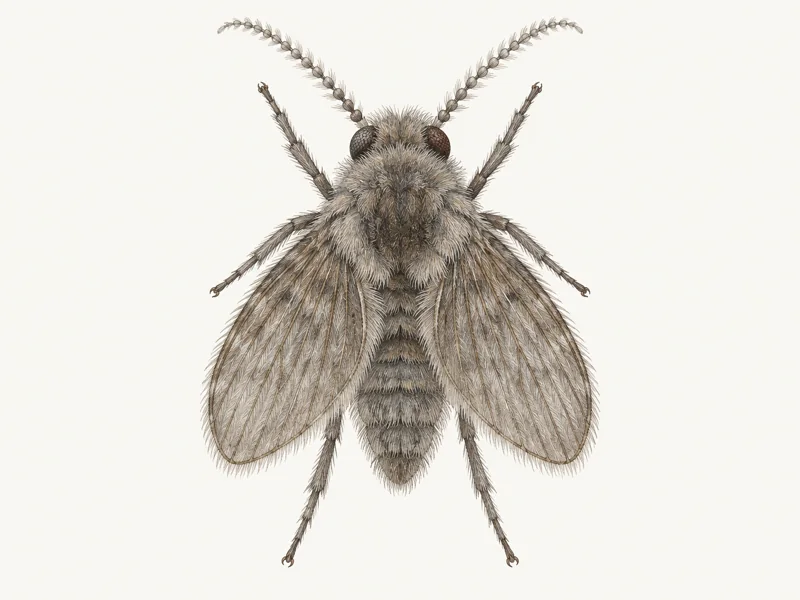
- Feathery beaded antennae: Curved, finely bristled dark antennae projecting from a tiny fuzzy head.
- Furry charcoal thorax: Densely hairy dark gray 2–4 mm body breeds exclusively in wet drain biofilm.
- Broad heart-shaped wings: Hazy, hair-covered leaf-shaped wings held roof-like out to the sides like a tiny moth.
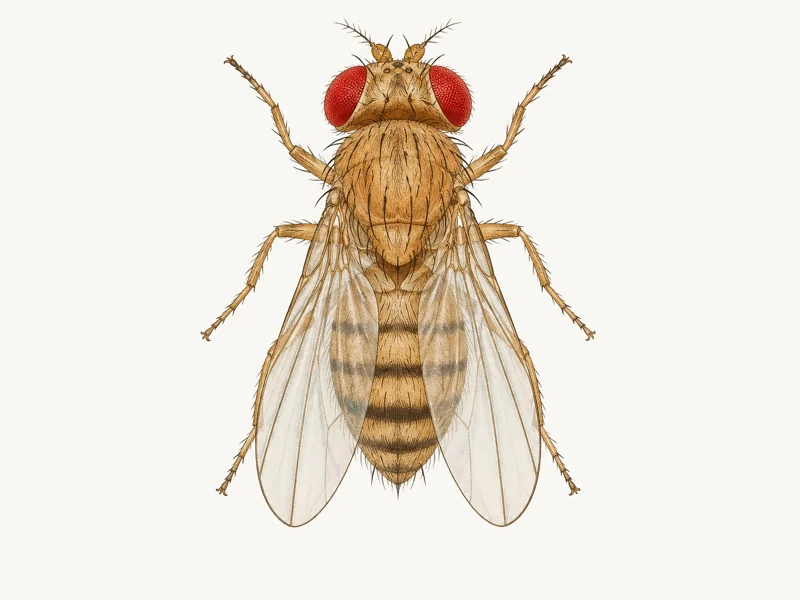
- Bright crimson-red eyes: Large unmistakable ruby-red compound eyes distinguish fruit flies from gnats.
- Arched honey-tan thorax: Compact plump tan-brown body (2–4 mm) drawn to ripe fruit and fermenting spills.
- Six slender tan legs: Short pale bristled legs—far shorter and sturdier than spindly fungus gnats.
That three-second check settles most drain fly vs fruit fly questions. The rest of this guide covers why the difference matters, where each one breeds, and how to clear them out without reaching for chemicals first.
Drain Fly or Fruit Fly? Key Identification Differences
Both insects are small, both show up indoors, and both are classified as nuisance pests rather than health threats. But the difference between drain fly and fruit fly becomes obvious once someone knows where to look.
Appearance, Size, and Wing Shape
Drain flies, also called moth flies, belong to the family Psychodidae. They measure 2-5 mm and look more like miniature moths than flies.
- Drain flies: fuzzy, gray-to-black bodies: hairy, heart-shaped wings held flat over the body like a roof
- Fruit flies (Drosophila melanogaster): 2-4 mm, smooth tan-to-brown bodies, clear wings folded neatly behind them, and bright red eyes in common species
Those red eyes are the giveaway. Drain flies have dark eyes that disappear into their fuzzy heads.
Flight Patterns and Where You Spot Them
Drain flies are weak, awkward fliers. They tend to sit motionless on bathroom walls or shower tiles, then make short, hopping flights when disturbed.
Fruit flies are agile and persistent. They hover in loose clouds over fruit bowls, trash cans, recycling bins, and open wine glasses. A fly that won't leave a banana alone is almost always a fruit fly.
Breeding Sites and Life Cycles Compared
This is where drain fly vs fruit fly identification really pays off, because each one breeds in a completely different place.
Drain flies lay eggs in the slimy biofilm lining drains, sump pits, overflow holes, and sewage-damp areas. Larvae feed on that organic gunk, and the full cycle takes roughly one to three weeks depending on temperature.
Fruit flies lay eggs on the surface of fermenting fruit and vegetables, spilled juice, and damp food residue. At warm room temperatures, they can go from egg to adult in about 8-10 days, and a single female can lay several hundred eggs.
The takeaway? Swatting adults won't solve either problem. The breeding source has to go.
When and Where They Show Up Across the US
Both pests occur in every US state, mostly because indoor plumbing and kitchens give them year-round habitat.
- Fruit flies peak in late summer and early fall, when garden produce and ripe fruit come indoors. Homes in warm Southern states may see them nearly year-round.
- Drain flies are steady indoor residents in any climate. They often spike after vacations, when drains sit unused and biofilm builds up, or in basements with slow-draining floor drains.
A sudden swarm in October points to fruit flies. Persistent flies on the bathroom wall in February point to drain flies.
Safe IPM Strategies to Eliminate Each Pest
Integrated Pest Management starts with sanitation, exclusion, and moisture control. Chemicals come last, if at all.
For Drain Flies
- Scrub drains with a stiff pipe brush to physically remove biofilm
- Use an enzyme-based drain cleaner to break down remaining organic buildup
- Run water in rarely used sinks, tubs, and floor drains weekly
- Fix leaks and dry out damp areas under sinks
To confirm the source, tape a piece of plastic wrap loosely over a drain overnight. Flies stuck underneath in the morning reveal the culprit.
For Fruit Flies
- Remove or refrigerate overripe produce
- Empty and rinse trash and recycling bins
- Set a simple trap: a jar of cider vinegar with a drop of dish soap
- Wipe up spills and clean sticky residue from counters
If a product is ever needed, homeowners should choose one labeled for the specific pest and follow the EPA product label exactly.
Prevention Tips to Keep Both Flies Away
So which one is worse for homeowners? Neither bites or poses a medical danger: both are nuisance pests. Drain flies tend to be more stubborn, though, since their breeding sites hide inside plumbing. Fruit flies multiply faster but vanish quickly once food sources disappear.
A few habits keep both in check:
- Clean kitchen and bathroom drains monthly
- Store ripe fruit in the fridge during warm months
- Take out trash and compost often
- Keep window screens in good repair
- Address plumbing leaks and standing water promptly
When flies keep returning even though good sanitation, a cracked pipe or hidden moisture problem may be feeding them. In that case, a licensed plumber or pest professional can track down the source.
Frequently Asked Questions
What's the fastest way to identify a drain fly vs fruit fly?
Check the wings and eyes. Drain flies are fuzzy, gray-to-black with heart-shaped wings folded flat like a roof and dark eyes. Fruit flies are tan-brown, smooth, with bright red eyes and clear wings. If the fly hovers around fruit, it's likely a fruit fly; if it rests on drain areas, it's a drain fly.
Where do drain flies and fruit flies breed?
Drain flies breed in slimy biofilm lining drains, sump pits, and sewage-damp areas. Fruit flies lay eggs on fermenting fruit, vegetables, and food residue. This is why eliminating breeding sources—not just swatting adults—is essential to control either pest.
How quickly do fruit flies multiply compared to drain flies?
Fruit flies develop faster, completing their life cycle in 8–10 days at room temperature, with females laying hundreds of eggs. Drain flies take one to three weeks. However, fruit flies vanish quickly once food sources disappear, while drain flies persist as long as drain biofilm remains.
What's the best way to eliminate drain flies without chemicals?
Scrub drains with a stiff brush, use enzyme-based drain cleaners to break down biofilm, run water weekly in rarely used drains, and fix leaks. Tape plastic wrap over a drain overnight to confirm it's the breeding source. These sanitation steps address the root cause of drain fly infestations.
Can a drain fly or fruit fly bite or spread disease?
No. Both drain flies and fruit flies are classified as nuisance pests rather than health threats. Neither bites nor poses a medical danger, making sanitation and exclusion the safest and most effective long-term control methods.
How should I set up a simple trap to catch fruit flies?
Fill a jar with cider vinegar and add a drop of dish soap. The vinegar attracts fruit flies, while the soap breaks the surface tension, causing them to sink and drown. This non-chemical method works well alongside removing overripe produce and cleaning sticky residue.