Fruit Fly vs Mosquito: How to Tell Them Apart Fast
Quick ID Verdict: A fruit fly is a tiny, compact tan-to-brown fly (2-4 mm) with bright red eyes that hovers around ripe produce, while a mosquito is a slender, fragile fly (3-10 mm) with long spindly legs and a single pair of scaly wings. If it looks stocky and hangs around your fruit bowl, it's a fruit fly. If it looks leggy and delicate and lands on your skin, it's a mosquito.
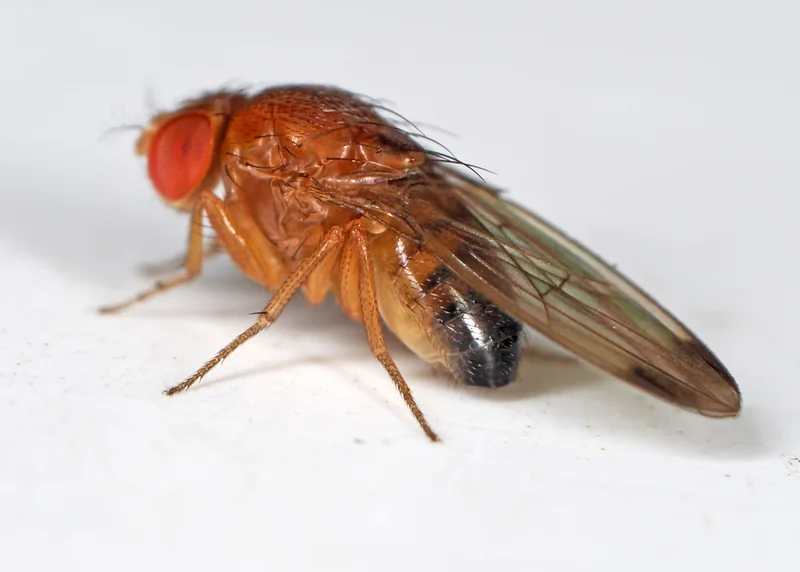
Fruit Fly
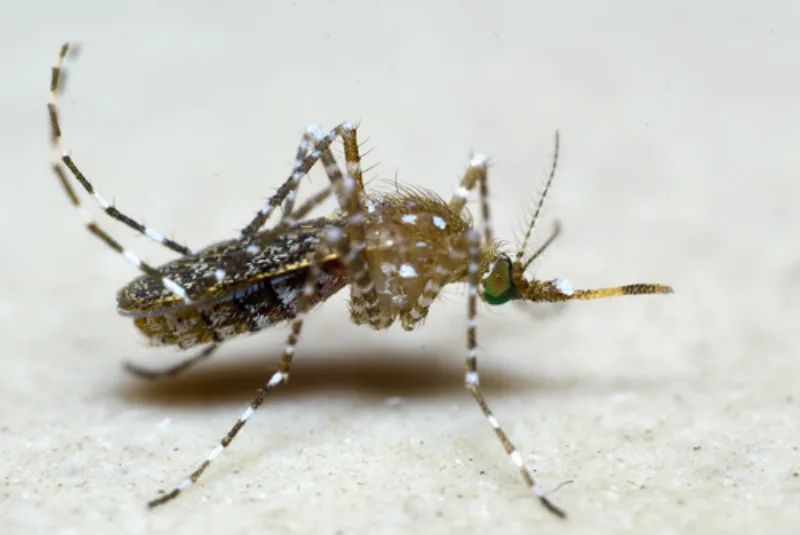
Mosquito
Side-by-Side Comparison Table
| Trait | Fruit Fly | Mosquito |
|---|---|---|
| Scientific Group | Drosophila melanogaster | Culicidae |
| Category | Insect | Insect |
| Typical Size | 2–4 mm | 3–10 mm |
| Danger Level | Nuisance | Medically Significant |
| Bites or Stings? | No | Yes |
| Peak US Months | April, June, July, August | June, July, August, September |
| Key ID Trait | Tiny tan-to-brown hovering fly with bright red eyes (in common Drosophila species) | Slender, fragile fly with long spindly legs and a single pair of scaly wings |
Fruit Fly vs. Mosquito: True Size Comparison
Side-by-Side Anatomy Blueprint
Compare body segments, antennae, leg count, and key markings directly before treating or removing either species.
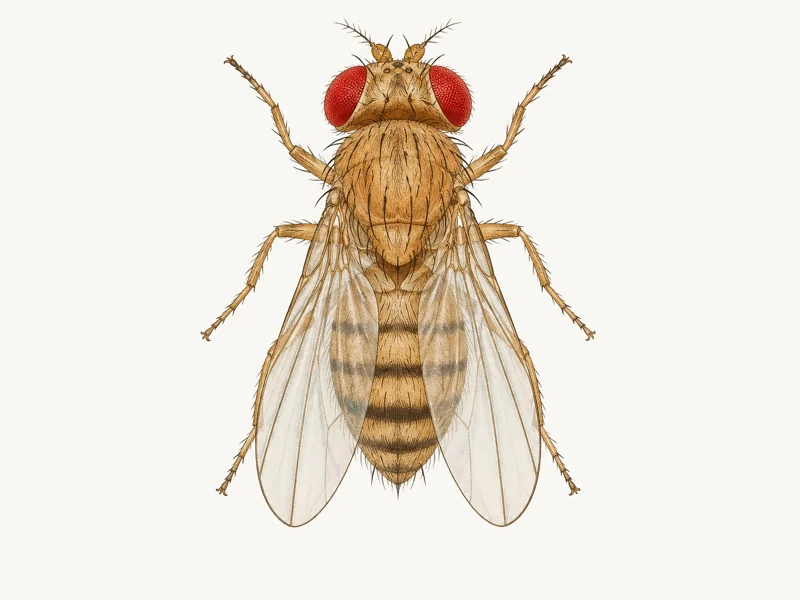
- Bright crimson-red eyes: Large unmistakable ruby-red compound eyes distinguish fruit flies from gnats.
- Arched honey-tan thorax: Compact plump tan-brown body (2–4 mm) drawn to ripe fruit and fermenting spills.
- Six slender tan legs: Short pale bristled legs—far shorter and sturdier than spindly fungus gnats.
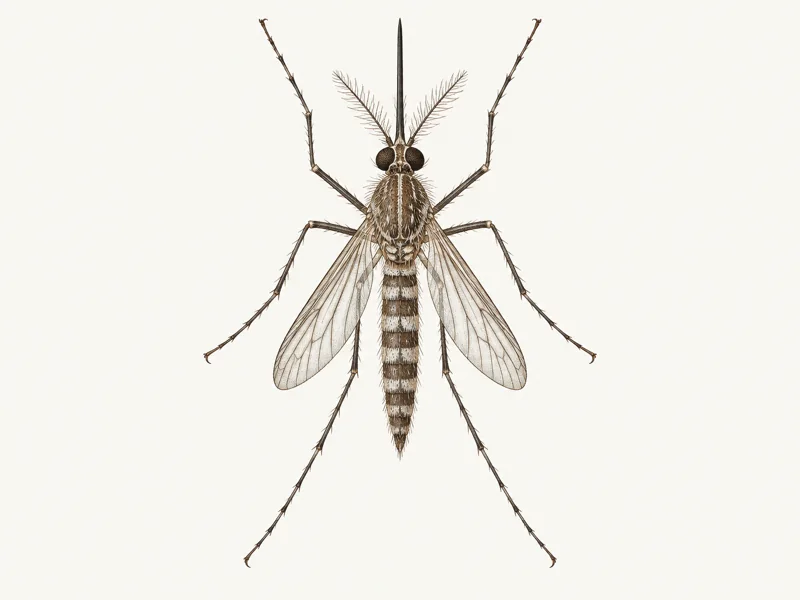
- Needle proboscis: Long straight piercing-sucking mouthpart projecting straight ahead (only females bite).
- Narrow scaled wings: Single pair of delicate translucent veined wings edged with microscopic fringe scales.
- Six long spindly legs: Three pairs of delicate trailing legs (marked with crisp white bands on Aedes tiger species).
Quick Answer: A fruit fly is a tiny, compact tan-to-brown fly (2-4 mm) with bright red eyes that hovers around ripe produce, while a mosquito is a slender, fragile fly (3-10 mm) with long spindly legs and a single pair of scaly wings. If it looks stocky and hangs around your fruit bowl, it's a fruit fly. If it looks leggy and delicate and lands on your skin, it's a mosquito.
Quick ID Verdict: Fruit Fly or Mosquito?
In three seconds, check the body shape and eyes. Fruit flies (Drosophila melanogaster) are short and rounded with red eyes, and mosquitoes (family Culicidae) are thin, long-legged, and often perch with their bodies angled away from the surface.
Location is the second giveaway. Fruit flies cluster in kitchens near fermenting food. Mosquitoes seek out people and pets and are most active near standing water, especially at dusk and dawn.
Key Visual & Physical Differences
Good fruit fly vs mosquito identification comes down to proportions. A fruit fly looks like a miniature house fly. A mosquito looks more like a tiny, fragile crane fly with a needle-like mouth.
Fruit Fly Features
- Size: 2-4 mm, about the size of a sesame seed.
- Color: Tan to light brown, often with darker bands on the abdomen.
- Eyes: Bright red in common Drosophila species, visible even without magnification.
- Body: Compact and rounded, with short legs.
- Wings: Clear and held flat over the back at rest.
Mosquito Features
- Size: 3-10 mm, depending on species.
- Body: Slender and fragile, with a narrow abdomen.
- Legs: Long and spindly, much longer than the body.
- Wings: A single pair of wings covered in tiny scales along the veins.
- Mouthparts: A long, piercing proboscis that extends forward from the head.
Mosquitoes also produce the familiar high-pitched whine in flight. Fruit flies are nearly silent and tend to hover in slow, lazy loops.
Behavior, Habitat & Danger Comparison
The biggest difference between fruit fly and mosquito pests is what they want from you. Fruit flies want your food. Female mosquitoes want your blood to develop their eggs.
Fruit Fly Behavior and Habitat
Fruit flies are drawn to fermenting sugars in overripe bananas, tomatoes, spilled juice, wine, beer, and damp drain buildup. They breed in that same moist organic material, which is why populations can explode indoors within days.
Their danger level is rated as a nuisance. They don't bite or sting, though they can move bacteria from garbage and drains onto food surfaces, so sanitation matters.
Mosquito Behavior and Habitat
Mosquitoes lay eggs in or near standing water, including clogged gutters, birdbaths, plant saucers, old tires, and buckets. Many species are most active at dawn and dusk, though some bite during the day.
Mosquitoes are medically significant. They can transmit pathogens to people and animals, and their bites cause itchy welts. Anyone with a severe reaction, or symptoms such as fever or headache after being bitten, should contact a doctor. For questions about a reaction, call US Poison Control at 1-800-222-1222.
Which One Is Worse for Homeowners?
Fruit flies are more common indoors and more annoying day to day. Mosquitoes, however, pose the greater health risk, which makes them the more serious pest overall.
Controlling Fruit Flies
- Refrigerate ripe produce or eat it promptly.
- Empty and rinse trash, recycling, and compost bins often.
- Scrub sink drains and garbage disposals to remove film buildup.
- Use a simple trap: a small dish of cider vinegar with a drop of dish soap.
Controlling Mosquitoes
- Dump standing water weekly from containers, saucers, and toys.
- Clean gutters and change birdbath water every few days.
- Repair window and door screens to keep adults out.
- Wear long sleeves outdoors at dawn and dusk.
Start with exclusion, sanitation, and moisture control before reaching for products. If you use repellents, larvicides, or insecticides, choose EPA-registered options and follow the product label exactly.
Frequently Asked Questions
Can fruit flies bite people?
No. Fruit flies lack biting mouthparts and feed on fermenting food. If something tiny is biting you indoors, it's more likely a mosquito or another biting insect.
Why do I see mosquitoes inside my house?
They usually slip in through torn screens or open doors, or breed in indoor standing water like plant trays. Sealing gaps and removing water sources typically solves the problem.
Do fruit flies and mosquitoes breed in the same places?
Not usually. Fruit flies breed in moist, fermenting organic matter, while mosquitoes need standing water to lay eggs and develop.
How can I tell a fruit fly or mosquito apart at a glance?
Look at the legs and eyes. Short legs and red eyes mean fruit fly. Long, spindly legs and a slender body mean mosquito.