Carpenter Bees in Arizona: Identification, Season and Prevention
Quick Answer: Yes, there are carpenter bees in Arizona, and they are common. GBIF holds 3,985 verified sightings, concentrated in Pima, Maricopa, Cochise, Santa Cruz and Yavapai counties, with activity peaking in May, August and September. These large bees rarely sting, but females tunnel into soft or weathered wood, so the main risk is structural damage.
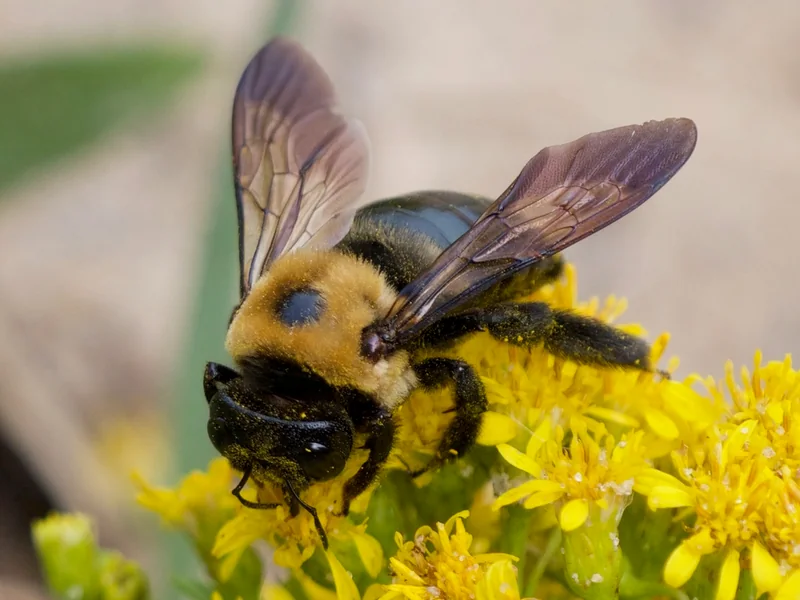
When Carpenter Bees Are Most Active in Arizona
Now (November): Lower Outdoor ActivityVerified Arizona Counties, Species & US Range
Counties with Verified Observations
- Pima
- Maricopa
- Cochise
- Santa Cruz
- Yavapai
Species Recorded in Arizona
| Species | Scientific Name | GBIF Records |
|---|---|---|
| California Carpenter Bee | Xylocopa californica | 2,697 |
| Hawaiian Carpenter Bee | Xylocopa sonorina | 728 |
| Horse-fly Carpenter Bee | Xylocopa tabaniformis | 125 |
How Arizona Compares to Neighboring States
Note: Wildlife does not follow state or county lines. GBIF totals reflect verified citizen and museum records, so low counts in a neighboring county do not guarantee absence.
How to Identify Carpenter Bees
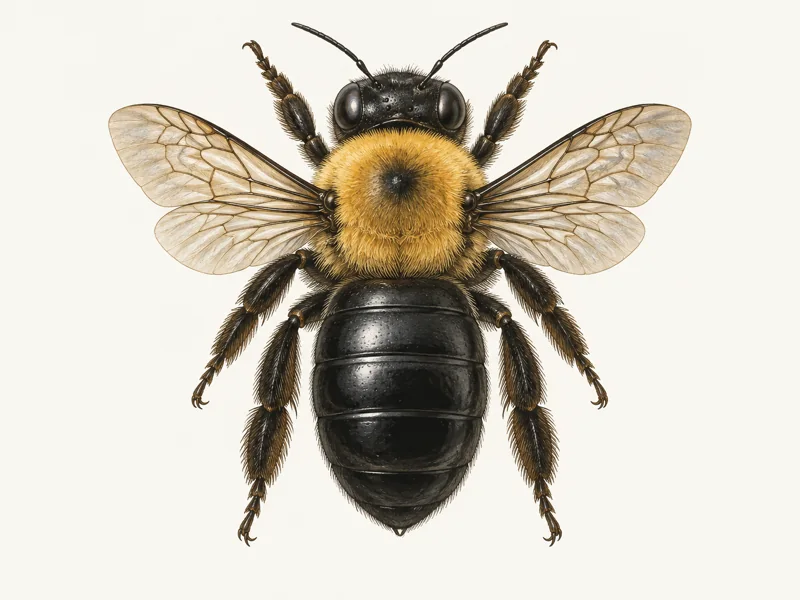
Annotated Anatomy Key (Carpenter Bee)
- Broad black head: Wide head with strong jaws for drilling perfectly round 1/2-inch wood tunnels.
- Fuzzy golden thorax: Plump thorax densely coated in bright yellow-gold hair with a small bald center dot.
- Smoky veined wings: Broad tinted wings supporting loud hovering patrols near eaves and decks.
- Hairless glossy abdomen: Smooth, shiny, bald jet-black abdomen—key difference from fuzzy bumble bees.
Carpenter Bees Field Checklist
- Large robust bee resembling a bumble bee but with a shiny, mostly hairless black abdomen
- Yellow fuzzy thorax; males often have a white or yellow spot on the face and CANNOT sting
- Females bore neat, perfectly round 1/2-inch entry holes into unpainted softwood
- Leaves fresh pale sawdust piles and yellowish pollen stains below entry holes
Side-by-Side Look-Alike Comparisons
Carpenter Bees Size at True Relative Scale
Where Carpenter Bees Live in Arizona
Arizona's carpenter bees belong to the genus Xylocopa. GBIF occurrence records document three species in the state:
- California Carpenter Bee (Xylocopa californica) is a large, robust bee with a dark, often metallic-sheened body and dark wings.
- Hawaiian Carpenter Bee (Xylocopa sonorina) shows striking differences between the sexes. Females are glossy black, and males are fuzzy and golden-tan with green eyes.
- Horse-fly Carpenter Bee (Xylocopa tabaniformis) is smaller than the other two. Males have pale facial markings and, as the name suggests, can look a little like a horse fly.
Most sightings come from the southern counties of Pima, Maricopa, Cochise and Santa Cruz, where warm desert lowlands and sky-island canyons offer flowers and nesting wood. Yavapai County rounds out the top five, which shows these bees also reach the cooler transition zone toward the northern highlands.
In the wild, carpenter bees nest in dead wood, stumps and the dry flower stalks of agave and sotol. Around homes, they look for unpainted or weathered softwood such as fascia boards, pergolas, eaves, fence rails, wooden patio furniture and decks.
When Carpenter Bees Are Most Active in Arizona
The Arizona carpenter bee season follows a two-part pattern. Verified records peak in May, when overwintered adults emerge, mate and females start new nest tunnels. Males often hover near nest sites in spring and chase other insects away, which homeowners can mistake for aggression.
A second rise comes in August and September. This lines up with monsoon rains, which bring a flush of blooms, and with new adults emerging from tunnels dug earlier in the year. In the mildest southern lowlands, a few bees may fly on warm days well outside these months.
Males have no stinger. Females can sting but seldom do unless handled or trapped. Anyone with a known allergy to bee stings, or anyone who has a severe reaction, should contact US Poison Control at 1-800-222-1222 or seek medical care right away.
Look-Alikes Frequently Mistaken for Carpenter Bees
Getting Arizona carpenter bee identification right matters because each insect calls for a different response. These are the common local look-alikes:
- Bumble bees: These have a fuzzy, hairy abdomen, usually banded with yellow. Carpenter bees typically have a shiny, mostly hairless abdomen. Bumble bees nest in the ground or in cavities, not in drilled wood.
- Honey bees: These are smaller and slimmer, with golden-brown bands. They live in large colonies and swarms, and they never bore into wood. In Arizona, a honey bee colony inside a wall should be handled by a professional.
- Wasps: These have a narrow "waist," smoother bodies and longer legs that dangle in flight. They build paper or mud nests and sting more readily.
The surest clue is behavior. A large bee that backs into a perfectly round, roughly half-inch hole in wood is almost certainly a carpenter bee.
How to Keep Carpenter Bees Out of Your Arizona Home
Carpenter bees are important native pollinators, so the best approach is to steer them away from structures rather than eliminate them. Integrated Pest Management guidance from university cooperative extension programs puts prevention and exclusion first.
Non-Chemical Prevention
- Paint or seal exposed wood. Females prefer bare, weathered wood. Oil-based paint or polyurethane holds up better than stain alone under Arizona sun.
- Use resistant materials. When replacing trim or patio structures, choose hardwoods, composite boards, vinyl or metal.
- Inspect in spring. Check eaves, fascia and pergolas in April and May for fresh holes and small piles of sawdust.
- Seal old tunnels. After bees leave, usually in fall, plug holes with a wooden dowel and wood glue or exterior filler, then paint over them.
- Offer alternatives. Leaving untreated dead wood or old agave stalks away from the house can give bees somewhere else to nest.
Targeted Treatment
If active tunnels persist, a registered insecticide dust applied directly into the gallery can be used. Treat only the hole, not the surrounding area, and avoid spraying flowering plants. Always read and follow the EPA product label exactly.
When to Call a Licensed Arizona Pest Professional
- Many active holes, or tunnels coming back year after year
- Sagging, soft or cracked structural wood
- Woodpeckers tearing into siding to reach larvae
- Nests high on rooflines or in places you can't reach safely
- Uncertainty about whether the insects are honey bees, which call for professional removal
IPM Prevention Checklist for Arizona Homes
- Paint or apply thick polyurethane/varnish to exposed exterior wood surfaces (painted wood strongly deters boring)
- Use composite decking or hardwood trim where feasible
 EXCLUSION BLUEPRINT
Inspect eaves, screens, door sweeps, foundation cracks, and utility penetrations around Arizona homes before peak season.
Carpenter Bees in Arizona: Frequently Asked Questions
Are there carpenter bees in Arizona?
Yes. GBIF lists 3,985 verified sightings in Arizona, most often in Pima, Maricopa, Cochise, Santa Cruz and Yavapai counties.
Which carpenter bee species live in Arizona?
The recorded species are the California Carpenter Bee, the Hawaiian Carpenter Bee (Xylocopa sonorina) and the Horse-fly Carpenter Bee.
When is carpenter bee season in Arizona?
Activity peaks in May and again in August and September, during and after the monsoon.
Do Arizona carpenter bees damage homes?
They can. Females drill nesting tunnels in soft or weathered wood. Damage is usually cosmetic at first but can weaken wood over several seasons if the bees keep reusing the same tunnels.
Sources & Verification
- University of Kentucky Entomology — Carpenter Bees
- NC State Extension — Carpenter Bees
- GBIF Global Biodiversity Occurrence Records
Data refreshed · Editorial & GBIF Methodology