Bumble Bee vs Carpenter Bee: How to Tell Them Apart and Protect Your Home
Quick ID Verdict: A big, buzzing bee hovers near the porch railing, and the homeowner's first question is simple: is it harmless or is it chewing the house? The bumble bee vs carpenter bee question comes up every spring, and the answer matters. One is a valuable pollinator that's mostly a nuisance. The other can bore into wood and cause slow, real structural damage.
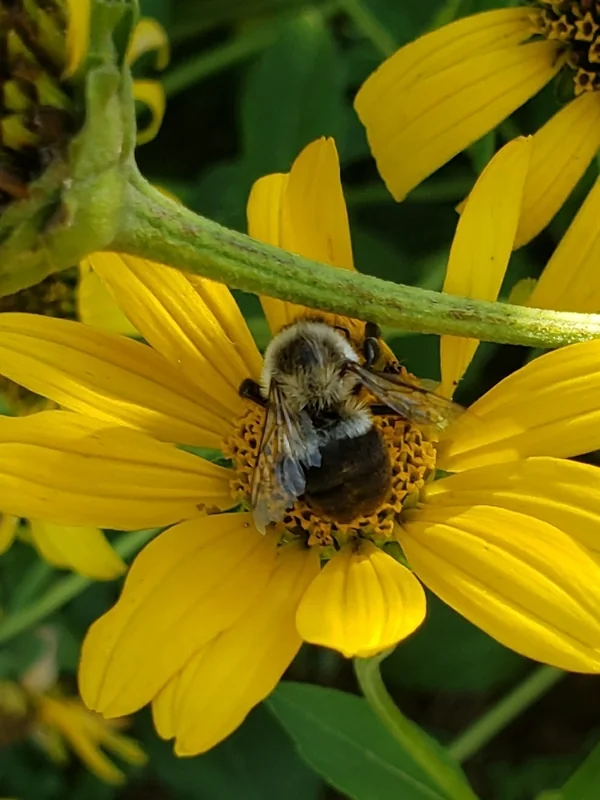
Bumble Bee
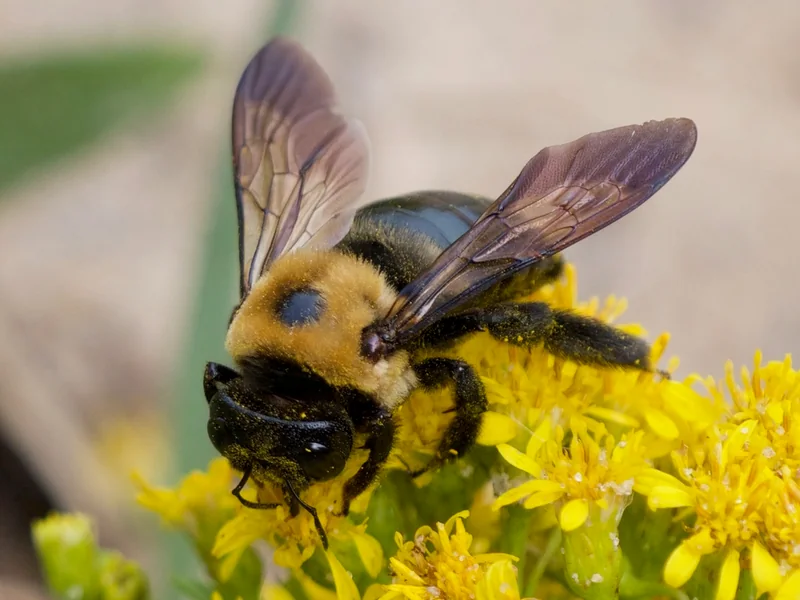
Carpenter Bee
Side-by-Side Comparison Table
| Trait | Bumble Bee | Carpenter Bee |
|---|---|---|
| Scientific Group | Bombus | Xylocopa |
| Category | Insect | Insect |
| Typical Size | 15–25 mm | 18–25 mm |
| Danger Level | Nuisance | Structural |
| Bites or Stings? | Yes | Yes |
| Peak US Months | June, July, August | April, May, August, September |
| Key ID Trait | Plump, heavily fuzzy bee with dense yellow, black, or orange hairs covering BOTH thorax and abdomen | Large robust bee resembling a bumble bee but with a shiny, mostly hairless black abdomen |
Bumble Bee vs. Carpenter Bee: True Size Comparison
Side-by-Side Anatomy Blueprint
Compare body segments, antennae, leg count, and key markings directly before treating or removing either species.
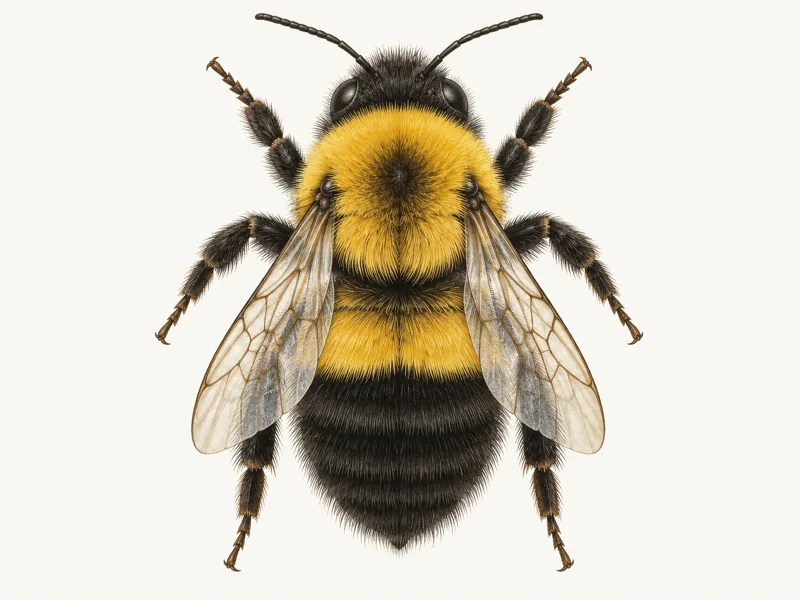
- Compact black head: Round fuzzy head with short elbowed antennae—vital native pollinator.
- Plush yellow thorax: Thick velvety golden-yellow hair coat covering the entire rounded thorax.
- Clear veined wings: Two pairs of translucent wings beating rapidly for buzz pollination.
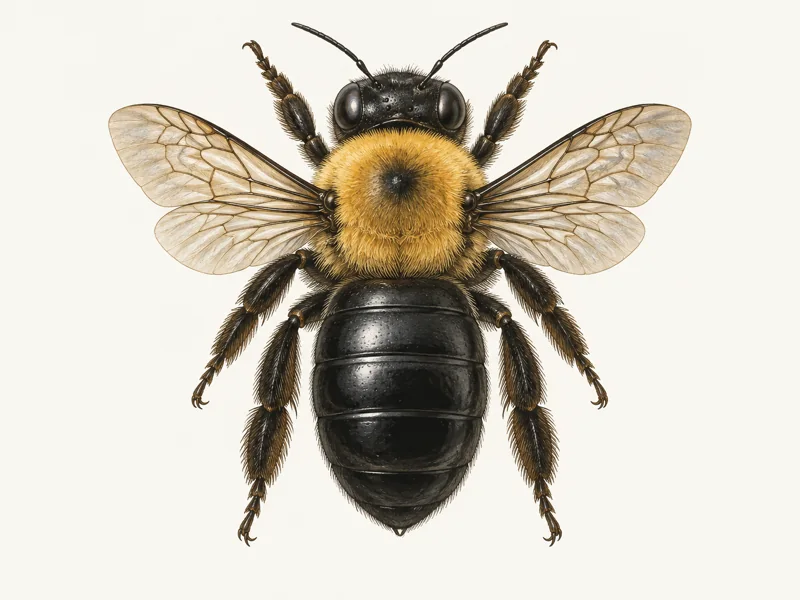
- Broad black head: Wide head with strong jaws for drilling perfectly round 1/2-inch wood tunnels.
- Fuzzy golden thorax: Plump thorax densely coated in bright yellow-gold hair with a small bald center dot.
- Smoky veined wings: Broad tinted wings supporting loud hovering patrols near eaves and decks.
Quick verdict: Check the abdomen. A fuzzy, hairy rear end means a bumble bee, while a shiny, mostly hairless black rear end means a carpenter bee.
Quick Identification: Bumble Bee or Carpenter Bee?
Both insects are large and robust, and both are black and yellow. That's why so many people confuse them. Still, a few reliable clues settle the bumble bee or carpenter bee debate in seconds.
The Shiny Abdomen Test and Other Visual Clues
The single best tool for bumble bee vs carpenter bee identification is the abdomen.
FeatureBumble Bee (Bombus)Carpenter Bee (Xylocopa)Size15–25 mm18–25 mmAbdomenDense yellow, black, or orange hairShiny, mostly hairless blackThoraxHeavily fuzzyFuzzy, often yellowBody shapePlump, roundedLarge, robust, slightly flatterDanger levelNuisanceStructuralSize overlaps almost completely, so it won't help much. Focus on that rear segment. If it gleams like polished plastic in the sun, it's a carpenter bee.
Behavior and Flight Patterns Around Your Yard
Bumble bees tend to move flower to flower, low and busy, with little interest in people. Carpenter bees behave differently. Males often hover near eaves, decks, and fascia boards, darting at anyone who walks by.
That territorial dive-bombing looks threatening, but male carpenter bees have no stinger at all. A bee repeatedly circling a wooden structure is almost always a carpenter bee.
Nesting Habits and Property Damage Risks
Here's the core difference between bumble bee and carpenter bee concerns for homeowners: nesting.
Bumble bees nest in the ground, often in abandoned rodent burrows, under thick grass, or in compost and debris piles. Occasionally they'll use a cavity in a wall or shed. They don't chew wood, so they pose no structural threat.
Carpenter bees don't eat wood, but females excavate it to raise young. Signs include:
- Perfectly round holes about 1/2 inch wide
- Small piles of coarse sawdust below the hole
- Yellowish stains from droppings near entrances
- Woodpecker damage, as birds hunt larvae inside
They prefer bare, weathered softwoods like pine, cedar, and redwood. One tunnel is minor. But females reuse and extend galleries year after year, and that's when decks and trim start to weaken.
Where They Live Across the US and When They're Active
Bumble bees occur in every US state, including Alaska, and thrive in cooler climates and higher elevations. Colonies are annual. Only new queens survive winter, emerging in early spring to start fresh nests, with activity peaking in mid to late summer.
Carpenter bees are most common in the eastern and southern US, where the eastern carpenter bee (Xylocopa virginica) is the familiar species. Several other species live in the West and Southwest. Adults overwinter inside old tunnels, emerge in April or May to mate and drill, and a new generation appears in late summer.
Spring is usually when homeowners first notice the hovering males.
Stinging Risk and Safety for Families and Pets
Neither bee is aggressive away from its nest. Still, the risks differ a bit.
- Bumble bees: Females can sting more than once and will defend a disturbed nest. Mowing over a ground nest is the classic way people get stung.
- Carpenter bees: Males can't sting. Females can, but rarely do unless handled or trapped.
Dogs that snap at buzzing insects may get stung in the mouth, so supervise pets near flowering beds and nest sites.
For any sting followed by swelling of the face or throat, trouble breathing, or dizziness, seek emergency care right away. For other concerns, contact US Poison Control at 1-800-222-1222 and a doctor or veterinarian. PestAlmanac doesn't offer medical advice or home remedies for stings.
Safe IPM Strategies for Managing Each Bee
So which one is worse for homeowners? Carpenter bees, clearly, because of the structural risk. Bumble bees are important pollinators, and some species, like the rusty patched bumble bee, are federally endangered. Integrated Pest Management (IPM) starts with non-chemical steps.
Bumble Bees
- Leave nests alone when they're away from foot traffic. Colonies die off naturally in fall.
- Mark the area and skip mowing nearby.
- For nests by doorways or play areas, call a pest professional or local beekeeper about relocation.
Carpenter Bees
- Protect wood: Paint or apply a solid stain to exposed surfaces. Bare wood attracts them.
- Choose materials wisely: Hardwoods, composite decking, or metal flashing resist drilling.
- Seal old holes: After bees leave in late fall, plug tunnels with wooden dowels and wood putty, then paint over them.
- Use traps: Carpenter bee traps hung near problem areas can reduce numbers.
If an insecticide becomes necessary, use a product labeled for carpenter bees and follow the EPA product label exactly. Treat entrance holes only, ideally in the evening, and avoid spraying flowering plants where pollinators feed.
Frequently Asked Questions
What's the best way to tell a bumble bee from a carpenter bee?
The easiest method is checking the abdomen. Bumble bees have a fuzzy, hairy rear end with dense yellow, black, or orange hair. Carpenter bees have a shiny, mostly hairless black abdomen that gleams like polished plastic.
Can carpenter bees cause structural damage to my home?
Yes, carpenter bees pose a structural risk. Females excavate perfectly round 1/2-inch holes in bare wood to lay eggs. While one tunnel is minor, females reuse and extend galleries yearly, eventually weakening decks and trim over time.
Do bumble bees nest in the ground or in wood?
Bumble bees nest in the ground, typically in abandoned rodent burrows, under thick grass, or in compost piles. Occasionally they use wall cavities, but they never chew wood like carpenter bees do.
How do you prevent carpenter bees from drilling into wood structures?
Paint or stain exposed wood surfaces—bare wood attracts carpenter bees. Use hardwoods or composite decking instead of softwoods. After bees leave in late fall, seal old holes with wooden dowels and wood putty, then paint over them.
Are carpenter bee males dangerous—can they sting?
No, male carpenter bees cannot sting at all. Only females can sting, but they rarely do unless handled or trapped. Males may appear threatening by hovering near wood structures and dive-bombing, but they're harmless.
Why are bumble bees considered important and not pests?
Bumble bees are valuable pollinators essential for ecosystems and agriculture. Some species, like the rusty patched bumble bee, are federally endangered. They pose no structural threat and should be left alone when away from foot traffic.