Carpenter Bee vs Wasp: How to Tell Them Apart and Protect Your Home
Quick ID Verdict: A big black insect hovering at the porch eaves can put any homeowner on edge. But the carpenter bee vs wasp question matters, because one threatens the wood and the other threatens the people near it.
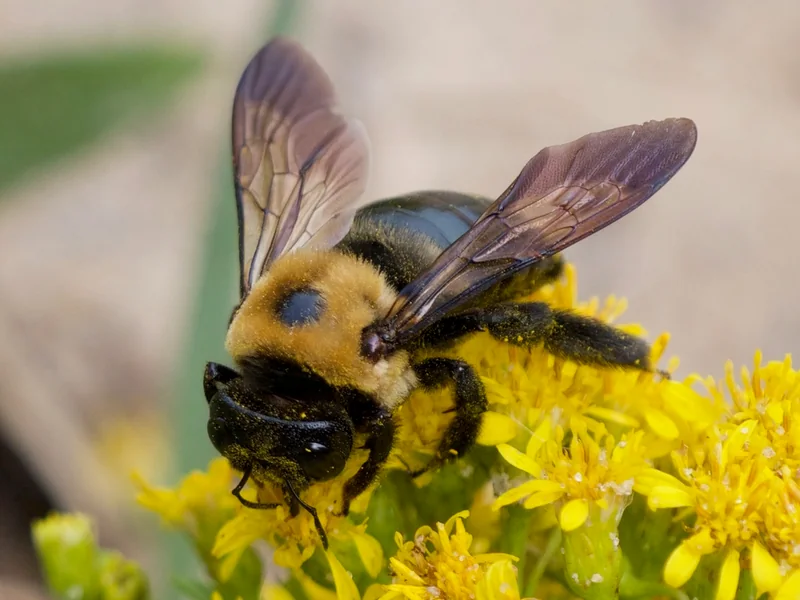
Carpenter Bee
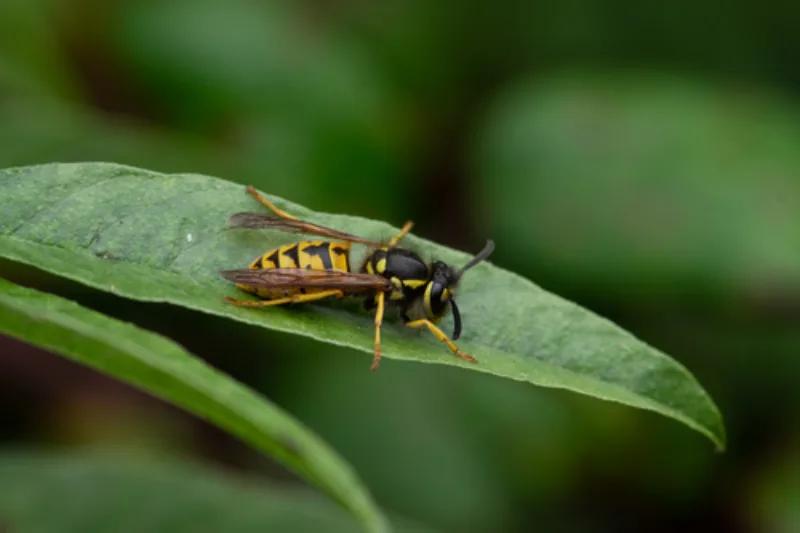
Wasp
Side-by-Side Comparison Table
| Trait | Carpenter Bee | Wasp |
|---|---|---|
| Scientific Group | Xylocopa | Vespidae |
| Category | Insect | Insect |
| Typical Size | 18–25 mm | 12–28 mm |
| Danger Level | Structural | Medically Significant |
| Bites or Stings? | Yes | Yes |
| Peak US Months | April, May, August, September | July, August, September, October |
| Key ID Trait | Large robust bee resembling a bumble bee but with a shiny, mostly hairless black abdomen | Slender, smooth, nearly hairless body with a very narrow pinched waist |
Carpenter Bee vs. Wasp: True Size Comparison
Side-by-Side Anatomy Blueprint
Compare body segments, antennae, leg count, and key markings directly before treating or removing either species.
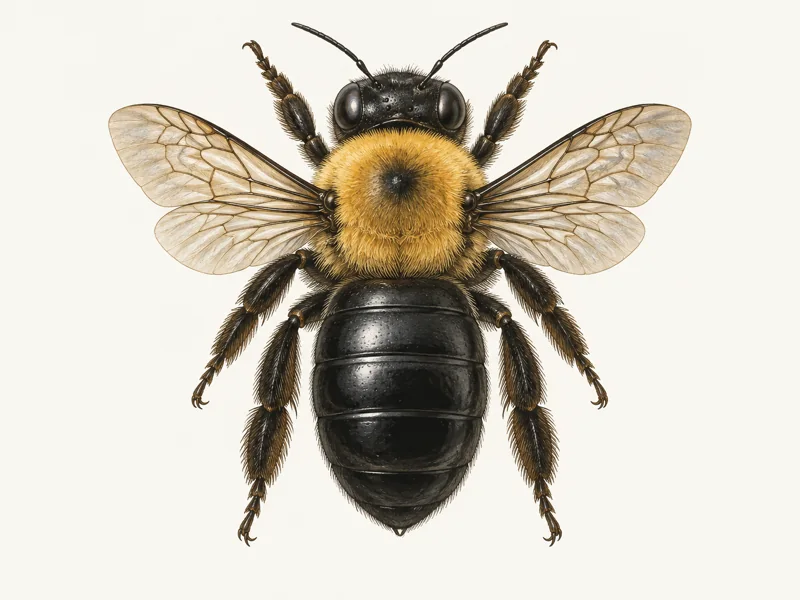
- Broad black head: Wide head with strong jaws for drilling perfectly round 1/2-inch wood tunnels.
- Fuzzy golden thorax: Plump thorax densely coated in bright yellow-gold hair with a small bald center dot.
- Smoky veined wings: Broad tinted wings supporting loud hovering patrols near eaves and decks.
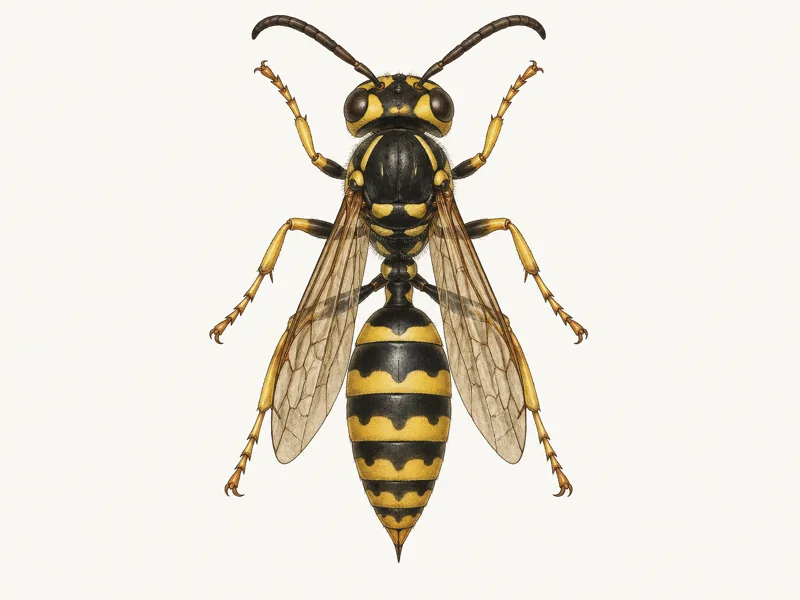
- Curved dark antennae: Segmented dark antennae and strong chewing mandibles for wood pulp nests.
- Smoky folded wings: Two pairs of narrow veined wings that fold lengthwise along the back at rest.
- Pinched waist: Sharp slender constriction separating the smooth hairless thorax from abdomen.
The 3-second verdict: A carpenter bee is chunky and bumble bee-like, with a shiny, mostly hairless black abdomen. A wasp is slender and smooth, with a very narrow, pinched waist between its thorax and abdomen.
Carpenter Bee or Wasp? Quick Identification Guide
When someone asks "carpenter bee or wasp?", the answer usually comes down to body build and what the insect is doing. Here's a side-by-side look at the verified basics.
TraitCarpenter Bee (Xylocopa)Wasp (Vespidae)Length18–25 mm12–28 mmBodyLarge, robustSlender, smoothHairFuzzy thorax, shiny bare abdomenNearly hairless overallWaistThick, barely visibleVery narrow, pinchedMain riskStructuralMedically significant
Body Shape, Color, and Hair Differences
The clearest difference between carpenter bee and wasp lies in the silhouette. Carpenter bees look like heavyset bumble bees, but the giveaway is the abdomen: glossy, black, and mostly hairless, while bumble bees are fuzzy all over.
Wasps, by contrast, have a streamlined, almost polished look. Many common species, such as yellowjackets and paper wasps, show yellow, black, or reddish-brown markings, and their legs often dangle in flight. That pinched "wasp waist" is the single most reliable feature for carpenter bee vs wasp identification.
Flight Patterns and Nesting Signs
Carpenter bees tend to hover in place near rooflines, decks, and fascia boards, sometimes darting at passersby. Look for perfectly round holes, about 1/2 inch across, in bare or weathered wood, often with sawdust-like frass and yellowish stains below.
Wasps fly in a more direct, purposeful way between a nest and food sources. Their calling card is a nest: gray papery combs under eaves, enclosed paper balls in shrubs, or ground holes with steady traffic.
Behavior, Stinging Risk, and Seasonal Activity
Carpenter bees look intimidating, but they're mostly bluster. Males, which often have a pale patch on the face, have no stinger at all. Females can sting but rarely do unless handled or trapped.
Wasps are a different story. Social wasps defend their nests and can sting repeatedly, and yellowjackets grow especially defensive in late summer as colonies peak and food becomes scarce.
- Carpenter bees: Most active in spring (April–May) during mating and nest drilling: new adults emerge in late summer.
- Wasps: Queens start nests in spring: colonies swell through summer and early fall, then die back after hard frosts.
Anyone with a history of severe reactions should treat wasp activity seriously. For any sting causing trouble breathing, swelling of the face or throat, or dizziness, call 911. For other concerns, contact US Poison Control at 1-800-222-1222 and a doctor.
Where They Live: Regional Presence Across the US
Both groups are widespread. The eastern carpenter bee (Xylocopa virginica) is the familiar species across the East, Midwest, and South, while western states host species such as the valley carpenter bee (Xylocopa varipuncta), common in California and the Southwest.
Vespid wasps, including paper wasps, yellowjackets, and hornets, occur in every one of the lower 48 states. Warmer Southern climates may see longer active seasons for both groups, while northern homeowners deal with a shorter but often intense summer window.
Damage Potential: Wood Boring vs Paper and Mud Nests
Carpenter bees don't eat wood, but they excavate tunnels in it to raise their young. A single hole looks minor, yet females often reuse and extend old galleries year after year. Over time, that can weaken railings, eaves, and siding, and woodpeckers hunting the larvae can make the damage worse.
Wasps cause little structural harm. Paper wasps and yellowjackets chew wood fibers to build paper nests, and potter wasps form small mud nests, but none tunnel into lumber. The real problem is location: a nest beside a door, grill, or play area puts people at risk of stings.
Safe Integrated Pest Management Strategies for Each
Integrated Pest Management starts with prevention, not sprays. Both insects play useful roles: carpenter bees pollinate, and many wasps prey on garden pests.
For Carpenter Bees
- Paint or apply polyurethane to exposed wood: bare, weathered softwood is their favorite target.
- After the nesting season, plug old holes with wood dowels or filler and repaint.
- Consider hardwoods, composite decking, or metal flashing in problem spots.
For Wasps
- Seal gaps in siding, soffits, and vents before spring.
- Keep garbage lidded, clean up spilled food and sugary drinks, and pick up fallen fruit.
- Knock down small, new paper nests early in spring, ideally at dusk when activity is low.
If a product is needed, always follow the EPA label exactly: the label is the law. Large, hidden, or wall-void wasp nests, or anyone in the household with sting allergies, are good reasons to call a licensed pest professional.
Frequently Asked Questions
What's the main difference between a carpenter bee and a wasp?
The key difference is body shape: a carpenter bee is chunky and bumble bee-like with a shiny, hairless black abdomen, while a wasp is slender with a very narrow, pinched waist between its thorax and abdomen. This wasp waist is the most reliable identification feature.
How can I identify carpenter bee holes in my wood?
Look for perfectly round holes about 1/2 inch across in bare or weathered wood, often with sawdust-like frass and yellowish stains below. Carpenter bees reuse and extend these galleries year after year, creating tunnels to raise their young.
Are carpenter bees or wasps more dangerous?
Carpenter bees rarely sting; males have no stinger, and females only sting if handled or trapped. Wasps are more dangerous—they defend nests aggressively, can sting repeatedly, and grow especially defensive in late summer when colonies peak.
What damage do carpenter bees cause compared to wasps?
Carpenter bees excavate tunnels in wood over time, potentially weakening structures like railings and eaves. Wasps cause minimal structural damage but pose a greater human safety risk when nests are near doors, grills, or play areas.
What's the best way to prevent carpenter bee infestations?
Paint or seal exposed wood with polyurethane, as bare weathered softwood attracts carpenter bees. After nesting season, plug old holes with wood dowels or filler and repaint. Consider hardwoods or composite decking in problem areas.
When are carpenter bees and wasps most active?
Carpenter bees are most active in spring (April–May) during mating and nest drilling. Wasps peak through summer and early fall as colonies grow. Both groups are more active in warmer climates, with longer seasons in Southern regions.