Camel Crickets in North Carolina: Identification, Season, and Prevention
Quick Answer: Camel crickets (spider crickets, family Rhaphidophoridae) are common in North Carolina, with 1,001 verified GBIF sightings statewide. They are nuisance pests that do not bite people or damage structures in any meaningful way. Reducing moisture and sealing entry points is the most effective way to keep them out.
When Camel Crickets (Spider Crickets) Are Most Active in North Carolina
Now (November): Moderate ActivityCamel Crickets (Spider Crickets) Range in North Carolina vs. Neighboring States
How North Carolina Compares to Neighboring States
Note: Wildlife does not follow state or county lines. GBIF totals reflect verified citizen and museum records, so low counts in a neighboring county do not guarantee absence.
How to Identify Camel Crickets (Spider Crickets)
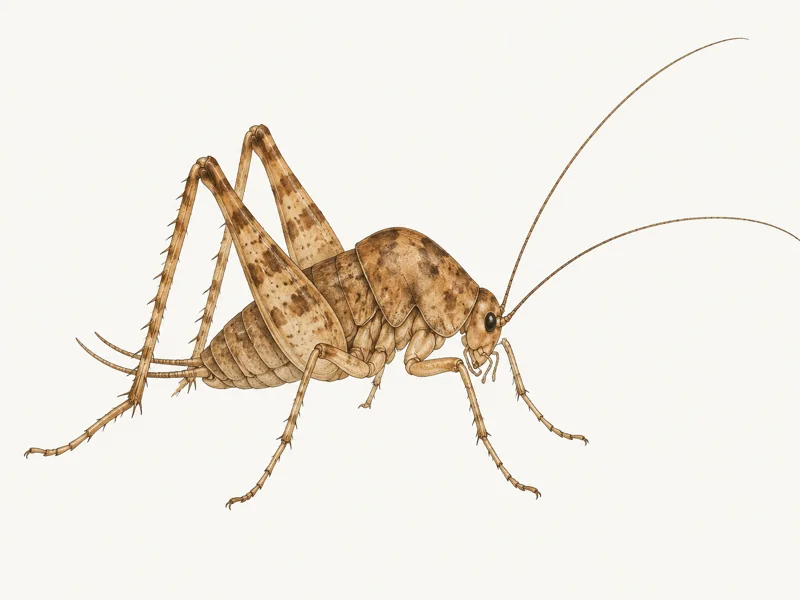
Annotated Anatomy Key (Camel Cricket)
- Jumping hind legs: Powerfully enlarged, banded hind femora angled high above the body for sudden leaps.
- Long whip antennae: Extraordinarily long, thin sensory antennae sweeping far ahead of the head in dark basements.
- Rear cerci: Paired slender sensory feelers projecting from the back of the mottled abdomen.
- Humpbacked wingless body: Smooth arched wingless profile—camel crickets cannot chirp and never bite humans.
Camel Crickets (Spider Crickets) Field Checklist
- Wingless humpbacked tan-to-brown cricket with very long antennae and spider-like hind legs
- Does NOT chirp (lacks sound-producing wings)
- Startles homeowners by jumping unexpectedly toward perceived threats when disturbed
- Completely harmless—does not bite or sting
Side-by-Side Look-Alike Comparisons
Camel Crickets (Spider Crickets) Size at True Relative Scale
Quick Answer: Camel crickets (spider crickets, family Rhaphidophoridae) are common in North Carolina, with 1,001 verified GBIF sightings statewide. They are nuisance pests that do not bite people or damage structures in any meaningful way. Reducing moisture and sealing entry points is the most effective way to keep them out.
Where Camel Crickets (Spider Crickets) Live in North Carolina
So, are there camel crickets in North Carolina? Yes. They turn up from the humid coastal plain through the Piedmont and into the cooler Blue Ridge mountains (USDA zones 6a to 8b). GBIF county-level records are limited, so the statewide count is a better guide than any single hotspot.
Outdoors, they shelter in damp, dark places such as leaf litter, hollow logs, stone walls, mulch beds, and crawl space edges. Indoors, they favor basements, garages, crawl spaces, laundry rooms, and cellars.
Quick Identification Guide
North Carolina camel cricket identification is straightforward once you know the features:
- Humped, arched back that gives the group its name.
- Very long, thin antennae often longer than the body.
- Oversized hind legs built for sudden, long jumps.
- Tan to brown color, often with darker banding or mottling.
- No wings, so they do not chirp the way true field crickets do.
When Camel Crickets (Spider Crickets) Are Most Active in North Carolina
GBIF records show sightings peaking in July, August, September, and October. That fits the usual pattern: hot, dry spells push them toward cooler, damp indoor spaces, and fall rains and cooling temperatures send more wandering individuals into garages and basements.
The North Carolina camel cricket season is therefore strongest from midsummer through autumn. They are mostly nocturnal, so many homeowners notice them only when they flip on a basement light or disturb stored boxes.
Look-Alikes Frequently Mistaken for Camel Crickets (Spider Crickets)
Several North Carolina pests get confused with camel crickets. Telling them apart helps you choose the right response.
- Spiders: Spiders have eight legs and no antennae, and they have two body sections. Camel crickets have six legs, long antennae, and a humped thorax.
- Mole crickets: These have broad, shovel-like front legs for digging and live mostly in turf and soil. Camel crickets have slender front legs and do not burrow.
- Cockroaches: Roaches have flattened, oval bodies and run rather than leap. Camel crickets are arched and jump unpredictably.
Camel crickets are rated a nuisance. They are not known to be medically significant, and they do not sting. If you have a concern about a bite from any unidentified creature, call US Poison Control at 1-800-222-1222 and consult a doctor.
How to Keep Camel Crickets (Spider Crickets) Out of Your North Carolina Home
If you want to know how to prevent camel crickets in North Carolina, start with moisture and access. University cooperative extension IPM guidance consistently ranks these steps ahead of any pesticide.
Non-Chemical Steps First
- Control moisture: Run a dehumidifier in basements and crawl spaces, fix leaky pipes and spigots, and keep gutters and downspouts directing water away from the foundation.
- Seal entry points: Add weatherstripping to garage doors, caulk foundation cracks, and screen vents and crawl space openings.
- Clear the perimeter: Move mulch, firewood, leaf piles, and debris at least a foot or more from the foundation.
- Reduce clutter: Store items in sealed plastic bins instead of cardboard, which holds moisture and gives them cover.
- Improve ventilation: Keep crawl spaces dry and well vented.
- Use sticky traps: Place them along walls to monitor numbers and catch stragglers.
Insecticide Use
If you consider a product, choose one labeled for the site and pest, and follow the EPA-registered label exactly. Treatments work best along the exterior foundation and entry points, and only after moisture and exclusion work is done. Spraying alone rarely solves the problem if conditions stay damp.
When to Call a Licensed North Carolina Pest Professional
- You see dozens of camel crickets repeatedly, even after moisture and sealing fixes.
- Persistent dampness, standing water, or suspected wood moisture problems exist in your crawl space.
- You cannot confirm what the pest is and suspect something other than camel crickets.
- You want a crawl space inspection or exterior treatment from a licensed applicator.
IPM Prevention Checklist for North Carolina Homes
- Run a dehumidifier in basements and improve crawlspace ventilation/vapor barriers
- Seal foundation cracks, bulkhead doors, and vent screens
 EXCLUSION BLUEPRINT
Inspect eaves, screens, door sweeps, foundation cracks, and utility penetrations around North Carolina homes before peak season.
Camel Crickets (Spider Crickets) in North Carolina: Frequently Asked Questions
Are camel crickets dangerous?
No. They are nuisance pests and are not considered medically significant. They rarely bite, do not sting, and are not known to spread disease. Poison Control (1-800-222-1222) can advise if you have concerns about a bite.
Do camel crickets damage homes?
Seldom. They may chew fabric, paper, or stored items on occasion, but significant structural damage is not typical. Their presence mostly signals excess moisture.
Why are there so many camel crickets in my basement?
Basements offer the dark, damp, cool conditions they prefer. Late summer and fall bring more of them indoors, especially during hot, dry spells or after heavy rain.
Do camel crickets jump at people?
They jump erratically when startled, and may seem to leap toward you. This is an escape response, not an attack.
Sources & Verification
Data refreshed · Editorial & GBIF Methodology