Asian Lady Beetles in Texas: Identification, Season, and Prevention
Quick Answer: Yes, Asian lady beetles (Harmonia axyridis) are common in Texas, with 22,962 verified GBIF sightings recorded statewide. They are a nuisance pest rather than a danger, and they sometimes gather on and inside homes. Sealing entry points and reducing clutter is the best first defense.
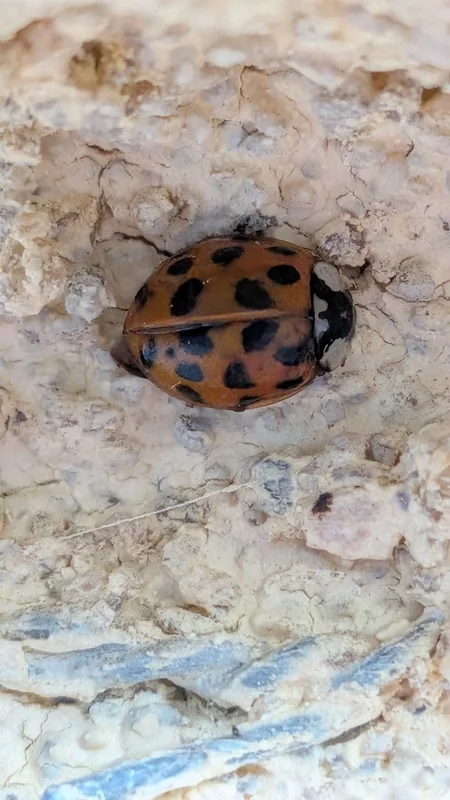
When Asian Lady Beetles Are Most Active in Texas
Now (November): Moderate ActivityAsian Lady Beetles Range in Texas vs. Neighboring States
How Texas Compares to Neighboring States
Note: Wildlife does not follow state or county lines. GBIF totals reflect verified citizen and museum records, so low counts in a neighboring county do not guarantee absence.
How to Identify Asian Lady Beetles
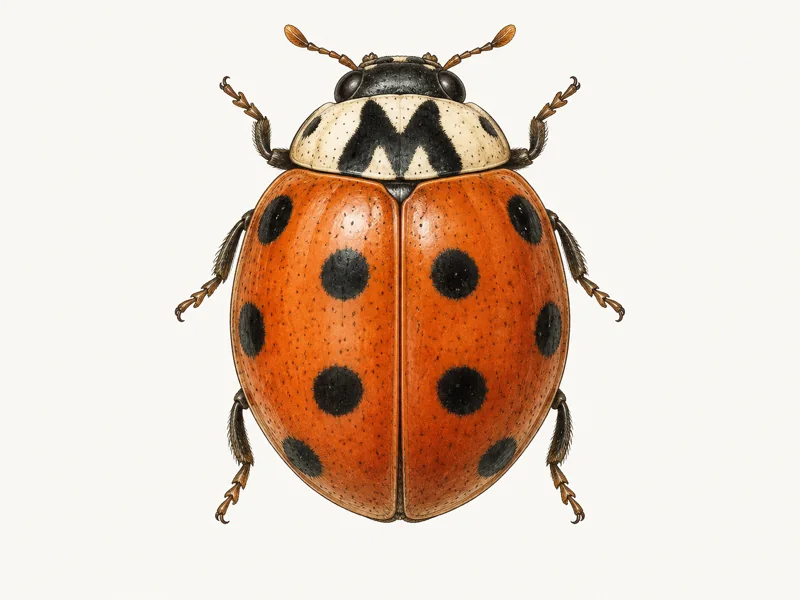
Annotated Anatomy Key (Asian Lady Beetle)
- Black M-shaped mark: Diagnostic black M (or W facing head-on) centered on the creamy-white pronotum.
- Domed orange elytra: Glossy burnt-orange to yellow-orange shell carrying 0 to 19 symmetrical black spots.
- Short tucked legs: Six compact dark legs; may emit yellow defensive fluid when startled indoors.
- Rounded oval shell: Slightly larger (5–8 mm) and more oval than native seven-spotted ladybugs.
Asian Lady Beetles Field Checklist
- Dome-shaped orange, yellow, or red beetle with 0 to 19 black spots
- Identified from native ladybugs by the distinct black 'M' or 'W' marking on the white plate behind the head
- Congregates on sunny house walls in October seeking winter shelter
- Secretes a yellow staining defensive fluid ('reflex bleeding') and can pinch lightly
Asian Lady Beetles Size at True Relative Scale
Where Asian Lady Beetles Live in Texas
Texas covers the humid subtropical Gulf Coast, the semi-arid central plains, and the arid western desert, with USDA zones from 6b to 10a. Asian lady beetles have been recorded across this range, though GBIF data here include only limited county-level detail, so no single county can be called the top hotspot.
The beetles feed on aphids and other soft-bodied insects, so they are most often found where those prey live. Typical habitats include:
- Shade trees, shrubs, and ornamental plantings
- Gardens, farm fields, and pecan or other orchard trees
- Sunny, light-colored walls, window frames, and eaves
When Asian Lady Beetles Are Most Active in Texas
GBIF records show peak sightings in May, June, August, and September. This is the texas asian lady beetle season most residents notice, when aphid populations feed active adults and larvae outdoors.
Because the data peak in warm months, expect the beetles to be outdoors and visible then. Adults may also move toward buildings as temperatures cool, looking for sheltered spots. Indoor sightings on warm winter days are possible, but the records above do not define a precise fall or winter timeline for Texas.
How to Recognize Them
For texas asian lady beetle identification, look at these features:
- Size and shape: Small, rounded, dome-shaped beetles, roughly a quarter inch long.
- Color: Ranges from pale yellow-orange to deep red, and spots vary from none to many.
- Head marking: A white area on the pronotum (the shield behind the head) usually shows a black "M" or "W" shape.
Color alone is unreliable, so check the head marking first.
Look-Alikes Frequently Mistaken for Asian Lady Beetles
Several Texas insects are mistaken for these beetles, especially when they show up around windows and walls.
- Carpet beetles: Also small and oval, but with mottled scales and a much smaller body. Their larvae damage fabrics, wool, and stored goods, which lady beetles never do.
- Stink bugs: Shield-shaped with a triangular back and a distinct odor when disturbed. Lady beetles are rounder and dome-like.
- Boxelder bugs: Elongated, dark insects with reddish-orange edging, not round and domed.
If the insect is round, domed, and shows an "M" on the head, it is likely an Asian lady beetle. Carpet beetles deserve a closer look because they can harm household items.
How to Keep Asian Lady Beetles Out of Your Texas Home
Anyone asking how to prevent asian lady beetles in texas should start with non-chemical IPM. Exclusion works better than spraying, since beetles will keep arriving if gaps remain.
- Seal entry points: Caulk cracks around windows, doors, siding, utility lines, and fascia boards.
- Repair screens and weatherstripping: Fix gaps under doors and torn window or vent screens.
- Check attic and soffit vents: Make sure screening is intact.
- Reduce moisture and clutter: Fix leaks and clear debris near the foundation to limit hiding places.
- Remove beetles gently: Use a vacuum with a nylon stocking over the hose, or sweep them up and release them outside. Crushing them can leave stains and an odor.
Asian lady beetles can bite occasionally and may trigger allergies in some people. If someone has a reaction, contact a doctor, or call US Poison Control at 1-800-222-1222 for guidance.
If you use any insecticide, choose a product labeled for the site and follow every instruction on the EPA-registered label. Indoor spraying is rarely effective and often leaves dead beetles that attract other pests.
When to Call a Licensed Texas Pest Professional
- Hundreds of beetles keep returning despite sealing efforts.
- Large clusters are inside wall voids, attics, or soffits.
- You cannot reach or safely seal high entry points.
- You are unsure whether the insects are lady beetles or fabric-damaging carpet beetles.
- Household members have repeated allergy-like symptoms.
Choose a company licensed by the state of Texas and ask for an inspection and exclusion plan before any treatment.
IPM Prevention Checklist for Texas Homes
- Caulk exterior window frames, siding seams, and attic vents before October
- Repair damaged window screens and door sweeps
 EXCLUSION BLUEPRINT
Inspect eaves, screens, door sweeps, foundation cracks, and utility penetrations around Texas homes before peak season.
Asian Lady Beetles in Texas: Frequently Asked Questions
Are there Asian lady beetles in Texas?
Yes. GBIF holds 22,962 verified sightings of Harmonia axyridis in Texas, and the species is considered common statewide.
Are Asian lady beetles dangerous?
They are a nuisance pest. They may occasionally pinch skin or bother people with allergies. For any health concern, see a doctor or call Poison Control at 1-800-222-1222.
When are Asian lady beetles most visible in Texas?
Records peak in May, June, August, and September, when the beetles are active outdoors around aphid-infested plants.
Why do they come into houses?
Adults look for sheltered spots and can enter through small cracks near windows, siding, and eaves. Sealing those gaps is the most dependable prevention.
Sources & Verification
- Ohio State University Extension — Multicolored Asian Lady Beetle
- GBIF Global Biodiversity Occurrence Records
Data refreshed · Editorial & GBIF Methodology