Asian Lady Beetles in California: Identification, Season, and Prevention
Quick Answer: Yes, Asian lady beetles (Harmonia axyridis) are common in California, with 18,427 verified GBIF sightings on record. They are a nuisance pest rather than a danger, and they often cluster on and in homes. Sealing entry points and reducing outdoor attractants is the most effective first step.
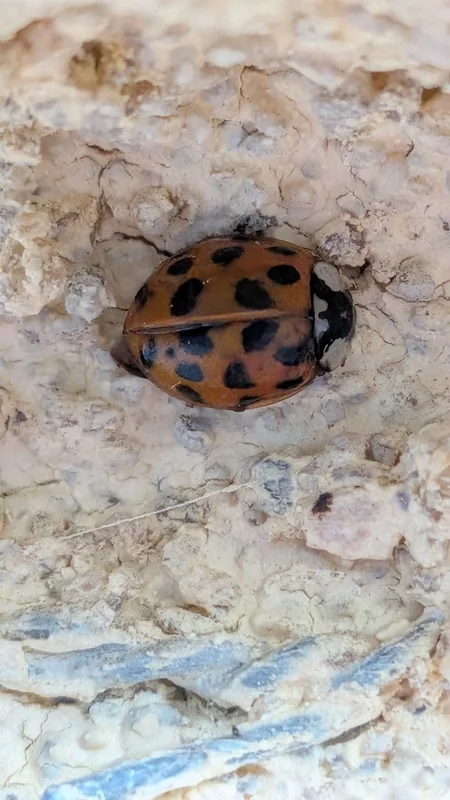
When Asian Lady Beetles Are Most Active in California
Now (November): Moderate ActivityAsian Lady Beetles Range in California vs. Neighboring States
How California Compares to Neighboring States
Note: Wildlife does not follow state or county lines. GBIF totals reflect verified citizen and museum records, so low counts in a neighboring county do not guarantee absence.
How to Identify Asian Lady Beetles
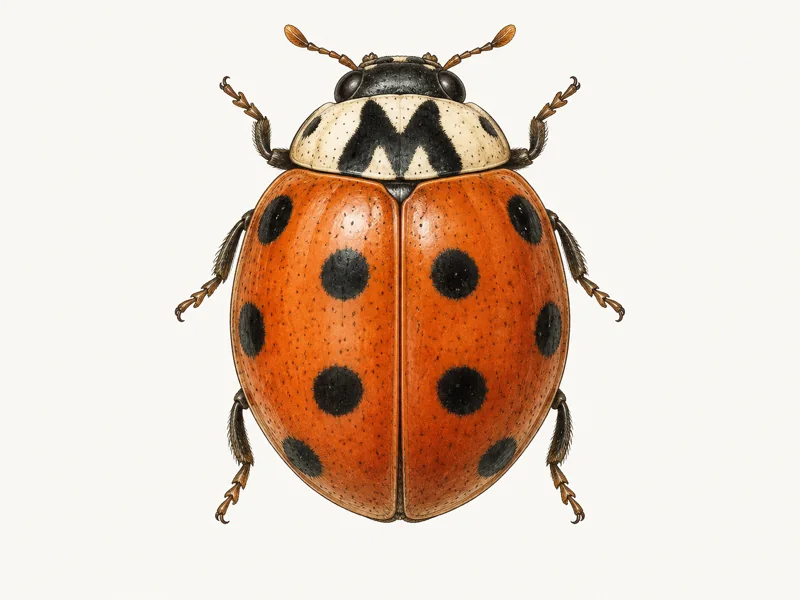
Annotated Anatomy Key (Asian Lady Beetle)
- Black M-shaped mark: Diagnostic black M (or W facing head-on) centered on the creamy-white pronotum.
- Domed orange elytra: Glossy burnt-orange to yellow-orange shell carrying 0 to 19 symmetrical black spots.
- Short tucked legs: Six compact dark legs; may emit yellow defensive fluid when startled indoors.
- Rounded oval shell: Slightly larger (5–8 mm) and more oval than native seven-spotted ladybugs.
Asian Lady Beetles Field Checklist
- Dome-shaped orange, yellow, or red beetle with 0 to 19 black spots
- Identified from native ladybugs by the distinct black 'M' or 'W' marking on the white plate behind the head
- Congregates on sunny house walls in October seeking winter shelter
- Secretes a yellow staining defensive fluid ('reflex bleeding') and can pinch lightly
Asian Lady Beetles Size at True Relative Scale
Quick Answer: Yes, Asian lady beetles (Harmonia axyridis) are common in California, with 18,427 verified GBIF sightings on record. They are a nuisance pest rather than a danger, and they often cluster on and in homes. Sealing entry points and reducing outdoor attractants is the most effective first step.
Where Asian Lady Beetles Live in California
Anyone asking whether there are Asian lady beetles in California can rely on the records: GBIF data confirm Harmonia axyridis is well established statewide. County-level records are limited, so the sightings reflect a broad pattern rather than a single hotspot. The state spans Mediterranean coastal climates, arid inland deserts, and alpine mountain zones (USDA zones 5a-11a), and the beetle turns up across much of that range wherever food is available.
These beetles are predators of aphids and scale insects. They gather on trees, shrubs, gardens, and agricultural plantings where those prey are plentiful. As temperatures drop, they look for sheltered crevices and may move toward light-colored, sun-warmed buildings.
When Asian Lady Beetles Are Most Active in California
California Asian lady beetle season, based on GBIF occurrence records, shows peaks in May, June, August, and September. Spring and early summer activity follows aphid populations, while late-summer and early-fall records often reflect beetles dispersing and seeking shelter.
Indoor sightings tend to rise in the cooler months as beetles settle into wall voids, attics, and window frames. Warm winter days can wake them, so a few may wander into living spaces.
- May-June: feeding and breeding outdoors near aphid-infested plants.
- August-September: dispersal and early searches for overwintering sites.
- Cooler months: clustering in protected spots, occasionally indoors.
Look-Alikes Frequently Mistaken for Asian Lady Beetles
California Asian lady beetle identification starts with the basics. Adults are about 1/4 to 1/3 inch long, domed, and range from pale yellow-orange to deep red. Many have a white "M" or "W" shaped marking behind the head and a variable number of black spots, though some have none.
Several California insects get confused with them:
- Carpet beetles: smaller, oval, and mottled with white, brown, and black scales. Their larvae feed on fabrics, pet hair, and stored goods, which lady beetles never do.
- Stink bugs: shield-shaped and flatter, often brown or green, and they release an odor when disturbed.
- Boxelder bugs: elongated black insects with red-orange edges on the wings. They are true bugs with a narrower body, not a rounded beetle.
A domed, shiny, rounded shell and the pale head marking are the best clues. Correct identification matters because the control approach differs for each insect.
How to Keep Asian Lady Beetles Out of Your California Home
Learning how to prevent Asian lady beetles in California comes down to exclusion. These beetles do not breed indoors or damage structures, so keeping them outside is the goal. Start before late summer, when dispersal begins.
Non-Chemical Steps First
- Caulk gaps around windows, doors, utility lines, siding, and fascia.
- Repair damaged window and door screens and add door sweeps.
- Screen attic vents, chimneys, and crawl-space openings.
- Remove beetles indoors with a vacuum and empty the bag outdoors. Avoid crushing them, since they can stain surfaces and leave an odor.
- Reduce nearby aphid-heavy plants and keep vegetation trimmed back from walls.
- Reduce excess moisture and clutter near the foundation, which attracts many other pests.
Use Products Carefully
If you consider an insecticide, choose a product labeled for the site and follow the EPA-approved label exactly. Sprays are generally a limited, short-term help, and exclusion works better. Do not apply products to indoor wall voids yourself.
When to Call a Licensed California Pest Professional
- Hundreds of beetles return to the same wall or attic each year despite sealing.
- You cannot reach or safely seal high eaves, rooflines, or wall voids.
- You are unsure whether the insect is a lady beetle, carpet beetle, or another pest.
- Someone in the home has allergy or asthma concerns tied to heavy infestations.
The beetles can occasionally pinch skin, but this is minor. If you have a strong reaction to any insect contact, call US Poison Control at 1-800-222-1222 and consult a doctor.
IPM Prevention Checklist for California Homes
- Caulk exterior window frames, siding seams, and attic vents before October
- Repair damaged window screens and door sweeps
 EXCLUSION BLUEPRINT
Inspect eaves, screens, door sweeps, foundation cracks, and utility penetrations around California homes before peak season.
Asian Lady Beetles in California: Frequently Asked Questions
Are Asian lady beetles harmful in California?
They are a nuisance rather than a danger. They do not damage wood or food and do not reproduce indoors, though large clusters can be annoying and may stain surfaces.
Are Asian lady beetles native to California?
No. Harmonia axyridis is native to Asia and was introduced in North America as an aphid predator. It is now common in California according to GBIF records.
Why do they come inside?
They seek sheltered, protected places to spend the cooler months. Cracks, attics, and window frames resemble the rock crevices they naturally prefer.
Should I kill them in my garden?
Usually not. They eat aphids and other soft-bodied pests, so they can help your plants. Focus control efforts on keeping them out of the house.
Sources & Verification
- Ohio State University Extension — Multicolored Asian Lady Beetle
- GBIF Global Biodiversity Occurrence Records
Data refreshed · Editorial & GBIF Methodology