Mud Dauber vs Wasp: How to Tell the Difference and Know Which One to Worry About
Quick ID Verdict: A long-waisted insect hovering by the porch light can make any homeowner pause. In the mud dauber vs wasp question, the answer matters, because one is mostly a harmless tenant and the other can be a medically significant problem.
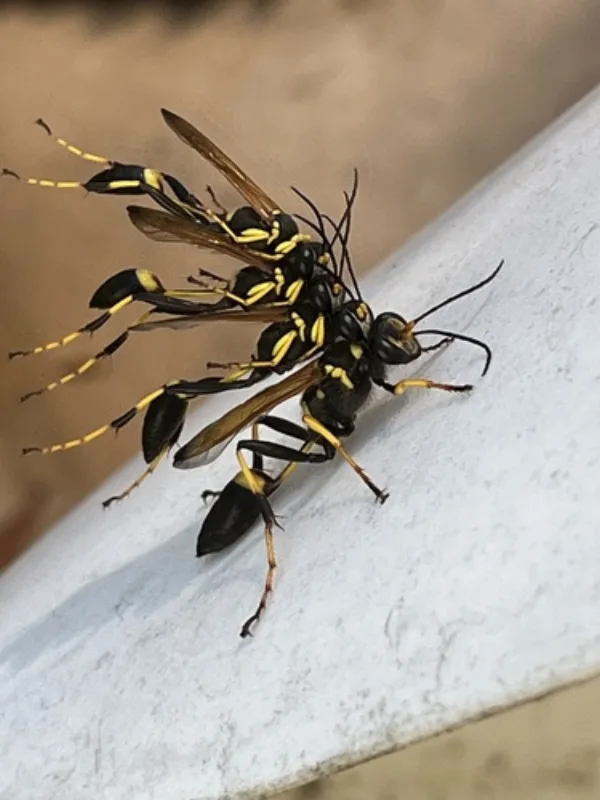
Mud Dauber
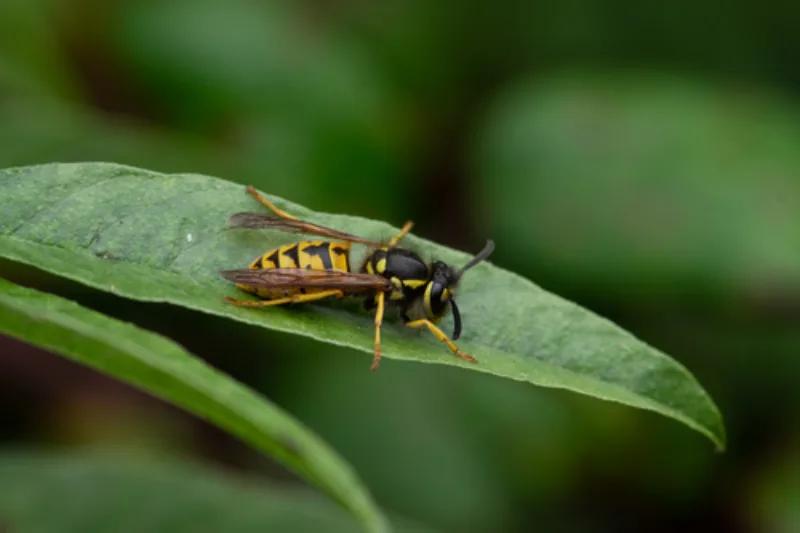
Wasp
Side-by-Side Comparison Table
| Trait | Mud Dauber | Wasp |
|---|---|---|
| Scientific Group | Sphecidae | Vespidae |
| Category | Insect | Insect |
| Typical Size | 18–28 mm | 12–28 mm |
| Danger Level | Nuisance | Medically Significant |
| Bites or Stings? | Yes | Yes |
| Peak US Months | June, July, August | July, August, September, October |
| Key ID Trait | Solitary wasp with an extraordinarily long, thread-thin waist | Slender, smooth, nearly hairless body with a very narrow pinched waist |
Mud Dauber vs. Wasp: True Size Comparison
Side-by-Side Anatomy Blueprint
Compare body segments, antennae, leg count, and key markings directly before treating or removing either species.
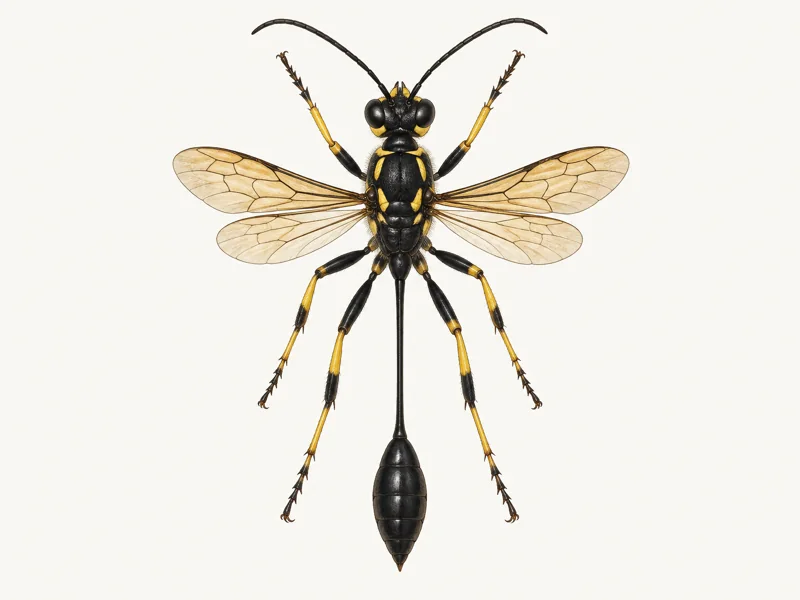
- Yellow-marked thorax: Glossy black thorax accented with crisp bright-yellow collar and spot.
- Amber veined wings: Narrow smoky-amber wings held out slightly while hunting spiders for mud nests.
- Thread-like waist stalk: Unmistakable extraordinarily long, needle-thin black petiole connecting thorax to tail.
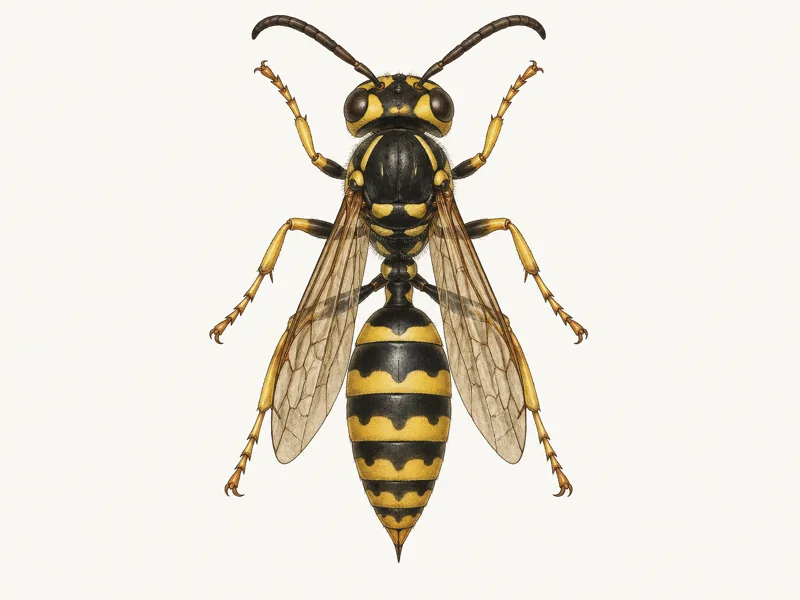
- Curved dark antennae: Segmented dark antennae and strong chewing mandibles for wood pulp nests.
- Smoky folded wings: Two pairs of narrow veined wings that fold lengthwise along the back at rest.
- Pinched waist: Sharp slender constriction separating the smooth hairless thorax from abdomen.
Quick ID verdict: If the waist looks like a stretched thread and the insect is alone near a mud tube, it's a mud dauber. If the waist is pinched but short, the body is smooth and nearly hairless, and the insect is coming and going from a papery nest, treat it as a stinging wasp.
Is a Mud Dauber a Wasp? Understanding the Key Difference
Yes, technically. Mud daubers are wasps, but they belong to the family Sphecidae, the thread-waisted wasps. The insects most people simply call "wasps," including paper wasps, yellowjackets, and hornets, belong to Vespidae.
The real difference between mud dauber and wasp comes down to lifestyle. Mud daubers are solitary: each female builds and provisions her own nest, with no colony to defend. Vespid wasps are usually social, and a nest full of workers will defend itself as a group. That single trait drives almost every risk difference homeowners care about.
Mud Dauber vs Wasp Identification: Body, Color, and Nest Clues
Size won't settle the question on its own. Mud daubers run 18–28 mm, while vespid wasps range from 12–28 mm, so the two overlap heavily. Shape and nest are the reliable clues.
Physical Features at a Glance
FeatureMud Dauber (Sphecidae)Wasp (Vespidae)Size18–28 mm12–28 mmWaistExtraordinarily long, thread-thinVery narrow and pinched, but shortBodySlender, often black, black-and-yellow, or metallic blueSlender, smooth, nearly hairless: often yellow, black, red, or brownSocial lifeSolitaryUsually social, living in coloniesDanger levelNuisanceMedically significantThe waist is the giveaway. On a mud dauber, the segment connecting thorax and abdomen looks almost like a stalk, with the abdomen seeming to dangle behind. A vespid's waist is pinched tight, yet the abdomen sits close to the body.
Mud Tubes vs Paper Nests
When it's hard to get a good look at a moving insect, the nest usually answers whether it's a mud dauber or wasp.
- Mud daubers build nests from mud: parallel "organ pipe" tubes or lumpy, fist-sized clumps on walls, eaves, sheds, and garages.
- Paper wasps build open, umbrella-shaped combs of chewed wood fiber, with the cells visible from below.
- Yellowjackets and hornets build enclosed paper nests, sometimes underground, in wall voids, or hanging from branches.
An old mud nest with small round holes simply means the young have already emerged.
Stinging Risk and Behavior Around Your Home
Mud daubers are rated a nuisance. With no colony to protect, females rarely sting unless grabbed or pressed against skin. They spend their time hunting spiders to stock their mud cells, which actually makes them minor allies in pest control.
Vespid wasps are rated medically significant. Disturbing a nest, by mowing near a ground nest or bumping an eave, can trigger multiple defensive stings. Unlike honey bees, they can sting more than once.
Anyone with a known venom allergy, multiple stings, or swelling beyond the sting site should not wait it out. Call US Poison Control at 1-800-222-1222 or contact a doctor, and call 911 for trouble breathing or facial swelling.
Where and When They're Active Across the US
Both groups are found across all lower 48 states, with the greatest activity in warm, humid regions such as the Southeast, Texas, and the Gulf Coast.
- Spring: Overwintering vespid queens start new nests: mud daubers emerge and begin building.
- Summer: Mud dauber construction peaks. Wasp colonies grow quickly.
- Late summer to fall: Yellowjacket and paper wasp colonies hit maximum size and are most defensive, especially around food and trash.
- Winter: Colonies die off in colder states: only mated queens survive. Mud dauber larvae overwinter sealed inside their tubes.
That late-season peak is when most backyard stings happen.
Safe IPM Steps for Managing Mud Daubers and Wasps
Integrated Pest Management starts with non-chemical steps. Most mud dauber problems never need a pesticide at all.
Exclusion
- Seal gaps around siding, soffits, vents, and utility lines.
- Repair torn window and attic vent screens.
- Keep garage and shed doors closed during summer.
Sanitation and moisture control
- Fix dripping faucets and puddles: mud daubers need wet soil to build.
- Use tight-fitting lids on trash and recycling bins.
- Clean up spilled soda, fruit, and pet food that attract yellowjackets.
- Reduce spider populations, which are mud daubers' main food source.
Removal
- Scrape off inactive mud nests with a putty knife and wash the area.
- Knock down small, early-season paper nests at dusk while wearing protective clothing.
- For large, enclosed, or in-wall yellowjacket and hornet nests, call a licensed pest professional.
If a pesticide is truly needed, choose a product labeled for the specific pest and site, and always follow the EPA product label exactly. The label is the law, and it covers safe application, timing, and protection for kids, pets, and pollinators.
Frequently Asked Questions
What is the main difference between a mud dauber and a wasp?
The key difference is lifestyle: mud daubers are solitary insects that build individual nests, while vespid wasps are social and live in colonies that defend themselves. This trait drives most risk and behavior differences homeowners encounter.
How can I identify a mud dauber vs wasp by their appearance?
Look at the waist: mud daubers have an extraordinarily long, thread-thin waist that makes the abdomen dangle, while wasps have a short, pinched waist. Mud daubers also appear slender and often metallic, whereas wasps are smooth, nearly hairless, and yellow or black.
What do mud dauber nests look like compared to wasp nests?
Mud daubers build nests from mud—parallel organ pipe tubes or lumpy clumps on walls and eaves. Paper wasps create open umbrella-shaped combs, while yellowjackets and hornets build enclosed paper nests, often underground or in wall voids.
Are mud daubers dangerous and do they sting?
Mud daubers are rated a nuisance and rarely sting unless grabbed or pressed against skin. They hunt spiders and spend time provisioning their mud cells, making them minor allies in pest control rather than a medically significant threat.
Why are vespid wasps considered more dangerous than mud daubers?
Vespid wasps are medically significant because they're social and defend their colonies aggressively. A nest disturbance can trigger multiple defensive stings from colony workers. Unlike mud daubers, wasps can sting repeatedly and cause serious reactions in allergic individuals.
What safe methods can I use to remove mud daubers from my home?
For inactive mud nests, scrape them off with a putty knife and wash the area. Seal gaps around siding and vents to prevent new nests. Fix wet soil sources since mud daubers need moisture to build. For large nests or wasps, contact a licensed pest professional.