Mud Dauber vs Paper Wasp: How to Tell Them Apart and Handle Each Safely
Quick ID Verdict: A slender wasp hovering near the porch light sends many homeowners straight to a search bar. Is it a mud dauber or paper wasp, and does it matter? It matters quite a bit, because one is mostly a nuisance and the other can deliver a medically significant sting.
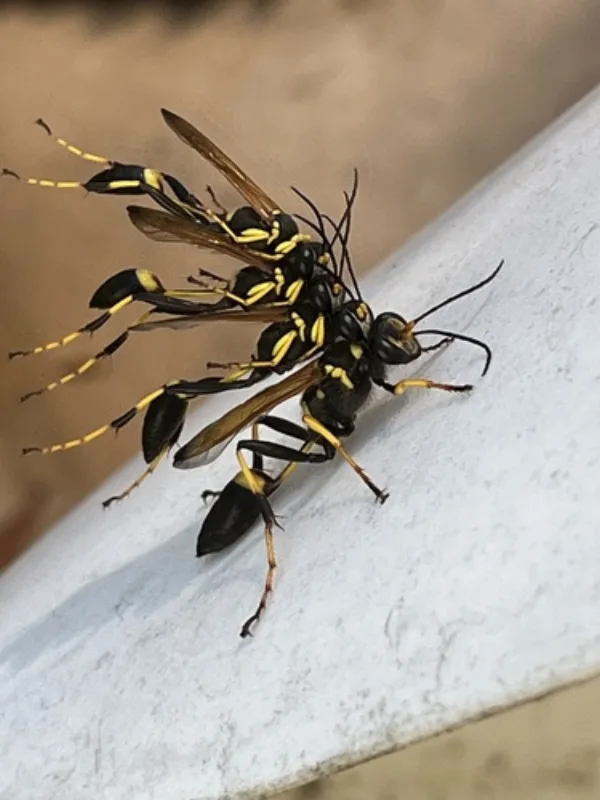
Mud Dauber
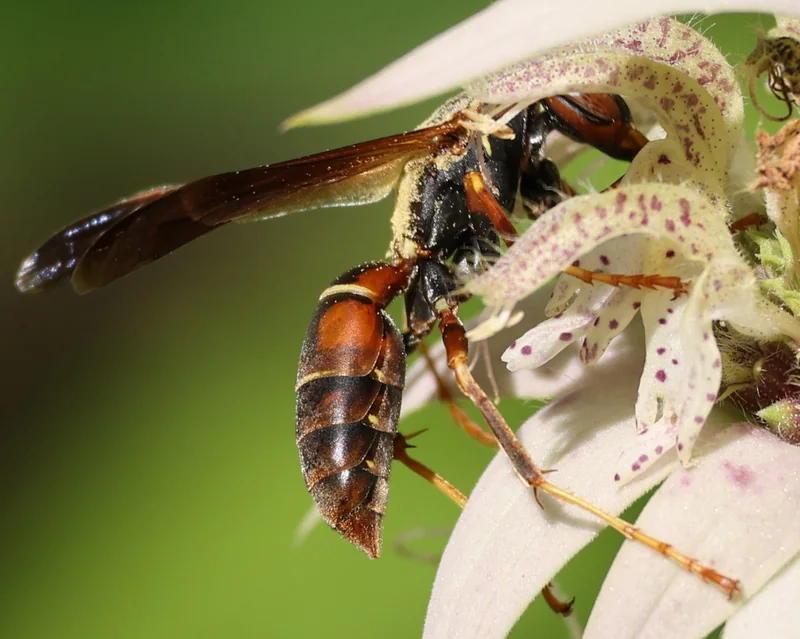
Paper Wasp
Side-by-Side Comparison Table
| Trait | Mud Dauber | Paper Wasp |
|---|---|---|
| Scientific Group | Sphecidae | Polistes |
| Category | Insect | Insect |
| Typical Size | 18–28 mm | 16–25 mm |
| Danger Level | Nuisance | Medically Significant |
| Bites or Stings? | Yes | Yes |
| Peak US Months | June, July, August | July, August, September, October |
| Key ID Trait | Solitary wasp with an extraordinarily long, thread-thin waist | Long slender brown, reddish, or yellow-and-black wasp with long hind legs dangling in flight |
Mud Dauber vs. Paper Wasp: True Size Comparison
Side-by-Side Anatomy Blueprint
Compare body segments, antennae, leg count, and key markings directly before treating or removing either species.
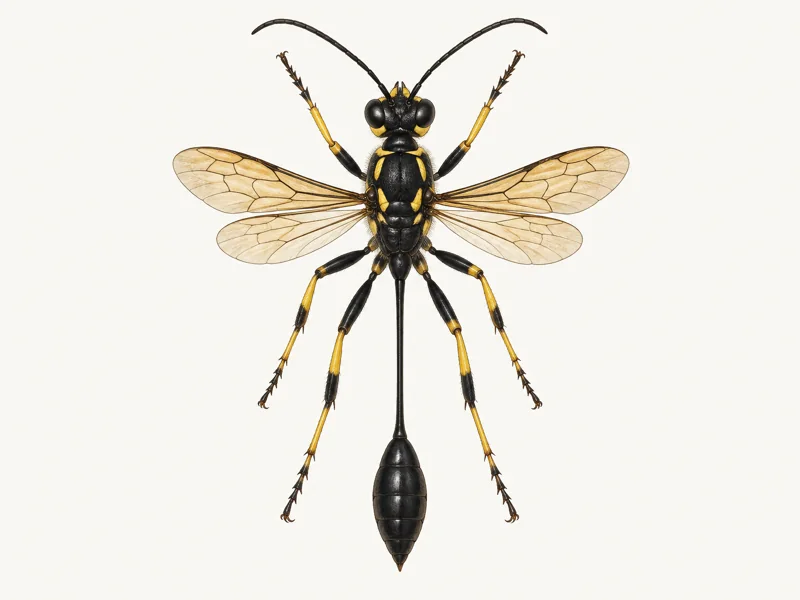
- Yellow-marked thorax: Glossy black thorax accented with crisp bright-yellow collar and spot.
- Amber veined wings: Narrow smoky-amber wings held out slightly while hunting spiders for mud nests.
- Thread-like waist stalk: Unmistakable extraordinarily long, needle-thin black petiole connecting thorax to tail.
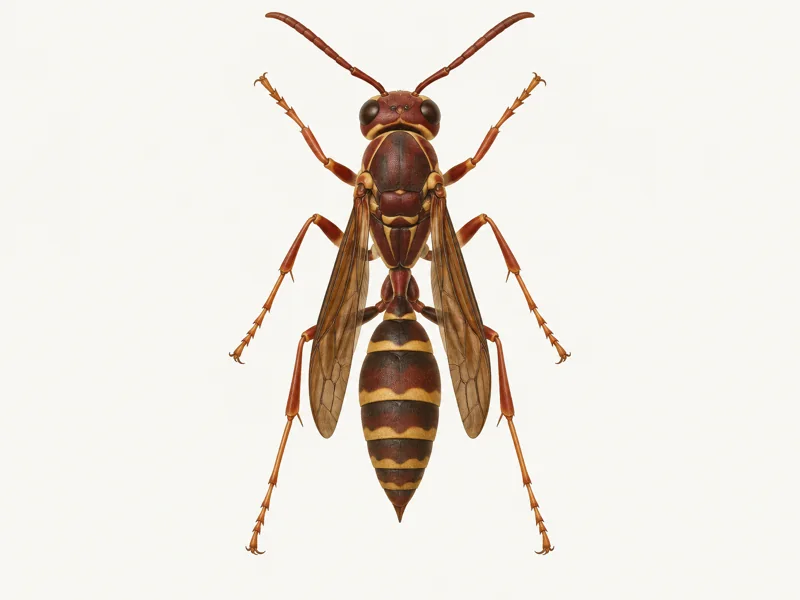
- Mahogany head & antennae: Slender reddish-brown head with curved yellow-tipped antennae.
- Narrow pinched waist: Slim spindle-shaped waist connecting dark thorax to tapered abdomen.
- Long dangling legs: Extra-long reddish-brown hind legs trail conspicuously downward in flight.
Quick ID verdict: If the waist is extraordinarily long and thread-thin and the wasp works alone near a mud nest, it's a mud dauber. If the hind legs dangle in flight and several wasps guard an open, honeycomb-like paper nest, it's a paper wasp.
Quick Identification: Body Shape, Color, and Size
The single most reliable difference between mud dauber and paper wasp is the waist. Mud daubers (family Sphecidae) have a petiole so long and thin it looks like a piece of thread connecting the thorax to the abdomen. Paper wasps (genus Polistes) have a slim waist too, but it's noticeably shorter and sturdier.
For quick mud dauber vs paper wasp identification, look for these traits:
TraitMud Dauber (Sphecidae)Paper Wasp (Polistes)Size18–28 mm16–25 mmWaistExtraordinarily long, thread-thinSlender but shorterColorBlack-and-yellow or metallic blue-blackBrown, reddish, or yellow-and-blackFlightDirect, purposefulLong hind legs dangle below the bodySocial habitSolitaryColonialThe sizes overlap, so color and posture tell more than length does.
Nest Differences: Mud Tubes vs Paper Combs
Nests are often easier to spot than the wasps themselves. A mud dauber nest is built from mud pellets the female carries one mouthful at a time. The black-and-yellow mud dauber makes lumpy clusters of cells that look like a dried mud smear, while the blue mud dauber often reuses old nests.
Paper wasp nests look completely different:
- Material: Chewed wood fiber mixed with saliva, giving a gray, papery look
- Shape: A single open comb, often umbrella-shaped, hanging from one stalk
- Cells: Hexagonal and visible from below, with no outer covering
A dry, crumbly mud mass usually means mud daubers. An open gray comb with wasps perched on it means paper wasps.
Behavior and Sting Risk Around Your Home
Mud daubers are solitary hunters that stock their cells with paralyzed spiders for their larvae. They have no colony to defend, so they rarely sting unless grabbed or pressed against skin. For most households, they rank as a nuisance rather than a hazard.
Paper wasps are a different story. They're colonial, and workers will defend the nest aggressively if someone bumps it, mows nearby, or reaches under a railing. Their stings are classified as medically significant and can trigger severe allergic reactions in sensitive people.
If someone has trouble breathing, swelling of the face or throat, or multiple stings, call 911. For other sting concerns, contact US Poison Control at 1-800-222-1222 and follow up with a doctor. Don't rely on home remedies for venom reactions.
So which is worse for homeowners? Paper wasps, clearly, especially near doors, decks, and play areas.
Where and When You'll See Them in the US
Both wasps are widespread across the continental United States, from the Southeast to the Pacific Northwest. They favor sheltered, dry spots on and around buildings.
Typical locations include:
- Mud daubers: Garage ceilings, attics, sheds, under eaves, and inside unused grills or vents, usually close to a mud source like a puddle or leaky spigot
- Paper wasps: Eaves, porch ceilings, window shutters, deck railings, fence tops, and playground equipment
Activity starts in spring as overwintered females emerge. Paper wasp colonies grow through summer and peak in late summer and early fall, when defensive behavior is highest. In warmer southern states, both can stay active well into autumn. Mated females overwinter in protected spaces, sometimes slipping into wall voids or attics.
Safe IPM Strategies for Each Wasp
Integrated Pest Management starts with exclusion, sanitation, and moisture control before any product is considered. Many mud daubers and paper wasps also help gardens by eating spiders and caterpillars, so nests far from foot traffic can often be left alone.
Managing Mud Daubers
Because mud daubers are a nuisance rather than a threat, physical removal usually works well.
- Scrape old or empty mud nests off surfaces with a putty knife
- Fix dripping hoses and fill low spots where puddles form, cutting off their building material
- Screen vents and seal gaps around soffits and siding
- Reduce spider populations, since spiders are their food source
Chemical treatment is rarely needed for this solitary wasp.
Managing Paper Wasps
Paper wasps deserve more caution. Small nests found in early spring, before many workers hatch, are the easiest to deal with.
- Inspect eaves, shutters, and railings each spring and knock down small starter combs
- Caulk cracks and screen openings where females might overwinter
- Keep sugary drinks and food scraps covered outdoors
- Work at dusk or dawn, when wasps are less active, and wear protective clothing
If a nest is large, high up, or near someone with a known sting allergy, a licensed pest professional is the safer choice. Any insecticide used should be applied exactly as directed on its EPA-registered product label.
Frequently Asked Questions
What's the main difference between a mud dauber and a paper wasp?
The key difference is the waist: mud daubers have an extraordinarily long, thread-thin waist, while paper wasps have a shorter, sturdier one. Mud daubers also work alone and build mud nests, whereas paper wasps are colonial and create open, honeycomb-like paper nests with multiple wasps.
How can I identify a mud dauber vs paper wasp by their nests?
Mud dauber nests are made from mud pellets and look like dried mud smears or lumpy clusters. Paper wasp nests are gray, papery structures with visible hexagonal cells in an open comb, often umbrella-shaped and hanging from a single stalk.
Are mud daubers or paper wasps more dangerous?
Paper wasps are significantly more dangerous. They aggressively defend their colonies and deliver medically significant stings that can trigger severe allergic reactions. Mud daubers rarely sting unless grabbed or pressed against skin, making them mostly a nuisance.
What should I do if I find a mud dauber nest near my home?
Since mud daubers are solitary and low-risk, you can safely scrape old nests with a putty knife. Fix water sources like dripping hoses and puddles to remove their building material, and screen vents to prevent new nests. Chemical treatment is rarely necessary.
When is the best time to remove a paper wasp nest?
Early spring is ideal, before the colony grows and workers hatch. Knock down small starter combs at dawn or dusk when wasps are less active and you're wearing protective clothing. For large, high, or threatening nests, hire a licensed pest professional.
Can paper wasps and mud daubers live together in the same area?
Yes, both species are widespread across the continental United States and often inhabit the same general regions. However, they have different nesting preferences—mud daubers favor attics and sheds, while paper wasps prefer eaves, railings, and exposed structures near human activity.