Cicada Killer vs Mud Dauber: How to Tell These Wasps Apart
Quick ID Verdict: A cicada killer (Sphecius speciosus) is a massive solitary wasp, 30-50 mm long, with rusty amber wings and a black-and-yellow striped abdomen. A mud dauber (Sphecidae) is smaller at 18-28 mm and stands out for its extraordinarily long, thread-thin waist. Both are solitary, rarely aggressive, and classed as nuisance insects rather than serious threats.
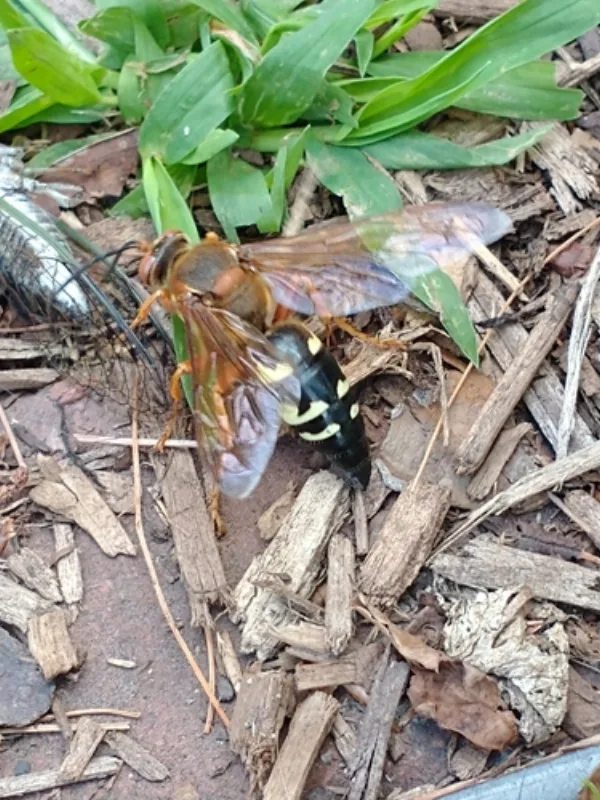
Cicada Killer
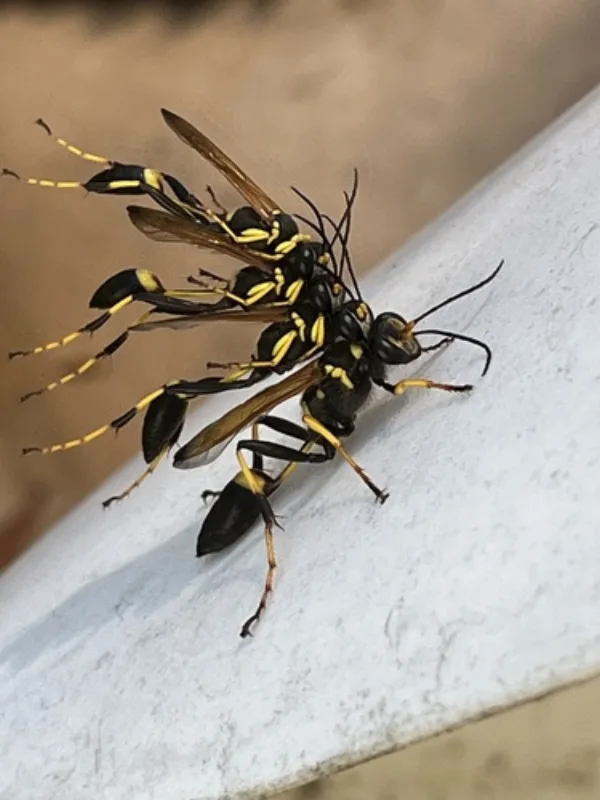
Mud Dauber
Side-by-Side Comparison Table
| Trait | Cicada Killer | Mud Dauber |
|---|---|---|
| Scientific Group | Sphecius speciosus | Sphecidae |
| Category | Insect | Insect |
| Typical Size | 30–50 mm | 18–28 mm |
| Danger Level | Nuisance | Nuisance |
| Bites or Stings? | Yes | Yes |
| Peak US Months | July, August | June, July, August |
| Key ID Trait | Massive solitary wasp (up to 2 inches) with rusty amber wings and black-and-yellow striped abdomen | Solitary wasp with an extraordinarily long, thread-thin waist |
Cicada Killer vs. Mud Dauber: True Size Comparison
Side-by-Side Anatomy Blueprint
Compare body segments, antennae, leg count, and key markings directly before treating or removing either species.
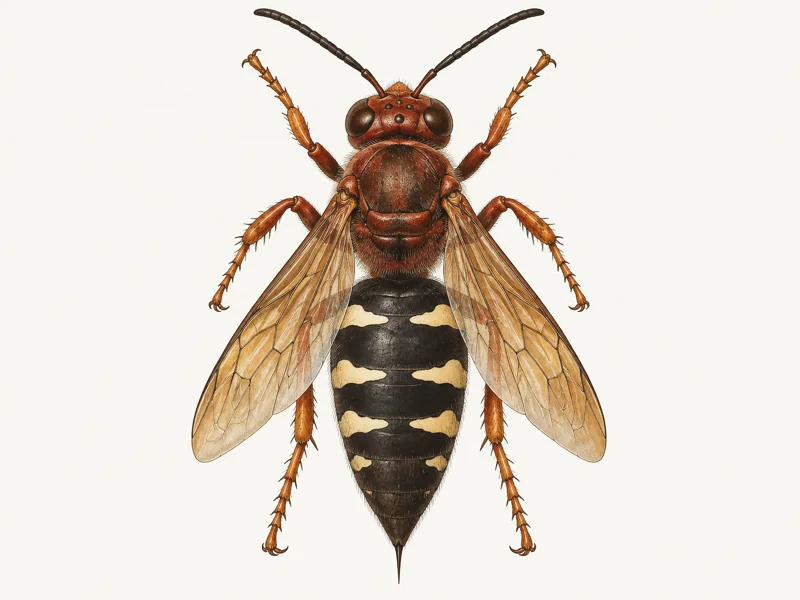
- Russet head & thorax: Massive solitary digger wasp (up to 40 mm) with rusty-red head and thorax.
- Large amber wings: Long russet-tinted veined wings strong enough to carry heavy paralyzed cicadas.
- Spiny digging legs: Six powerful amber-red spiny legs built for excavating deep sandy lawn burrows.
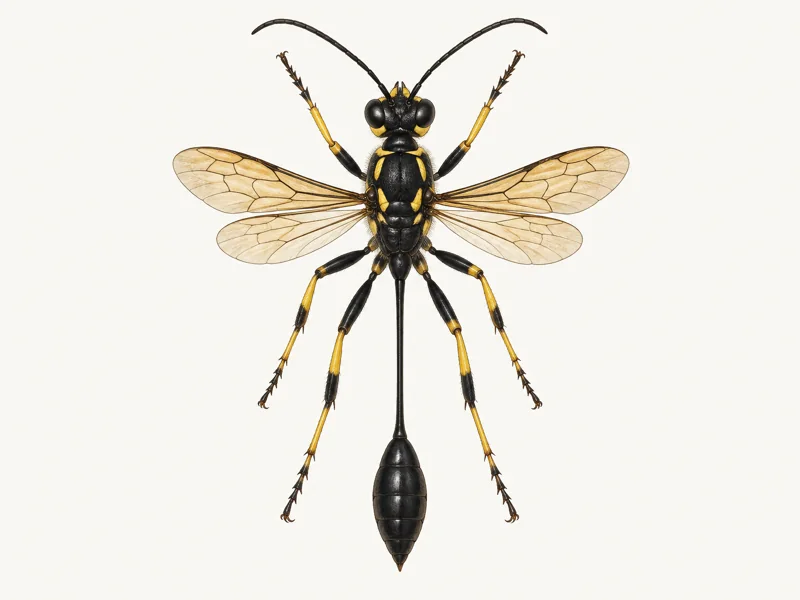
- Yellow-marked thorax: Glossy black thorax accented with crisp bright-yellow collar and spot.
- Amber veined wings: Narrow smoky-amber wings held out slightly while hunting spiders for mud nests.
- Thread-like waist stalk: Unmistakable extraordinarily long, needle-thin black petiole connecting thorax to tail.
Quick Answer: A cicada killer (Sphecius speciosus) is a massive solitary wasp, 30-50 mm long, with rusty amber wings and a black-and-yellow striped abdomen. A mud dauber (Sphecidae) is smaller at 18-28 mm and stands out for its extraordinarily long, thread-thin waist. Both are solitary, rarely aggressive, and classed as nuisance insects rather than serious threats.
In three seconds, check two things. If the wasp is huge and striped yellow with amber wings, it is a cicada killer. If it is slender with a waist as thin as thread, it is a mud dauber.
Key Visual & Physical Differences
The quickest way to settle the cicada killer vs mud dauber question is to look at size and body shape. These two wasps share a solitary lifestyle, but they look very different up close.
Size
- Cicada killer: 30-50 mm, or up to about 2 inches. It is one of the largest wasps a US homeowner is likely to see.
- Mud dauber: 18-28 mm. It is noticeably smaller and lighter in build.
Body Shape and Waist
- Cicada killer: Thick and heavy-bodied, with a stout connection between the thorax and abdomen.
- Mud dauber: Its defining feature is an extraordinarily long, thread-thin waist. The abdomen looks almost detached from the rest of the body.
Color and Wings
- Cicada killer: Rusty amber wings and a black abdomen marked with yellow stripes. People often mistake it for a giant hornet.
- Mud dauber: Coloring varies within the family. Some are dark or metallic and others have yellow accents, so rely on the waist rather than the color.
For quick cicada killer vs mud dauber identification, the waist is the most reliable clue. Size is a close second.
Behavior, Habitat & Danger Comparison
Behavior is the clearest difference between cicada killer and mud dauber activity around a property. One digs into the ground. The other builds with mud.
Cicada Killers
Cicada killers dig burrows in loose, sunny, well-drained soil. Look along sidewalks, sandy lawn patches, garden beds, and bare slopes, and expect small U-shaped mounds of dirt at each entrance. Females hunt cicadas, paralyze them, and drag them underground to feed their young.
Males often patrol the nesting area and dart at people who come near. This looks intimidating, but males cannot sting. Females can sting, but they seldom do unless they are handled or stepped on barefoot.
Mud Daubers
Mud daubers build nests from mud on protected surfaces such as eaves, porch ceilings, garage walls, sheds, attics, and under decks. Depending on the species, the nests may look like tubes, clumps, or rows of cells. They stock these cells with paralyzed spiders, which gives them some value as natural spider control.
Mud daubers are calm and do not defend their nests the way social wasps do. Stings are uncommon and usually happen only when a wasp is pinched or trapped.
Danger Level
Both species are rated as nuisance pests. Neither forms a colony or swarms to defend a nest. Anyone with a known insect venom allergy should still take care around them. If someone has a reaction to a sting, contact US Poison Control at 1-800-222-1222 or see a doctor. Call 911 for trouble breathing or swelling of the face or throat.
Which One Is Worse for Homeowners?
If you are wondering whether a cicada killer or mud dauber causes more trouble, the answer depends on your property. Cicada killers cause more visible disruption. Their burrows leave dirt mounds in lawns, loosen soil under pavers, and their size alarms families and guests. Mud daubers are mostly a cosmetic problem, since their nests stain siding and clutter eaves.
Non-Chemical IPM for Cicada Killers
- Keep turf thick and healthy. These wasps prefer bare, sandy ground.
- Water dry, exposed soil, or cover it with mulch, ground cover, or landscape fabric.
- Fill in or rake out burrow entrances after the season ends.
Non-Chemical IPM for Mud Daubers
- Scrape off inactive nests with a putty knife and wash the area.
- Seal gaps in soffits, vents, and sheds with caulk or screening.
- Cut down on spiders, their main prey, by removing webs and clutter.
If you still need a pesticide, choose a product labeled for the specific wasp and follow the EPA product label exactly. Treat in the evening, when the wasps are less active. A licensed pest professional can help with large or hard-to-reach infestations.
Frequently Asked Questions
Do cicada killers or mud daubers sting people?
Both can sting, but they rarely do. Male cicada killers cannot sting at all. Female cicada killers and mud daubers usually sting only when they are handled or trapped.
What is the fastest way to tell them apart?
Check the size and the waist. A large wasp, 30-50 mm long, with amber wings and yellow stripes is a cicada killer. A smaller wasp with a thread-thin waist is a mud dauber.
Are mud dauber nests harmful to my house?
Not structurally. The nests are mainly a cosmetic issue. Scrape them off and seal any openings to keep the wasps from coming back.
Should I kill cicada killers in my yard?
Usually there is no need, since they are nuisance insects and their activity is seasonal. Improving the lawn and covering bare soil works well. If you do use a product, follow the EPA label.