Earwig vs Silverfish: How to Tell These Household Pests Apart
Quick ID Verdict: A small, fast-moving bug darts across the bathroom floor at night, and the homeowner is left wondering: earwig or silverfish? Both are common across the United States, both love damp spaces, and both are classified as nuisance pests rather than dangerous ones.
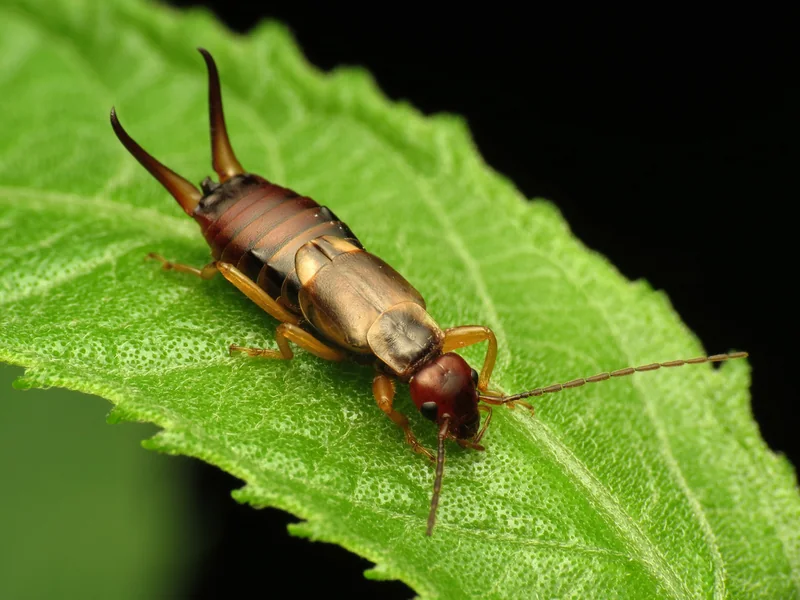
Earwig
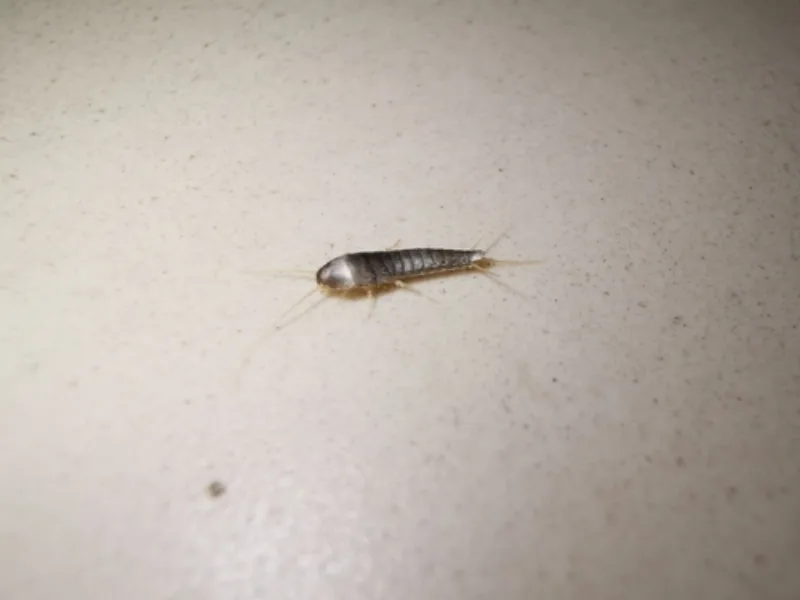
Silverfish
Side-by-Side Comparison Table
| Trait | Earwig | Silverfish |
|---|---|---|
| Scientific Group | Dermaptera | Lepisma saccharinum |
| Category | Insect | Insect |
| Typical Size | 12–22 mm | 10–19 mm |
| Danger Level | Nuisance | Nuisance |
| Bites or Stings? | No | No |
| Peak US Months | June, July, August, September | March, April, May, July |
| Key ID Trait | Slender, flattened dark reddish-brown body | Wingless, carrot-shaped metallic silver-gray body covered in fine scales |
Earwig vs. Silverfish: True Size Comparison
Side-by-Side Anatomy Blueprint
Compare body segments, antennae, leg count, and key markings directly before treating or removing either species.
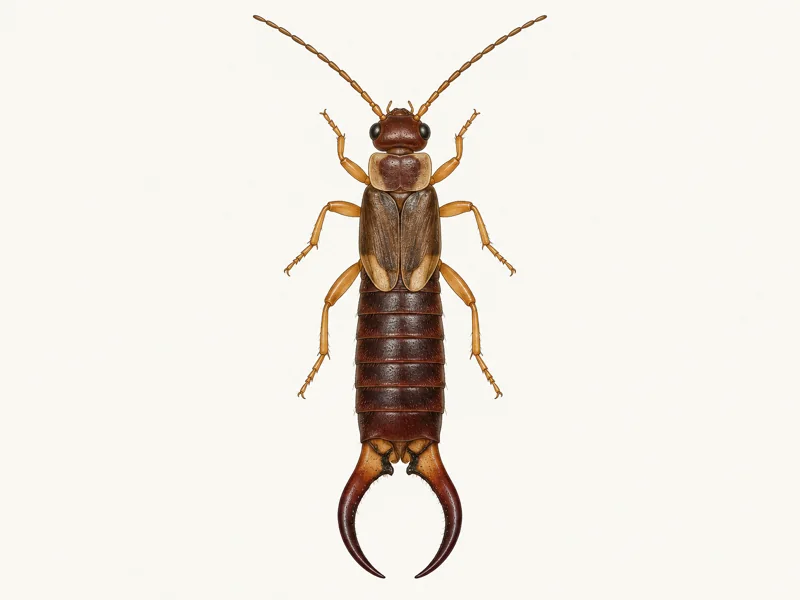
- Thread-like antennae: Segmented medium-length antennae on a flat chestnut-brown head.
- Short wing covers: Compact leathery forewings (tegmina) leave most of the flexible abdomen exposed.
- Six amber legs: Three pairs of slender pale tan legs suited for damp mulch and baseboard crevices.
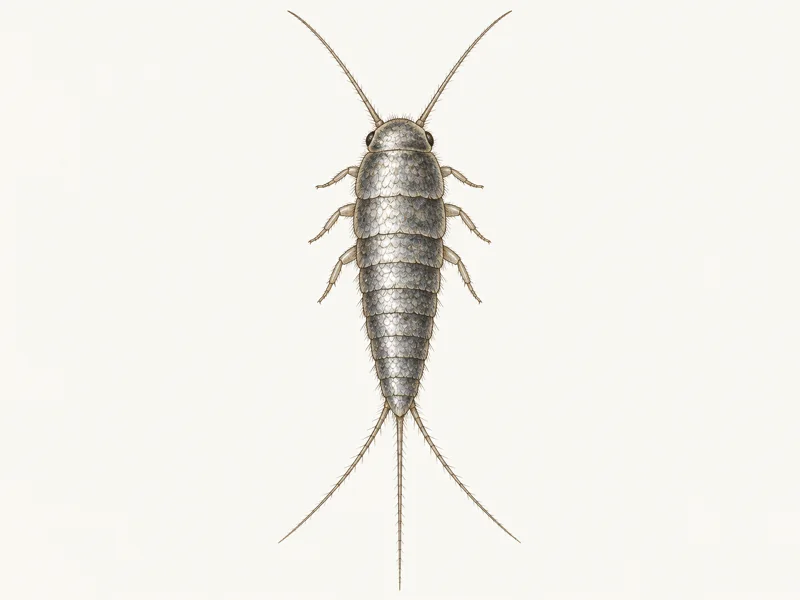
- Long thin antennae: Sweeping thread-like feelers guiding nocturnal foraging in damp paper and baths.
- Carrot-shaped body: Flat, wingless teardrop profile broad at the head and tapering smoothly backward.
- Metallic silver scales: Shimmering pewter-silver scales give a fluid, fish-like wriggling crawl.
Quick ID verdict: If it has pincers on its rear end and a dark reddish-brown body, it's an earwig. If it's wingless, carrot-shaped, shiny silver-gray, and trails three thin bristles, it's a silverfish.
This earwig vs silverfish guide explains the details behind that verdict, plus how to manage each one safely.
Earwig or Silverfish? Quick Identification Guide
Earwig vs silverfish identification comes down to three things: shape, color, and what's on the tail end. Size alone won't settle it, since the ranges overlap.
Body Shape, Color, and Pincers vs Tail Bristles
The clearest difference between earwig and silverfish is the rear of the body.
- Earwigs (order Dermaptera): 12–22 mm long, with a slender, flattened, dark reddish-brown body. The abdomen ends in a pair of curved pincers (cerci). Males usually have more strongly curved pincers than females.
- Silverfish (Lepisma saccharinum): 10–19 mm long, wingless, with a carrot-shaped body that tapers from head to tail. The body is metallic silver-gray and covered in fine scales. Three long, thread-like bristles extend from the tail, and long antennae point forward.
A squashed silverfish often leaves a silvery smudge from those scales. An earwig never will.
How They Move and Behave When Disturbed
Silverfish run in quick, wiggling bursts that look almost like a fish swimming, which is where the name comes from. They dart for cracks and baseboards the moment a light flicks on.
Earwigs move more deliberately. When threatened, they often stop and raise their pincers over the abdomen like a scorpion's tail. It's mostly a bluff, though some species can release a mildly foul-smelling liquid.
Key Differences in Habitat, Diet, and Seasonal Activity
These two pests share a love of moisture but live very different lives.
Earwigs are primarily outdoor insects. The European earwig, the species most US homeowners encounter, is found in nearly every state. They hide by day under mulch, leaf litter, stones, and boards, then feed at night on decaying plant matter, aphids, and sometimes tender seedlings, flowers, and soft fruit. Indoor sightings spike in summer and early fall, especially after heavy rain or during hot, dry spells that drive them toward cooler shelter.
Silverfish are indoor specialists found nationwide. They prefer high humidity (roughly 75% or more) and moderate temperatures, settling into basements, bathrooms, laundry rooms, attics, and storage boxes. Their diet leans on starches and carbohydrates:
- Paper, book bindings, and wallpaper paste
- Cereal, flour, and dry pet food
- Cotton, linen, and rayon fabrics
Because homes stay climate-controlled, silverfish can stay active year-round. They're also long-lived, often surviving several years and going weeks without food.
Are Earwigs or Silverfish Harmful to Your Home?
Neither insect is medically dangerous. Both are rated as nuisance pests: they don't carry disease, and silverfish don't bite at all.
An earwig may pinch if handled roughly, but the pinch rarely breaks skin. The old myth about earwigs crawling into human ears has no scientific basis. Anyone who experiences an unusual reaction to any insect encounter should contact US Poison Control at 1-800-222-1222 or see a doctor.
The real concern is property damage:
- Earwigs can chew holes in garden plants, seedlings, and ripe fruit, but they rarely damage anything indoors.
- Silverfish can slowly ruin books, photos, important documents, wallpaper, and stored clothing. They also contaminate pantry goods.
So which one is worse for homeowners? Indoors, silverfish usually cause more lasting trouble because they breed inside and quietly damage belongings. Earwigs are more of a garden and seasonal nuisance.
Safe IPM Strategies to Control Each Pest
Integrated Pest Management (IPM) focuses on removing the conditions pests need before reaching for chemicals. For both insects, that starts with moisture.
For earwigs:
- Pull mulch, leaf litter, and woodpiles back 6–12 inches from the foundation.
- Set rolled, damp newspaper traps overnight and discard them in the morning.
- Switch bright white porch lights to yellow bug lights to attract fewer night insects.
For silverfish:
- Store paper, photos, and fabrics in sealed plastic bins, not cardboard.
- Keep dry foods in airtight containers.
- Vacuum baseboards, shelves, and closets regularly to remove eggs and food debris.
- Use sticky traps to confirm where activity is concentrated.
Moisture Control, Exclusion, and When to Call a Pro
Running a dehumidifier to keep indoor humidity below 50% makes basements and bathrooms far less inviting to both pests. Fix leaky pipes, clear gutters, and make sure downspouts direct water away from the house.
Exclusion matters just as much. Seal cracks around foundations, pipes, and windows with caulk, and add door sweeps and weatherstripping.
If sightings continue after a few weeks of sanitation and moisture control, a licensed pest professional can locate hidden harborage and recommend targeted treatments. Any insecticide or bait used, professional or DIY, should be applied strictly according to its EPA-registered product label.
Frequently Asked Questions
What's the difference between an earwig and silverfish?
The main difference is the rear end: earwigs have curved pincers (cerci) and a dark reddish-brown body, while silverfish are carrot-shaped with three thread-like tail bristles and metallic silver-gray coloring. Earwigs are typically 12–22 mm long; silverfish are 10–19 mm.
How can I identify a silverfish by its appearance?
Silverfish are wingless, carrot-shaped insects with a metallic silver-gray body covered in fine scales. They have three long thread-like bristles extending from the tail and long antennae pointing forward. When squashed, they leave a silvery smudge from their scales.
Do earwigs or silverfish bite or sting?
Silverfish don't bite at all. Earwigs may pinch if handled roughly, but the pinch rarely breaks skin. Neither insect is medically dangerous. The myth about earwigs crawling into human ears has no scientific basis.
Which pest causes more property damage indoors: earwig or silverfish?
Silverfish typically cause more lasting indoor damage because they breed inside and quietly damage books, photos, documents, wallpaper, and clothing. Earwigs primarily damage gardens and outdoor plants but rarely damage anything inside the home.
What's the best way to control silverfish infestations?
Store items in sealed plastic bins rather than cardboard, keep dry foods in airtight containers, and vacuum baseboards regularly. Use sticky traps to monitor activity and run a dehumidifier to keep humidity below 50%, as silverfish prefer high moisture environments.
Why do earwigs and silverfish prefer damp areas?
Both insects require moisture to survive. Silverfish thrive in high humidity (75% or more) and settle in basements, bathrooms, and laundry rooms. Earwigs hide in damp outdoor spaces like mulch and leaf litter, moving indoors during dry spells or after heavy rain.