Cicada Killer vs Cicada: How to Tell Them Apart Fast
Quick ID Verdict: A cicada killer (Sphecius speciosus) is a large wasp with a narrow waist, rusty amber wings, and a black-and-yellow striped abdomen. A cicada (family Cicadidae) has a stout, broad body with large, wide-set compound eyes and no wasp waist. If it has yellow stripes and digs in your lawn, it's a cicada killer.
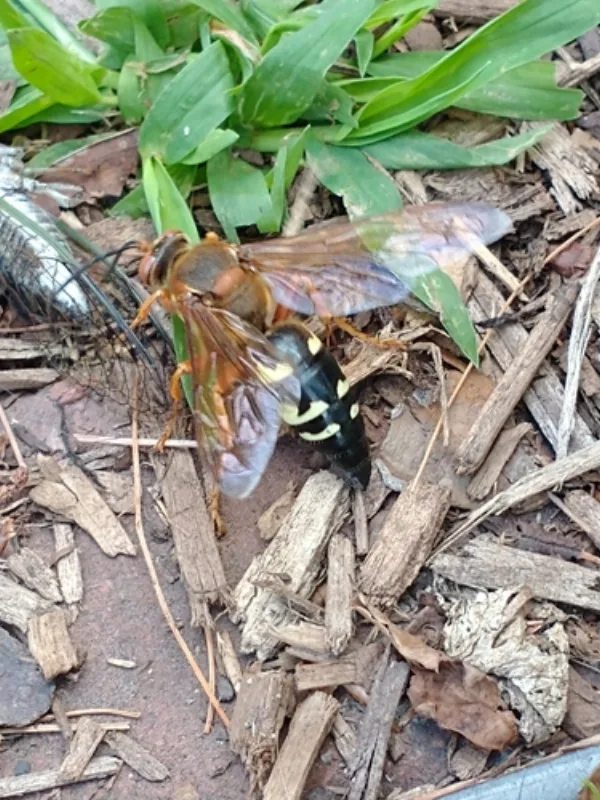
Cicada Killer
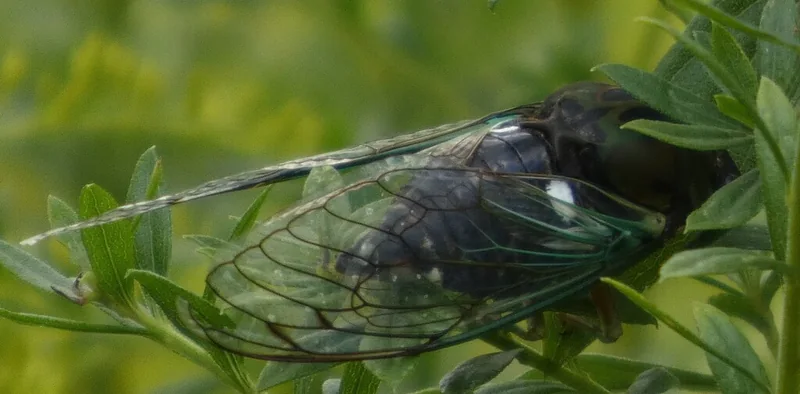
Cicada
Side-by-Side Comparison Table
| Trait | Cicada Killer | Cicada |
|---|---|---|
| Scientific Group | Sphecius speciosus | Cicadidae |
| Category | Insect | Insect |
| Typical Size | 30–50 mm | 25–55 mm |
| Danger Level | Nuisance | None |
| Bites or Stings? | Yes | No |
| Peak US Months | July, August | May, June, July, August |
| Key ID Trait | Massive solitary wasp (up to 2 inches) with rusty amber wings and black-and-yellow striped abdomen | Stout, broad body with large wide-set compound eyes (black, green, or red in periodical broods) |
Cicada Killer vs. Cicada: True Size Comparison
Side-by-Side Anatomy Blueprint
Compare body segments, antennae, leg count, and key markings directly before treating or removing either species.
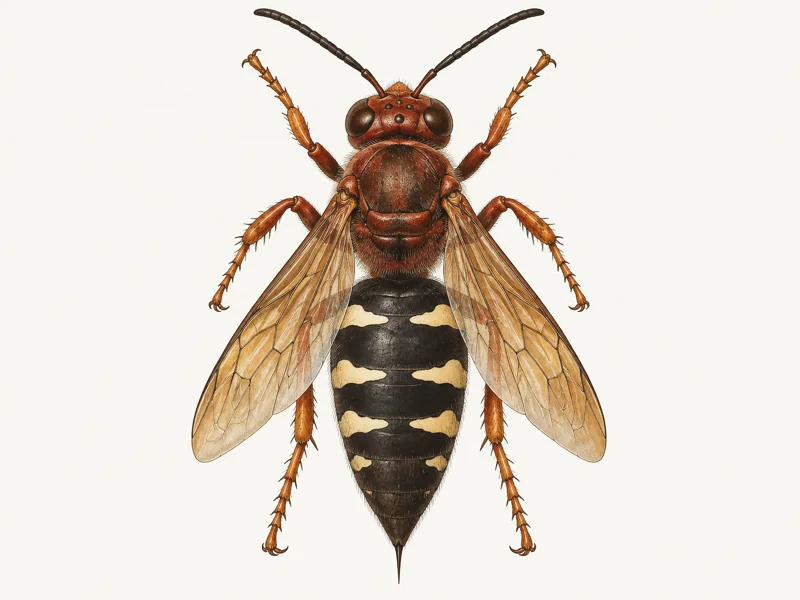
- Russet head & thorax: Massive solitary digger wasp (up to 40 mm) with rusty-red head and thorax.
- Large amber wings: Long russet-tinted veined wings strong enough to carry heavy paralyzed cicadas.
- Spiny digging legs: Six powerful amber-red spiny legs built for excavating deep sandy lawn burrows.
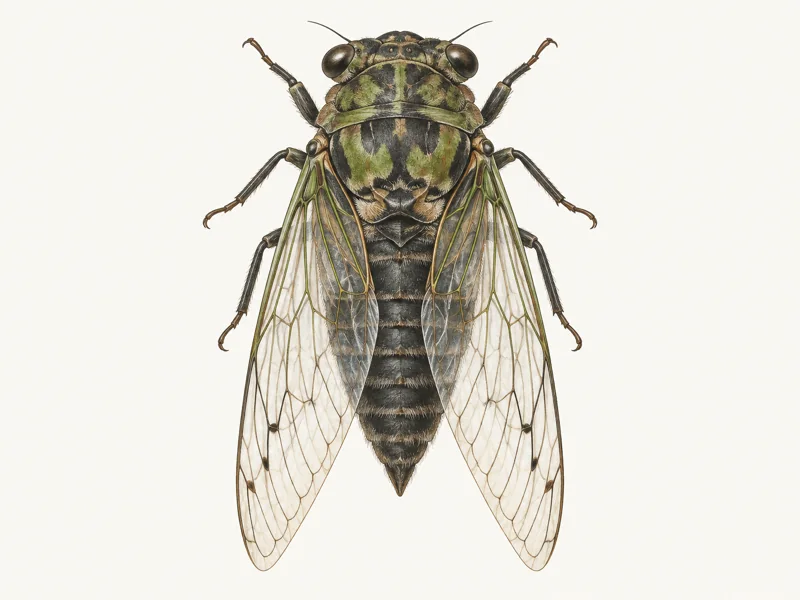
- Widely spaced eyes: Two huge prominent compound eyes set far apart on a broad blunt head.
- Patterned stout thorax: Thick black-and-moss-green thorax (black with red eyes in periodical cicadas).
- Clear veined roof wings: Large transparent heavily veined wings extend far past the abdomen at rest.
Quick Answer: A cicada killer (Sphecius speciosus) is a large wasp with a narrow waist, rusty amber wings, and a black-and-yellow striped abdomen. A cicada (family Cicadidae) has a stout, broad body with large, wide-set compound eyes and no wasp waist. If it has yellow stripes and digs in your lawn, it's a cicada killer. If it's chunky, buzzes loudly from trees, and has bulging eyes, it's a cicada.
Key Visual & Physical Differences
The two insects are similar in size, which is why so many people mix them up. Cicada killers measure about 30-50 mm, and cicadas range from 25-55 mm. Body shape and coloring are the most reliable clues.
Cicada Killer Identification
- Size: Massive for a solitary wasp, up to 2 inches long.
- Wings: Rusty amber, tinted reddish-brown.
- Abdomen: Black with bold yellow stripes or bands.
- Body shape: Classic wasp build with a pinched waist between the thorax and abdomen.
Cicada Identification
- Size: 25-55 mm, often with a heavy, compact look.
- Body shape: Stout and broad, with no narrow waist.
- Eyes: Large, wide-set compound eyes. They may be black, green, or red in periodical broods.
- Wings: Usually clear and held tent-like over the back.
For quick cicada killer vs cicada identification, check the waist and the stripes. A tapered waist and yellow banding mean wasp. A blocky body with prominent eyes means cicada.
Behavior, Habitat & Danger Comparison
The biggest difference between cicada killer and cicada behavior is that one hunts the other. Female cicada killers capture cicadas, paralyze them with a sting, and carry them into underground burrows to feed their young.
Cicada Killer Behavior
Cicada killers are solitary, so each female digs her own burrow rather than sharing a colony nest. They favor sunny, well-drained soil with sparse grass, such as lawn edges, sandbox borders, and areas near sidewalks. You may notice small mounds of loose soil around pencil-sized holes.
Males often patrol and hover near people, which looks intimidating, but males cannot sting. Females can sting but rarely do unless handled or stepped on barefoot. Their danger level is best described as a nuisance.
Cicada Behavior
Cicadas spend most of their lives underground as nymphs feeding on root sap. Adults emerge, climb trees and structures, and males produce the loud buzzing calls heard in summer. Cicadas do not bite or sting people, and they pose no danger to humans or pets.
Danger at a Glance
- Cicada killer: Nuisance. Females can sting if provoked, but they are not aggressive.
- Cicada: None. Harmless to people.
If anyone experiences swelling beyond the sting site, trouble breathing, or other unusual symptoms after a wasp sting, contact US Poison Control at 1-800-222-1222 or seek medical care immediately.
Which One Is Worse for Homeowners?
Neither insect is a serious threat, but cicada killers usually cause more homeowner concern. Their burrows can leave unsightly mounds in lawns and garden beds, and their size and hovering flights can alarm kids and guests. Cicadas are mainly a noise issue, though heavy egg-laying can damage the tips of young tree branches.
Managing Cicada Killers (IPM First)
- Thicken the lawn: Cicada killers prefer bare or thin turf. Dense, healthy grass discourages digging.
- Water and mulch: Moist soil and a thick mulch layer make burrowing less attractive.
- Cover bare spots: Reseed or cover sandy patches near play areas.
- Tolerate when possible: Activity is seasonal and fades once summer ends.
If treatment becomes necessary near high-traffic areas, use a product labeled for ground-nesting wasps and follow the EPA product label exactly. Treating individual burrows at dusk, when wasps are less active, limits exposure.
Managing Cicadas
- Protect young trees: Drape fine netting over saplings and shrubs during heavy emergences.
- Skip insecticides: Sprays are rarely needed and often ineffective against large emergences.
- Wait it out: Adult activity is short-lived.
Whether you're dealing with a cicada killer or cicada, non-chemical steps handle most situations. Interestingly, cicada killers act as a natural check on cicada numbers.
Frequently Asked Questions
Do cicada killers sting people?
Only females can sting, and they rarely do unless grabbed or stepped on. Males may hover aggressively but have no stinger.
Can cicadas bite or sting?
No. Cicadas have no stinger and do not bite people. They feed on plant sap and pose no danger to humans.
Why are there holes in my lawn with dirt piles?
Small holes with loose soil mounds in sunny, thin turf often point to cicada killer burrows. Each female digs her own nest to store paralyzed cicadas for her young.
Are cicada killers and cicadas the same size?
They overlap. Cicada killers measure about 30-50 mm, while cicadas range from 25-55 mm. Use body shape, stripes, and eyes rather than size to tell them apart.