Cicada Killer vs Wasp: How to Tell Them Apart and Which Is Dangerous
Quick ID Verdict: A cicada killer (Sphecius speciosus) is a massive solitary wasp, 30-50 mm long, with rusty amber wings and a black-and-yellow striped abdomen. Common social wasps in the family Vespidae are smaller at 12-28 mm, with slender, smooth, nearly hairless bodies and a very narrow pinched waist. If it is huge and digging in the soil alone, it is likely a cicada killer.
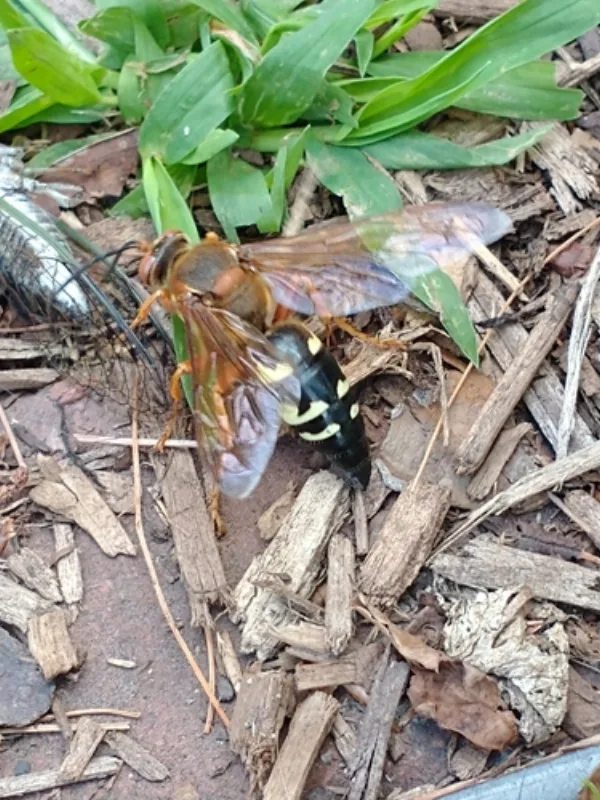
Cicada Killer
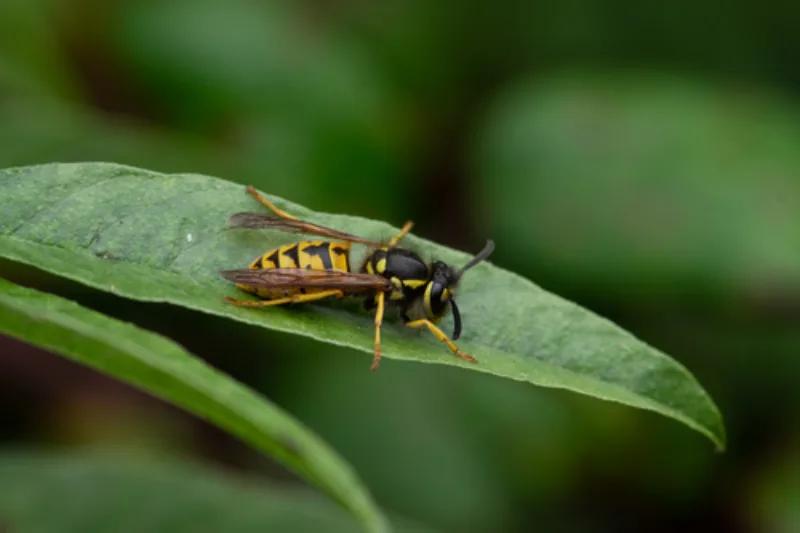
Wasp
Side-by-Side Comparison Table
| Trait | Cicada Killer | Wasp |
|---|---|---|
| Scientific Group | Sphecius speciosus | Vespidae |
| Category | Insect | Insect |
| Typical Size | 30–50 mm | 12–28 mm |
| Danger Level | Nuisance | Medically Significant |
| Bites or Stings? | Yes | Yes |
| Peak US Months | July, August | July, August, September, October |
| Key ID Trait | Massive solitary wasp (up to 2 inches) with rusty amber wings and black-and-yellow striped abdomen | Slender, smooth, nearly hairless body with a very narrow pinched waist |
Cicada Killer vs. Wasp: True Size Comparison
Side-by-Side Anatomy Blueprint
Compare body segments, antennae, leg count, and key markings directly before treating or removing either species.
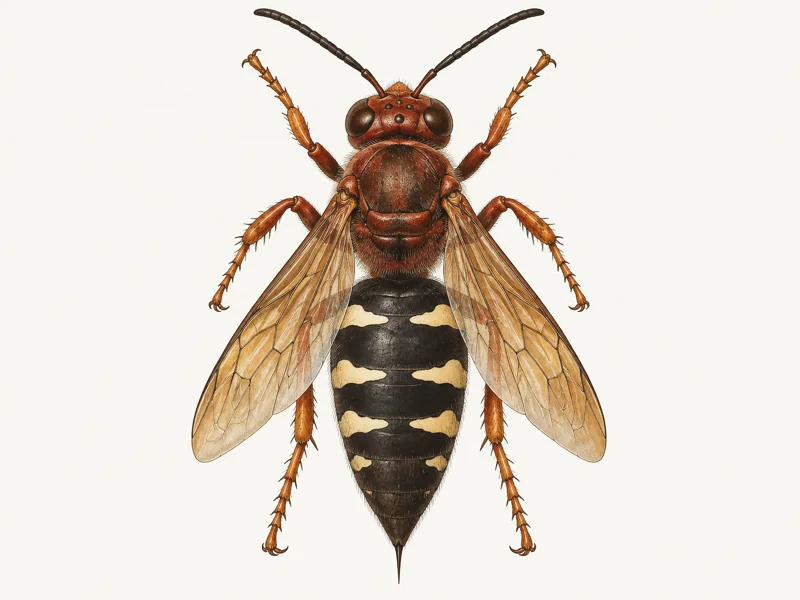
- Russet head & thorax: Massive solitary digger wasp (up to 40 mm) with rusty-red head and thorax.
- Large amber wings: Long russet-tinted veined wings strong enough to carry heavy paralyzed cicadas.
- Spiny digging legs: Six powerful amber-red spiny legs built for excavating deep sandy lawn burrows.
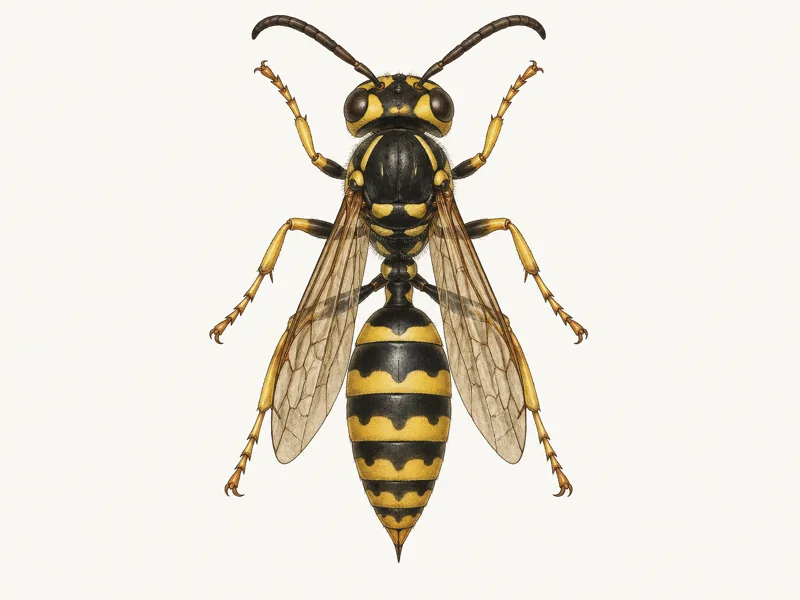
- Curved dark antennae: Segmented dark antennae and strong chewing mandibles for wood pulp nests.
- Smoky folded wings: Two pairs of narrow veined wings that fold lengthwise along the back at rest.
- Pinched waist: Sharp slender constriction separating the smooth hairless thorax from abdomen.
Quick Answer: A cicada killer (Sphecius speciosus) is a massive solitary wasp, 30-50 mm long, with rusty amber wings and a black-and-yellow striped abdomen. Common social wasps in the family Vespidae are smaller at 12-28 mm, with slender, smooth, nearly hairless bodies and a very narrow pinched waist. If it is huge and digging in the soil alone, it is likely a cicada killer. If it is smaller and flying around a paper nest with others, treat it as a stinging wasp.
Key Visual & Physical Differences
Size is the fastest clue in any cicada killer vs wasp identification. Cicada killers reach up to 2 inches, which makes them look alarming. Most Vespidae wasps, including paper wasps and yellowjackets, measure about half that length or less.
Cicada Killer Field Marks
- Size: 30-50 mm, among the largest wasps a homeowner will see
- Wings: Rusty amber or orange-tinted
- Abdomen: Black or dark reddish with pale yellow stripes
- Build: Thick and heavy-bodied, often with reddish-brown legs and thorax
Vespidae Wasp Field Marks
- Size: 12-28 mm
- Body: Slender, smooth, and nearly hairless
- Waist: Very narrow and pinched between thorax and abdomen
- Wings: Usually smoky or clear and folded lengthwise at rest
The main difference between cicada killer and wasp appearance comes down to bulk and wing color. A cicada killer looks like an oversized, amber-winged hornet. A typical Vespidae wasp looks sleek and narrow-waisted.
Behavior, Habitat & Danger Comparison
Behavior often settles the question faster than a close look. Cicada killers are solitary, while many Vespidae wasps live in colonies that guard their nests.
Cicada Killer Behavior
Females dig burrows in well-drained, sandy, or bare soil, often along sidewalks, lawn edges, and sunny banks. They hunt cicadas, paralyze them, and drag them underground as food for their larvae. Males patrol territories and may buzz people, but males cannot sting. Females can sting but rarely do unless grabbed or stepped on, which is why cicada killers are rated a nuisance.
Vespidae Wasp Behavior
Paper wasps build open, umbrella-shaped combs under eaves, railings, and grills. Yellowjackets often nest in the ground, wall voids, or attics, and hornets build enclosed paper nests in trees or shrubs. These wasps defend their colonies aggressively and can sting repeatedly, so they are considered medically significant.
Sting Safety
Anyone stung who shows swelling of the face or throat, trouble breathing, dizziness, or hives spreading beyond the sting site needs emergency care right away by calling 911. For guidance on a sting, contact US Poison Control at 1-800-222-1222 and follow up with a doctor. Do not rely on home remedies for venom reactions.
Which One Is Worse for Homeowners?
Despite their intimidating size, cicada killers are usually the lesser problem. They are mostly a cosmetic issue, leaving small mounds of soil and holes in lawns, and they pose little sting risk. Vespidae wasps are the bigger concern because colonies near doors, decks, and play areas can cause multiple stings.
Non-Chemical IPM First
- Cicada killers: Thicken turf, water and fertilize lawns properly, and cover bare sandy patches with mulch or ground cover, since females prefer loose, dry, sparse soil.
- Vespidae wasps: Seal gaps in siding, soffits, and vents. Keep trash cans lidded, clean up spilled sweet drinks and food, and remove fallen fruit.
- Early action: Knock down small paper wasp nests early in spring, when only the queen is present, while wearing protective clothing.
- Traps: Use yellowjacket traps placed away from gathering areas.
When to Use Products or Call a Pro
If a nest sits in a high-traffic spot or inside a wall, a licensed pest professional is the safest choice. Anyone applying an insecticide must read and follow the EPA product label exactly, including timing, protective gear, and site restrictions. Never seal a yellowjacket nest inside a wall, because the wasps may chew through into living spaces.
Frequently Asked Questions
Is that big wasp a cicada killer or wasp from a nest?
If it is 30-50 mm long with amber wings and is digging in soil alone, it is almost certainly a cicada killer. Smaller insects at 12-28 mm with pinched waists that fly to a shared paper nest are Vespidae wasps.
Do cicada killers sting people?
Males cannot sting at all. Females can, but they rarely do unless they are handled or trapped against skin, so they are considered a nuisance rather than a medical threat.
Are cicada killers good to have around?
They help control cicada numbers and seldom bother people. Many homeowners tolerate them unless their burrows damage lawns heavily.
What should someone do after a wasp sting?
Move away from the nest, then call US Poison Control at 1-800-222-1222 for guidance. Call 911 for any breathing trouble, throat or facial swelling, or fainting.