Paper Wasp vs Wasp: How to Tell Them Apart and Which Is Worse
Quick ID Verdict: Every paper wasp is a wasp, but not every wasp is a paper wasp. Paper wasps (genus Polistes) are long, slender, brown, reddish, or yellow-and-black insects whose long hind legs dangle in flight. The broader wasp family (Vespidae) includes yellowjackets and hornets, which tend to fly with legs tucked and often build enclosed nests.
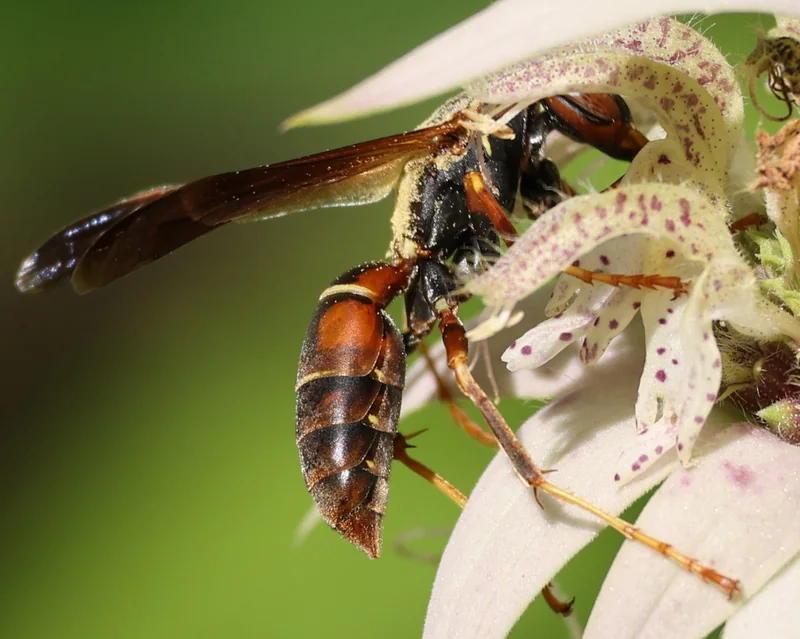
Paper Wasp
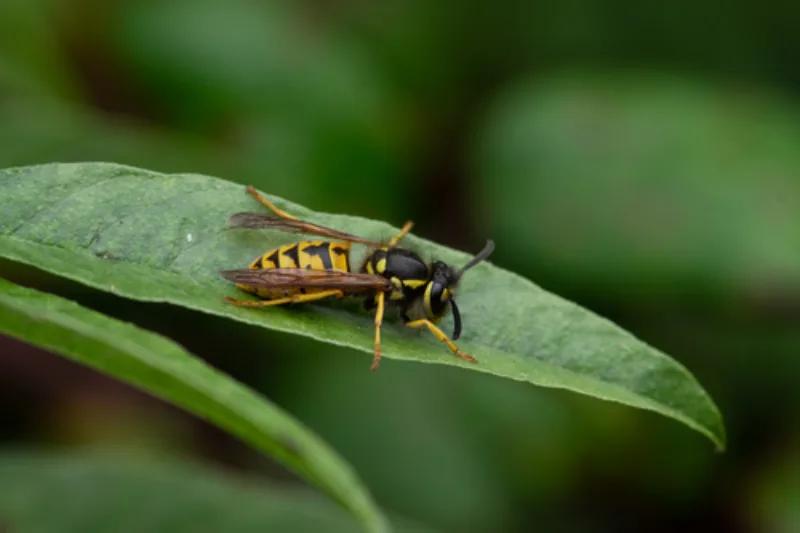
Wasp
Side-by-Side Comparison Table
| Trait | Paper Wasp | Wasp |
|---|---|---|
| Scientific Group | Polistes | Vespidae |
| Category | Insect | Insect |
| Typical Size | 16–25 mm | 12–28 mm |
| Danger Level | Medically Significant | Medically Significant |
| Bites or Stings? | Yes | Yes |
| Peak US Months | July, August, September, October | July, August, September, October |
| Key ID Trait | Long slender brown, reddish, or yellow-and-black wasp with long hind legs dangling in flight | Slender, smooth, nearly hairless body with a very narrow pinched waist |
Paper Wasp vs. Wasp: True Size Comparison
Side-by-Side Anatomy Blueprint
Compare body segments, antennae, leg count, and key markings directly before treating or removing either species.
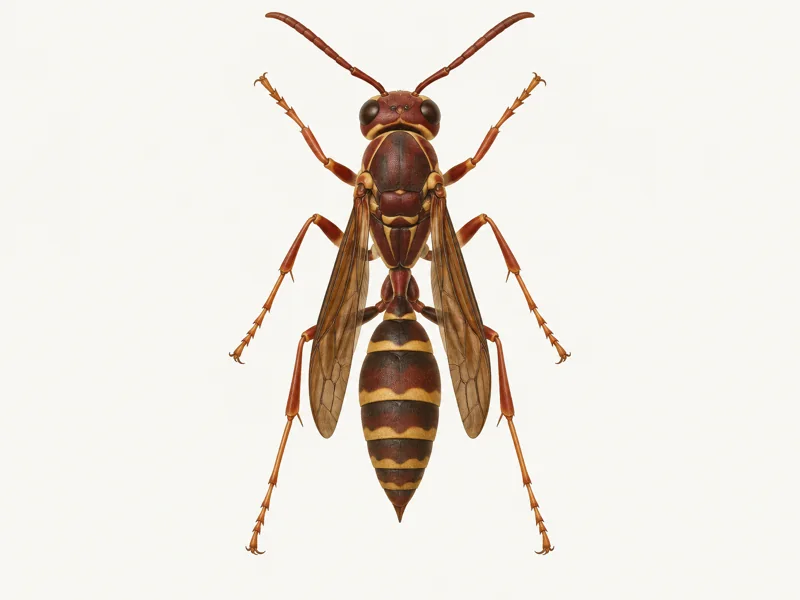
- Mahogany head & antennae: Slender reddish-brown head with curved yellow-tipped antennae.
- Narrow pinched waist: Slim spindle-shaped waist connecting dark thorax to tapered abdomen.
- Long dangling legs: Extra-long reddish-brown hind legs trail conspicuously downward in flight.
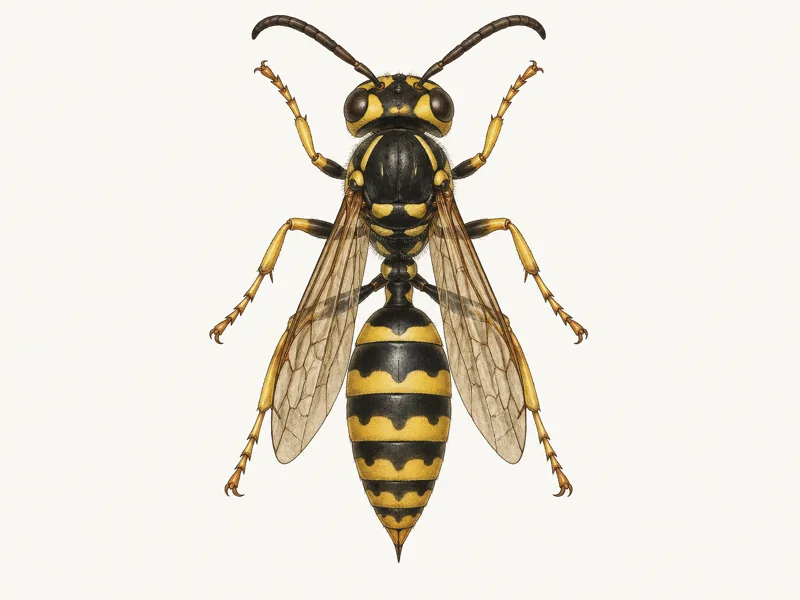
- Curved dark antennae: Segmented dark antennae and strong chewing mandibles for wood pulp nests.
- Smoky folded wings: Two pairs of narrow veined wings that fold lengthwise along the back at rest.
- Pinched waist: Sharp slender constriction separating the smooth hairless thorax from abdomen.
Quick Answer: Every paper wasp is a wasp, but not every wasp is a paper wasp. Paper wasps (genus Polistes) are long, slender, brown, reddish, or yellow-and-black insects whose long hind legs dangle in flight. The broader wasp family (Vespidae) includes yellowjackets and hornets, which tend to fly with legs tucked and often build enclosed nests.
Quick ID Verdict: Telling Them Apart in 3 Seconds
Watch the legs. If a slender wasp drifts past with long hind legs hanging down, it is almost certainly a paper wasp. If it is a smooth, nearly hairless insect with a very narrow pinched waist that zips by with legs tucked, it is more likely a yellowjacket, hornet, or another member of Vespidae.
Key Visual & Physical Differences
Because Polistes sits inside the Vespidae family, the two groups share a lot. Both have a smooth, nearly hairless body and the classic narrow waist. The useful paper wasp vs wasp identification clues come down to shape, size, color, and flight posture.
Paper Wasps (Polistes)
- Size: 16-25 mm long.
- Body shape: Long and slender, with a spindly, almost leggy look.
- Color: Brown, reddish, or yellow-and-black, depending on species.
- Flight: Slow and drifting, with long hind legs dangling below the body.
Wasps (Family Vespidae)
- Size: 12-28 mm long, a wider range that covers small yellowjackets and large hornets.
- Body shape: Slender, smooth, and nearly hairless with a very narrow pinched waist; many yellowjackets look stockier than paper wasps.
- Color: Often bold yellow-and-black or black-and-white banding.
- Flight: Fast and direct, usually with legs held close to the body.
Nest Appearance
Paper wasps build open, umbrella-shaped combs with exposed cells, often hanging from a single stalk. Many other vespid wasps, such as yellowjackets and hornets, build enclosed paper nests with an outer envelope, sometimes underground or inside wall voids.
Behavior, Habitat & Danger Comparison
Paper wasps favor sheltered spots like eaves, porch ceilings, window shutters, deck railings, and grill lids. Colonies are usually modest in size, and workers tend to defend the nest only when it is disturbed. They also hunt caterpillars, which makes them useful garden predators.
Other vespid wasps vary widely. Yellowjackets often nest in the ground or in structural voids, build large colonies by late summer, and scavenge sugary drinks and meats around picnics and trash cans. Hornets may nest in trees, shrubs, or attics.
Sting Risk
Both groups are rated medically significant. Females of both can sting repeatedly, and stings can trigger serious allergic reactions in sensitive people. If someone is stung and shows swelling beyond the sting site, trouble breathing, or dizziness, call 911. For non-emergency guidance, contact US Poison Control at 1-800-222-1222 and follow up with a doctor.
Which One Is Worse for Homeowners?
For most households, the real difference between paper wasp and wasp problems is nest location and colony size. Paper wasps are more visible because their open combs hang in plain sight near doors and windows, but they are generally less aggressive. Yellowjackets and some hornets are usually the bigger threat, since hidden ground or wall nests are easy to disturb and can hold many defensive workers.
Non-Chemical IPM First
- Exclusion: Seal gaps around eaves, soffits, vents, and siding in early spring before queens start nests.
- Sanitation: Keep trash cans lidded, clean up spilled soda and fallen fruit, and cover food outdoors.
- Early removal: Knock down small, new paper wasp nests in early spring with a long pole, ideally at dusk when activity is low.
- Leave beneficial nests alone: A paper wasp nest far from foot traffic can often be tolerated.
When to Use Products or Call a Pro
If a nest is large, hidden in a wall or the ground, or near someone with a sting allergy, hire a licensed pest professional. Anyone using an insecticide should choose a product labeled for wasps and follow the EPA product label exactly, including timing, protective clothing, and application site.
Frequently Asked Questions
Is a paper wasp a type of wasp?
Yes. Paper wasps belong to the genus Polistes within the wasp family Vespidae, which also includes yellowjackets and hornets.
How can someone tell if it is a paper wasp or wasp of another kind?
Look for long hind legs dangling in flight and a slender brown, reddish, or yellow-and-black body. Fast flight with tucked legs points to a yellowjacket or hornet.
Are paper wasps less dangerous than other wasps?
They are usually less aggressive, but both are medically significant. Paper wasps will sting readily if their nest is disturbed.
Should a homeowner remove a paper wasp nest?
Nests near doors, walkways, or play areas are worth removing, ideally while small in early spring. Larger nests or any nest near an allergic person warrant a licensed professional.