Pavement Ant vs Sugar Ant: How to Tell Them Apart Fast
Quick ID Verdict: Pavement ants (Tetramorium immigrans) are dark brown to blackish ants with paler legs and antennae, measuring 2.5-4 mm. Sugar ants, more accurately called odorous house ants (Tapinoma sessile), are slightly smaller at 2-3.5 mm and look uniformly dark brown to black. Crush one: if it gives off a rotten-coconut smell, it's an odorous house ant.
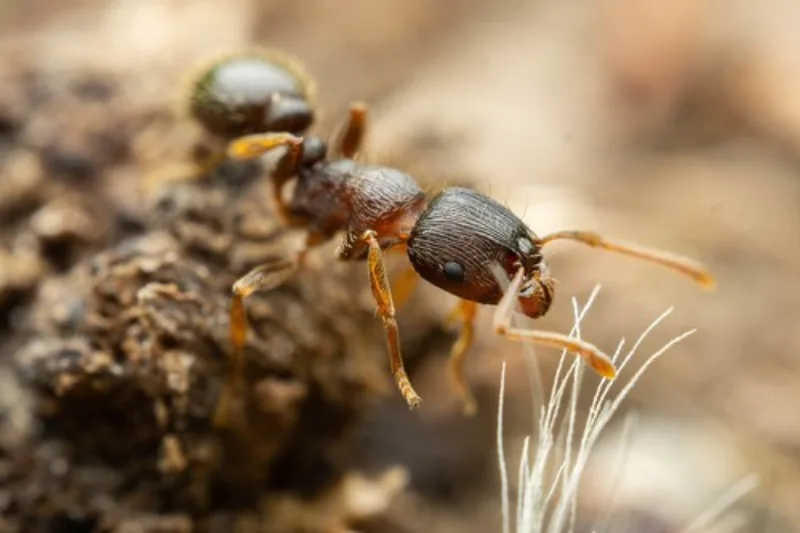
Pavement Ant
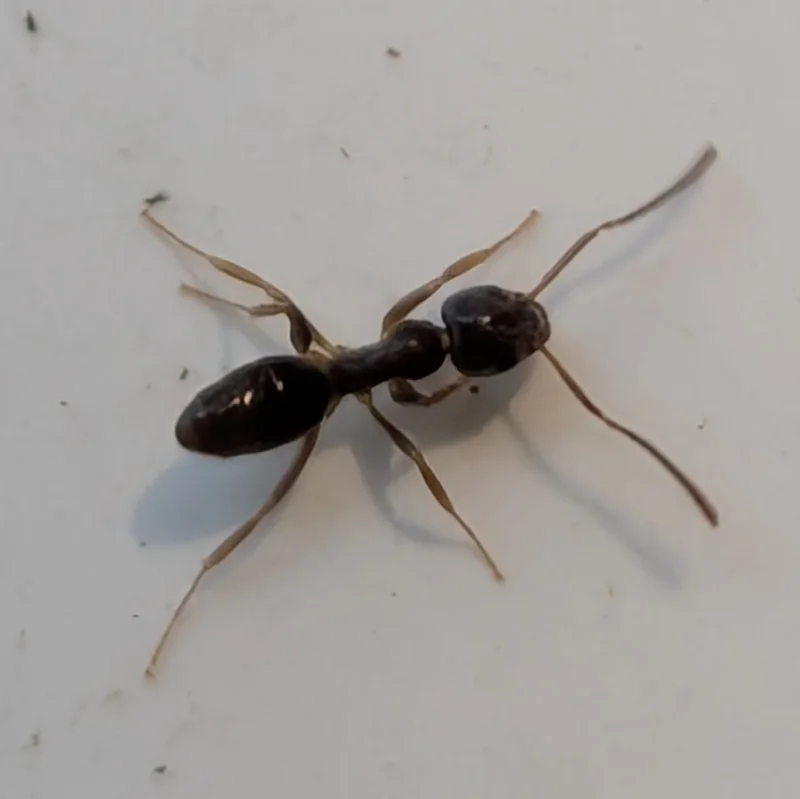
Sugar Ant
Side-by-Side Comparison Table
| Trait | Pavement Ant | Sugar Ant |
|---|---|---|
| Scientific Group | Tetramorium immigrans | Tapinoma sessile |
| Category | Insect | Insect |
| Typical Size | 2.5–4 mm | 2–3.5 mm |
| Danger Level | Nuisance | Nuisance |
| Bites or Stings? | No | No |
| Peak US Months | April, May, June, July | April, May, June, July |
| Key ID Trait | Small dark brown to blackish ant with paler legs and antennae | Tiny dark brown to black ant common in kitchens nationwide |
Pavement Ant vs. Sugar Ant: True Size Comparison
Side-by-Side Anatomy Blueprint
Compare body segments, antennae, leg count, and key markings directly before treating or removing either species.
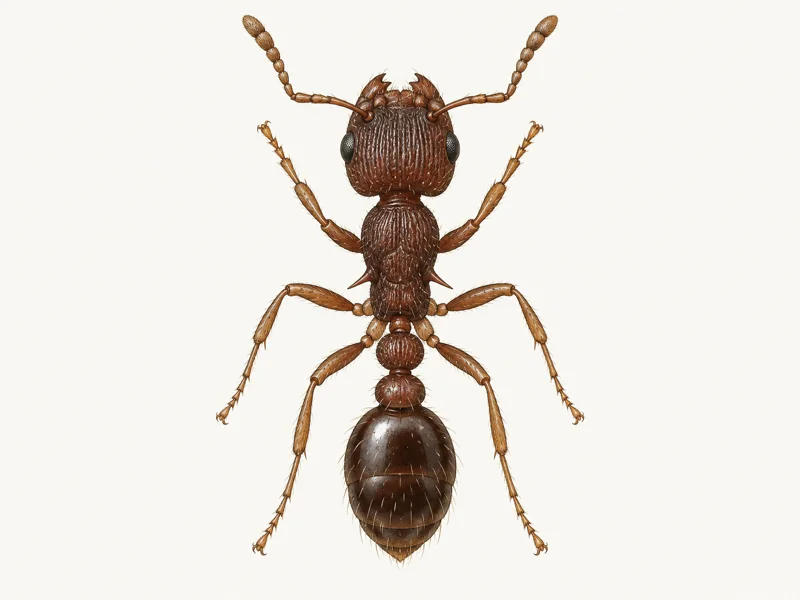
- Grooved dark head: Fine parallel lengthwise furrows cover the head and thorax under magnification.
- Tiny thorax spines: Pair of small backward-pointing spines sit at the rear edge of the thorax.
- Two waist nodes: Two distinct petiole nodes connect the dark brown thorax to the oval abdomen.
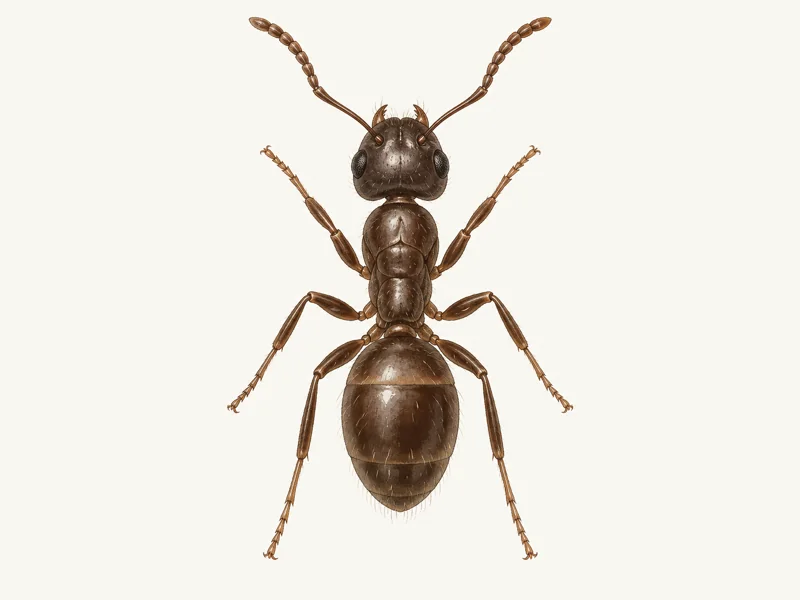
- Elbowed 12-part antennae: Sharply angled dark brown antennae without a heavy thickened club.
- Compact smooth thorax: Uniform dark chocolate-brown 2.5–3.2 mm body; smells like rotten coconut if crushed.
- Hidden single waist node: Flat, low 1-segmented petiole tucked directly beneath the overhanging abdomen.
Quick Answer: Pavement ants (Tetramorium immigrans) are dark brown to blackish ants with paler legs and antennae, measuring 2.5-4 mm. Sugar ants, more accurately called odorous house ants (Tapinoma sessile), are slightly smaller at 2-3.5 mm and look uniformly dark brown to black. Crush one: if it gives off a rotten-coconut smell, it's an odorous house ant.
3-Second ID Verdict: Look for paler legs and antennae on a slightly larger ant near cracks in pavement, which points to a pavement ant. If you see a tiny, all-dark ant trailing across kitchen counters that smells odd when crushed, you're most likely dealing with a sugar ant.
Key Visual & Physical Differences
At first glance, both species look like small dark ants. A closer look with a phone camera or hand lens reveals clear differences that make pavement ant vs sugar ant identification much easier.
Size and Color
- Pavement ant: 2.5-4 mm long, dark brown to blackish body with noticeably paler legs and antennae.
- Sugar ant (odorous house ant): 2-3.5 mm long, tiny and evenly dark brown to black from head to abdomen.
Body Features to Check
- Waist: Pavement ants have a two-segmented waist (petiole and postpetiole). Odorous house ants have a single, flattened waist node that is often hidden under the abdomen.
- Head and thorax: Pavement ants show fine parallel grooves on the head and thorax, plus a pair of small spines on the back. Odorous house ants look smooth.
- Odor: Crushed odorous house ants release a sharp, rotten-coconut or musty smell. Pavement ants have no notable odor.
The odor test is the fastest way to settle whether you have a pavement ant or a sugar ant. It works even when the ants are too small to examine comfortably.
Behavior, Habitat & Danger Comparison
The real difference between pavement ant and sugar ant species shows up in where they nest and how they forage. Both are rated as nuisance pests and pose no serious health threat.
Pavement Ants
- Nesting: Under sidewalks, driveways, patio slabs, and foundations. Look for small soil mounds pushed up through cracks.
- Indoor entry: Often enter through slab cracks, expansion joints, and gaps along baseboards on ground floors.
- Diet: Broad tastes, including sweets, grease, seeds, and dead insects.
- Behavior: Known for spring "ant wars," with large territorial battles between neighboring colonies on pavement.
Sugar Ants (Odorous House Ants)
- Nesting: Shallow nests in mulch, under stones, inside wall voids, and near moisture sources like leaky pipes.
- Indoor entry: Common in kitchens nationwide, often trailing along counters, sinks, and window frames.
- Diet: Strongly attracted to sweets, honeydew, and sugary spills.
- Behavior: Colonies can contain multiple queens and split into new nests when disturbed, which makes them harder to eliminate.
Danger Level
Both species are classified as nuisance pests. Pavement ants can bite or sting weakly but rarely affect people, and odorous house ants are not considered harmful. If anyone experiences an unusual reaction to any insect sting, contact US Poison Control at 1-800-222-1222 or a doctor.
Which One Is Worse for Homeowners?
For most households, odorous house ants are the bigger headache. Their multi-queen colonies relocate and split when sprayed, so repellent treatments often scatter them into more nests. Pavement ants are usually easier to manage because their colonies stay tied to slabs and soil.
Non-Chemical Control First
- Sanitation: Wipe counters, rinse recyclables, and store sweets and pet food in sealed containers.
- Moisture control: Fix leaky faucets and pipes, and keep gutters clear, which is especially important for odorous house ants.
- Exclusion: Seal foundation and slab cracks, baseboard gaps, and utility entry points with caulk.
- Landscaping: Pull mulch and stones a few inches back from the foundation and trim plants touching the house.
When to Use Baits
If ants persist, slow-acting baits generally outperform sprays because workers carry the bait back to the colony. Odorous house ants favor sweet baits, while pavement ants often accept both sweet and protein or grease baits. Always read and follow the EPA product label, and keep baits away from children and pets.
Frequently Asked Questions
Is "sugar ant" a real species?
No. "Sugar ant" is a common nickname for several sweet-loving ants. In most US homes it refers to the odorous house ant, Tapinoma sessile.
What is the fastest way to tell a pavement ant from a sugar ant?
Crush one ant and smell it. A rotten-coconut odor means odorous house ant, while paler legs and antennae with no smell suggest a pavement ant.
Do pavement ants or sugar ants damage homes?
Neither causes structural damage. Both are nuisance pests that contaminate food and annoy homeowners with indoor foraging trails.
Why do sugar ants come back after spraying?
Odorous house ant colonies have multiple queens and can split into new nests when stressed. Baits labeled for ants, used according to EPA label directions, work better than repellent sprays.