Pharaoh Ant vs Sugar Ant: How to Tell Them Apart and Treat Each the Right Way
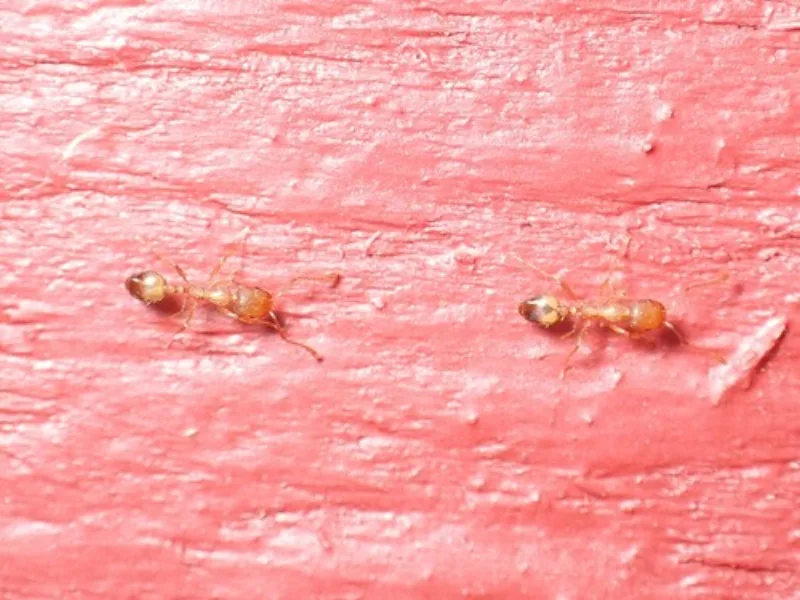
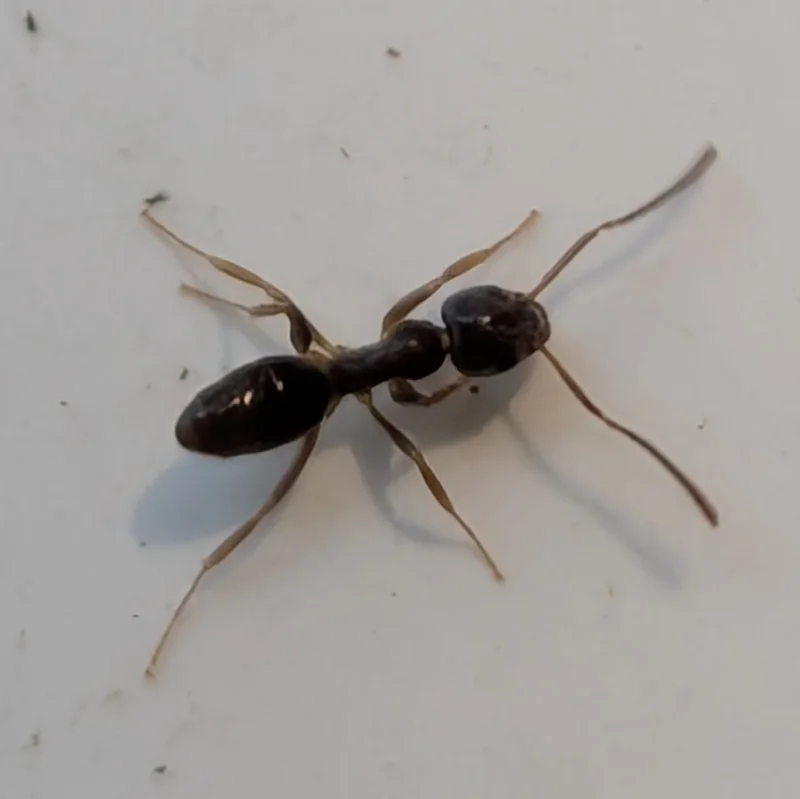
Quick ID Verdict: A trail of tiny ants on the kitchen counter sends most homeowners straight for the spray bottle. With a pharaoh ant vs sugar ant problem, that reflex can backfire. Quick ID verdict: pale golden-yellow ants about 1.5-2 mm long are almost certainly pharaoh ants. Dark brown to black ants about 2-3.5 mm long are most likely odorous house ants, the insect most people call "sugar ants."
Pharaoh Ant
Sugar Ant
Side-by-Side Comparison Table
| Trait | Pharaoh Ant | Sugar Ant |
|---|---|---|
| Scientific Group | Monomorium pharaonis | Tapinoma sessile |
| Category | Insect | Insect |
| Typical Size | 1.5–2 mm | 2–3.5 mm |
| Danger Level | Nuisance | Nuisance |
| Bites or Stings? | No | No |
| Peak US Months | August, September, October, December | April, May, June, July |
| Key ID Trait | Extremely tiny pale golden-yellow to light reddish ant with a slightly darker abdomen tip | Tiny dark brown to black ant common in kitchens nationwide |
Pharaoh Ant vs. Sugar Ant: True Size Comparison
Side-by-Side Anatomy Blueprint
Compare body segments, antennae, leg count, and key markings directly before treating or removing either species.
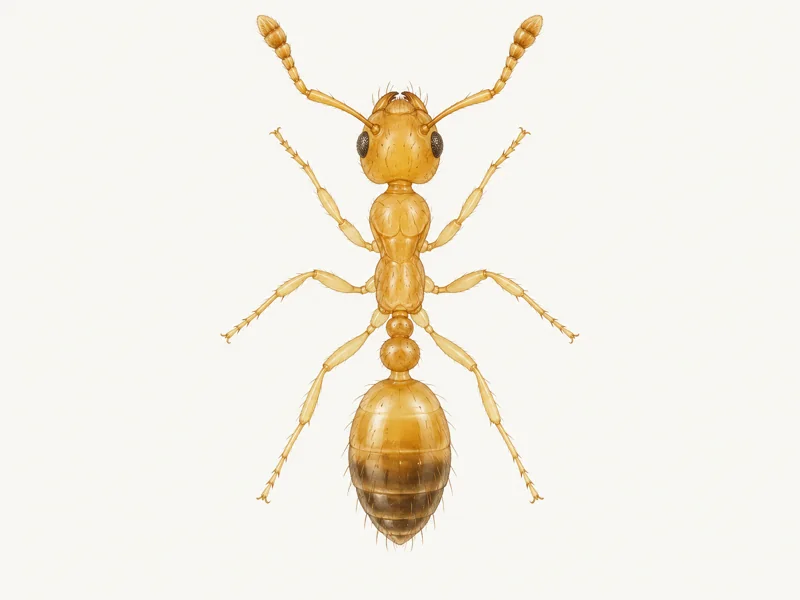
- 3-segmented club antennae: Elbowed pale antennae ending in a distinct 3-segment club (2-segment in fire ants).
- Translucent amber body: Tiny 1.5–2 mm pale golden-yellow indoor ant forming multi-queen colonies.
- Two tiny waist nodes: Two distinct small bead-like segments (petiole + postpetiole) at the waist.
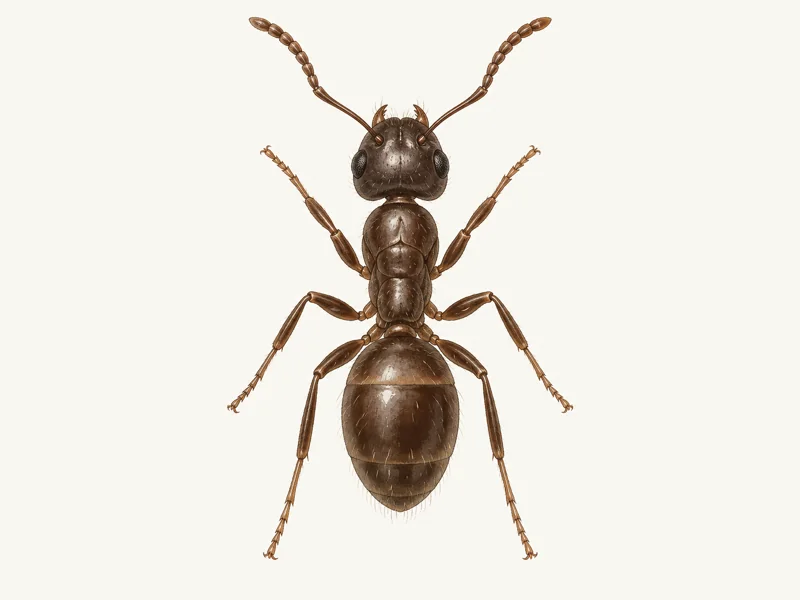
- Elbowed 12-part antennae: Sharply angled dark brown antennae without a heavy thickened club.
- Compact smooth thorax: Uniform dark chocolate-brown 2.5–3.2 mm body; smells like rotten coconut if crushed.
- Hidden single waist node: Flat, low 1-segmented petiole tucked directly beneath the overhanging abdomen.
What Homeowners Mean by "Sugar Ant" vs a True Pharaoh Ant
"Sugar ant" isn't a scientific name. It's a catch-all label for any small ant that shows up near sweets. In most US homes, the ant behind that nickname is the odorous house ant (Tapinoma sessile), a native species found in kitchens nationwide.
The pharaoh ant (Monomorium pharaonis) is a specific, well-defined species. It's an introduced tramp ant that has adapted to living almost entirely inside heated buildings. When someone asks whether they have a pharaoh ant or sugar ant, they're really comparing one precise species with a common nickname, and that distinction shapes every treatment decision.
Pharaoh Ant vs Sugar Ant Identification: Size, Color, and Body Features
Color is the fastest clue. A magnifying glass or phone camera zoom helps confirm the rest.
FeaturePharaoh AntSugar Ant (Odorous House Ant)Scientific nameMonomorium pharaonisTapinoma sessileSize1.5-2 mm2-3.5 mmColorPale golden-yellow to light reddishDark brown to blackKey markingSlightly darker abdomen tipUniformly dark bodyDanger levelNuisanceNuisanceA few extra details sharpen pharaoh ant vs sugar ant identification:
- Pharaoh ants are so small and pale they're easy to miss on light countertops. Their antennae end in a three-segmented club.
- Odorous house ants release a sour, rotten-coconut smell when crushed. That scent test is one of the most reliable field checks.
Neither ant is considered medically significant. If anyone in the home has an unusual reaction to any insect bite, contact US Poison Control at 1-800-222-1222 or a doctor.
Behavior, Nesting Habits, and Where You'll Find Each Ant
The biggest difference between pharaoh ant and sugar ant behavior is where they nest.
Pharaoh ants nest in warm, hidden voids indoors: wall cavities, behind baseboards, inside appliances, and in stacked linens or boxes. They favor spots near warmth and moisture, which is why they're common in apartments, hospitals, and multi-unit buildings. They'll eat sweets, but they also go after proteins and grease.
Odorous house ants usually nest outdoors under mulch, stones, and logs, then forage inside. They also move into wall voids near leaky pipes or damp insulation. They strongly prefer sugary foods and honeydew, and their trails often run along countertop edges and window frames.
US Range and Seasonal Activity Patterns
Odorous house ants are native and found across the continental United States. Their indoor activity typically spikes in spring and after heavy rain, when flooded or disturbed outdoor nests push foragers inside. Sightings usually drop off in late fall as colonies slow down.
Pharaoh ants have been recorded in states nationwide, but outside the warmest southern regions they depend on heated structures to survive. Because of that, they don't follow a normal outdoor season. An established indoor colony can stay active all year, including the middle of winter, which is a strong hint that the culprit isn't a typical sugar ant.
Why Treatment Differs: Budding Colonies and Repellent Sprays
Pharaoh ant colonies hold many queens and spread through budding. When stressed, a group of workers carries brood and a queen off to start a new nest. Repellent sprays are a classic trigger. A single colony can splinter into several, and the infestation gets harder to control.
Odorous house ants also have multiple queens and can relocate quickly, but they're generally more forgiving. Fixing moisture and food sources often goes a long way. In both cases, Integrated Pest Management (IPM) beats reactive spraying.
Safe IPM Steps for Controlling Pharaoh Ants
- Skip repellent sprays and foggers. They're the most common reason pharaoh ant problems spread.
- Use slow-acting baits. Place them along active trails and near warm voids so workers carry the bait back to queens and brood.
- Offer a mix of baits. Pharaoh ants shift between sugar and protein, so a gel or a protein-based bait can help.
- Be patient. Colony elimination can take weeks. Don't disturb bait stations or clean trails right next to them.
- Coordinate in shared buildings. Treating one unit alone often just pushes ants next door. Multi-unit infestations usually call for a licensed professional.
- Follow the EPA-registered product label for placement, quantity, and safety around children and pets.
Safe IPM Steps for Controlling Sugar Ants
- Sanitize first. Wipe up spills, rinse recyclables, and store sweets in sealed containers.
- Control moisture. Fix leaky faucets and pipes, and keep gutters and downspouts directing water away from the foundation.
- Exclude entry points. Seal gaps around windows, doors, and utility lines with caulk. Trim plants that touch the house.
- Manage the perimeter. Pull mulch a few inches back from the foundation and remove debris piles near walls.
- Bait if needed. Sugar-based baits placed on active trails work well. Always follow the EPA product label.
Getting the pharaoh ant vs sugar ant ID right takes only a few seconds, and it decides whether a homeowner should reach for bait and patience or start with simple cleanup and sealing.
Frequently Asked Questions
What's the difference between a pharaoh ant and a sugar ant?
Pharaoh ants (Monomorium pharaonis) are pale golden-yellow, 1.5-2 mm long, and nest indoors year-round in warm voids. Sugar ants (odorous house ants) are dark brown to black, 2-3.5 mm long, nest outdoors, and forage inside. The smell test—crushing an ant to detect rotten-coconut scent—confirms sugar ants.
How do I identify a pharaoh ant vs sugar ant by color and size?
Pharaoh ants appear pale golden-yellow to light reddish and measure 1.5-2 mm. Sugar ants are dark brown to black and 2-3.5 mm long. Use a magnifying glass or phone zoom to compare. Pharaoh ants have a slightly darker abdomen tip, while odorous house ants are uniformly dark.
Why can't I use spray pesticides to treat pharaoh ants?
Repellent sprays stress pharaoh ant colonies, triggering budding—where workers escape with brood and queens to create multiple new nests. This splinters one infestation into several, making control much harder. Slow-acting baits are the recommended IPM approach.
What's the best way to control sugar ants in my home?
Start with sanitation: wipe spills, seal food containers, and fix moisture leaks. Exclude entry points by caulking gaps around windows and doors. Control outdoor areas by removing mulch near foundations and debris piles. Use sugar-based baits on active trails only if needed, following EPA labels.
Are pharaoh ants or sugar ants dangerous to humans?
Neither pharaoh ants nor sugar ants are considered medically significant pests. If anyone experiences an unusual reaction to any insect bite, contact US Poison Control at 1-800-222-1222 or consult a doctor immediately.
Why do pharaoh ants stay active during winter while sugar ants disappear?
Pharaoh ants are introduced species that live entirely indoors in heated buildings, so colonies remain active all year, even in winter. Sugar ants are native and nest outdoors; cold weather slows their activity. Finding ants in mid-winter typically indicates a pharaoh ant problem.