Cicada vs June Bug: How to Tell Them Apart Fast
Quick ID Verdict: Cicadas are larger (25-55 mm), stout insects with clear, membranous wings held tent-like over the body and big, wide-set eyes. June bugs (May beetles in the genus Phyllophaga) are smaller (12-25 mm), plump, glossy chestnut-brown beetles with hard wing covers. If it buzzes loudly from a tree, it's a cicada.
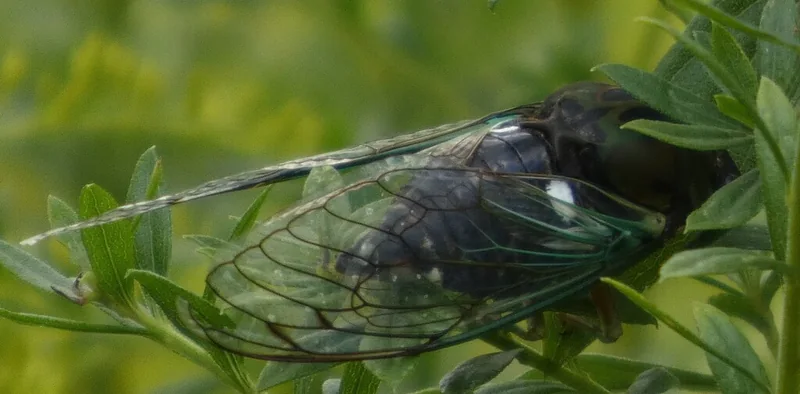
Cicada
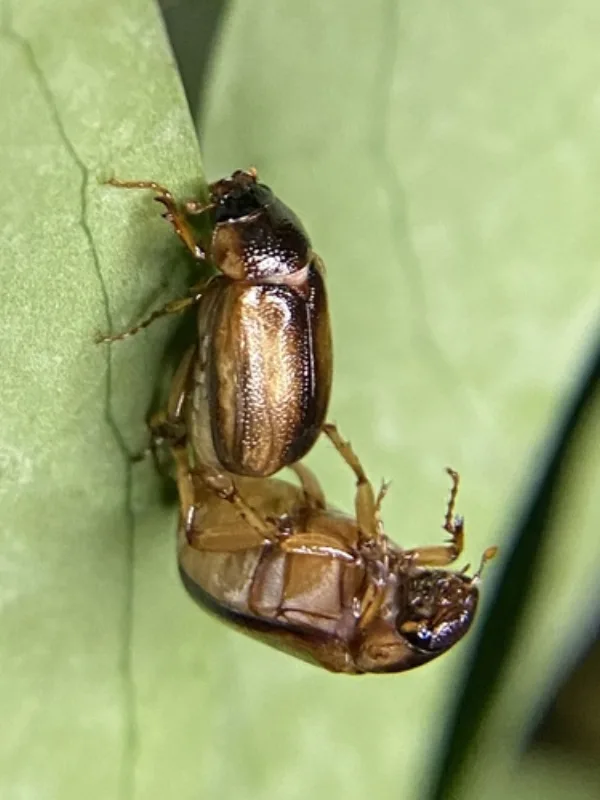
June Bug
Side-by-Side Comparison Table
| Trait | Cicada | June Bug |
|---|---|---|
| Scientific Group | Cicadidae | Phyllophaga |
| Category | Insect | Insect |
| Typical Size | 25–55 mm | 12–25 mm |
| Danger Level | None | Nuisance |
| Bites or Stings? | No | No |
| Peak US Months | May, June, July, August | May, June |
| Key ID Trait | Stout, broad body with large wide-set compound eyes (black, green, or red in periodical broods) | Plump, glossy chestnut-brown to reddish-tan scarab beetle |
Cicada vs. June Bug: True Size Comparison
Side-by-Side Anatomy Blueprint
Compare body segments, antennae, leg count, and key markings directly before treating or removing either species.
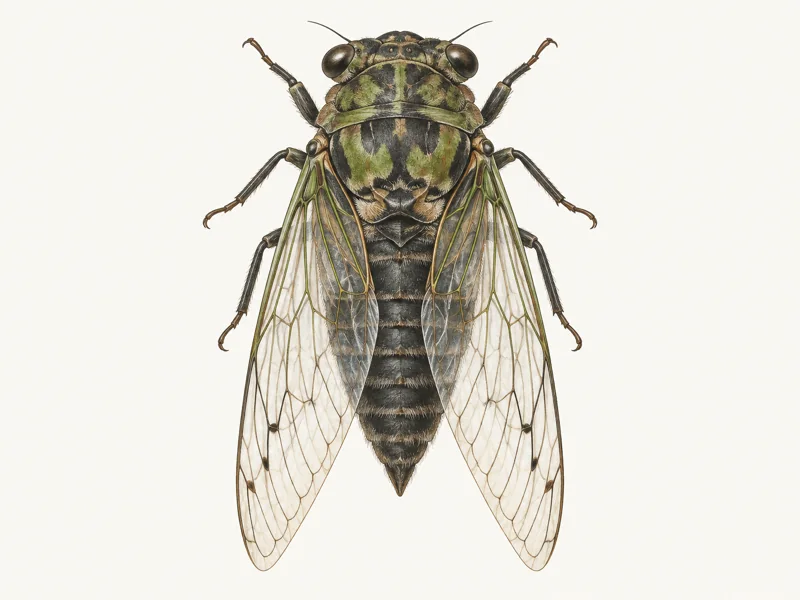
- Widely spaced eyes: Two huge prominent compound eyes set far apart on a broad blunt head.
- Patterned stout thorax: Thick black-and-moss-green thorax (black with red eyes in periodical cicadas).
- Clear veined roof wings: Large transparent heavily veined wings extend far past the abdomen at rest.
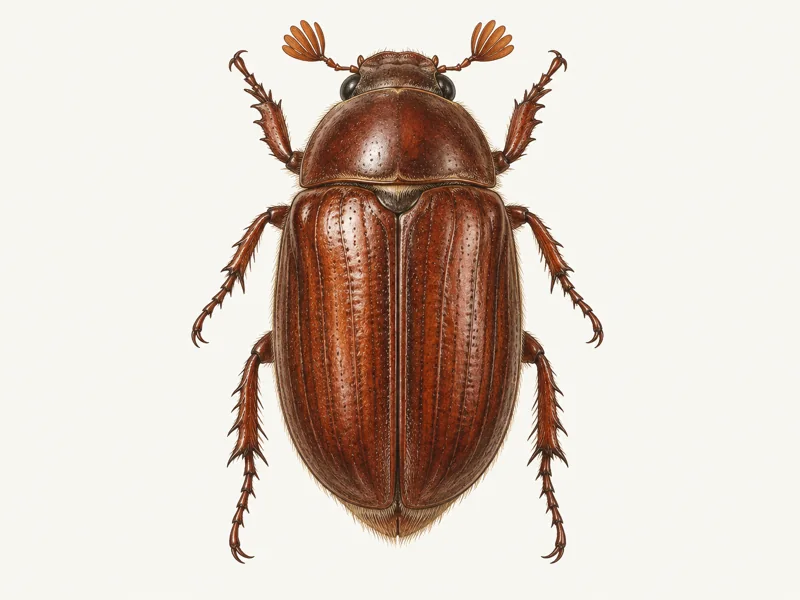
- Fanned club antennae: Short scarab antennae ending in tiny layered fan-like sensory clubs.
- Glossy chestnut dome: Plump, cylindrical 15–25 mm mahogany-brown scarab lacking any green sheen.
- Sturdy spiny legs: Clawed reddish-brown legs buzz clumsily onto porch screens around dusk.
Quick Answer: Cicadas are larger (25-55 mm), stout insects with clear, membranous wings held tent-like over the body and big, wide-set eyes. June bugs (May beetles in the genus Phyllophaga) are smaller (12-25 mm), plump, glossy chestnut-brown beetles with hard wing covers. If it buzzes loudly from a tree, it's a cicada. If it thumps against your porch light at night, it's a June bug.
Key Visual & Physical Differences
The fastest way to make a cicada vs June bug identification is to look at the wings. Cicadas have two pairs of see-through, veined wings that extend past the abdomen. June bugs are scarab beetles, so their wings hide under shiny, hardened covers called elytra.
Cicadas (Family Cicadidae)
- Size: 25-55 mm, roughly one to two inches long.
- Body: Stout and broad, with a blunt head.
- Eyes: Large, wide-set compound eyes. They may be black or green, and periodical broods often have striking red eyes.
- Wings: Clear and membranous, often with green or orange veins.
- Mouthparts: A piercing-sucking beak tucked under the body.
June Bugs / May Beetles (Genus Phyllophaga)
- Size: 12-25 mm, about half an inch to one inch long.
- Body: Plump, rounded, and glossy.
- Color: Chestnut-brown to reddish-tan.
- Wings: Hidden under hard, shiny wing covers.
- Antennae: Short with a small, fan-like club at the tip.
Most of the difference between cicada and June bug comes down to body build. A cicada looks like a wide, winged tank with bulging eyes. A June bug looks like a polished brown bean with legs.
Behavior, Habitat & Danger Comparison
These insects keep very different schedules, which helps when you're unsure whether you've found a cicada or June bug. Cicadas are mostly daytime insects, while June bugs are active after dark.
Cicada Behavior
Adult cicadas spend their time in trees and shrubs, where males "sing" using drum-like organs called tymbals. Nymphs live underground for years, feeding on root sap, then climb out to molt. They leave empty, papery shells on tree trunks, fences, and siding.
- Active: Daytime, especially warm afternoons.
- Sound: Loud buzzing, clicking, or droning.
- Danger: None. Cicadas don't sting, aren't venomous, and aren't known to bite people.
June Bug Behavior
Adult June bugs emerge from the soil in late spring and early summer and fly at night. They're strongly drawn to porch lights and windows, where they bump clumsily into screens. Their larvae, called white grubs, live in the soil and feed on grass roots.
- Active: Dusk and nighttime.
- Sound: A low hum in flight and a thud when they hit surfaces.
- Danger: Nuisance only. They don't sting and pose no medical risk, though they can be startling.
Which One Is Worse for Homeowners?
Neither insect is dangerous, but June bugs usually create more lasting trouble around a home. Their white grub larvae can chew grass roots, leaving brown, spongy turf that lifts up like a loose carpet. Skunks, raccoons, and moles may also tear up lawns digging for grubs.
Cicadas are mostly a noise and appearance issue. During heavy emergences, egg-laying females can split the tips of small branches, causing "flagging" on young trees. Mature trees generally recover without help.
Non-Chemical IPM First
- For June bugs: Switch outdoor bulbs to yellow "bug lights" or motion-activated fixtures, and keep screens in good repair.
- For lawn grubs: Mow higher, water deeply but infrequently, and check grub counts by peeling back a square foot of turf before treating.
- For cicadas: Cover young or newly planted trees with fine netting during emergence years and delay new plantings until it passes.
- Cleanup: Hose shed cicada shells off siding and sweep dead beetles from entryways.
If grub damage becomes severe, homeowners may consider a labeled lawn product or beneficial nematodes. Always follow the EPA product label exactly, including timing, rates, and pollinator precautions. Spraying for adult cicadas is rarely useful and generally not recommended.
Frequently Asked Questions
Can a cicada or June bug bite you?
Cicadas aren't known to bite people and have no venom. June bugs don't sting and are harmless, though their spiny legs can feel prickly when they cling to skin or clothing.
Why do June bugs fly into lights at night?
June bugs are nocturnal and strongly attracted to artificial light. Switching to yellow or warm LED bulbs and turning off unneeded outdoor lights reduces the number gathering near doors.
Are the shells on my trees from cicadas or June bugs?
Hollow, brown, bug-shaped shells clinging to bark or siding come from cicadas. June bugs develop underground and don't leave shells behind.
Do cicadas damage lawns like June bugs do?
No. Cicada nymphs feed on tree root sap without causing noticeable lawn damage. June bug grubs eat grass roots and are a common cause of dead, brown turf patches.