Clothes Moth vs Pantry Moth: How to Tell Them Apart and Stop an Infestation Fast
Quick ID Verdict: A small moth fluttering near the closet or kitchen raises a quick question: clothes moth or pantry moth? The answer determines where the problem is and how to fix it.
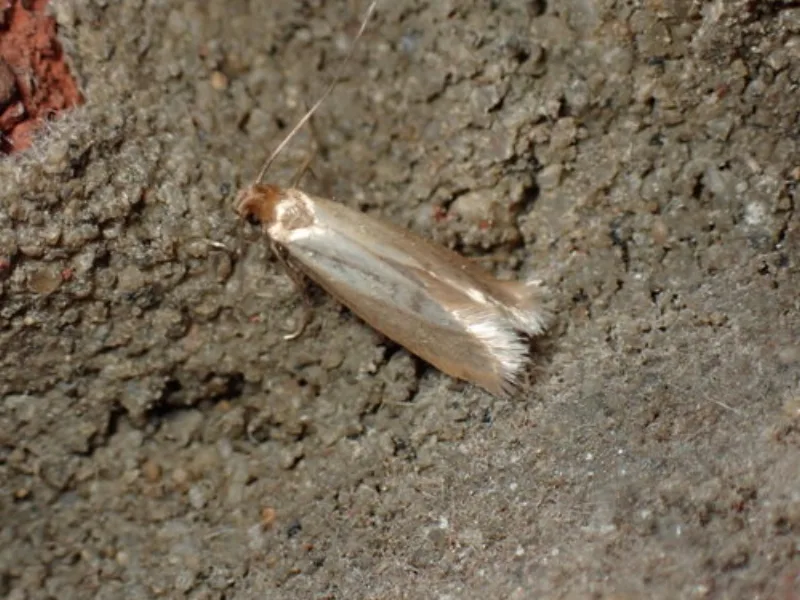
Clothes Moth
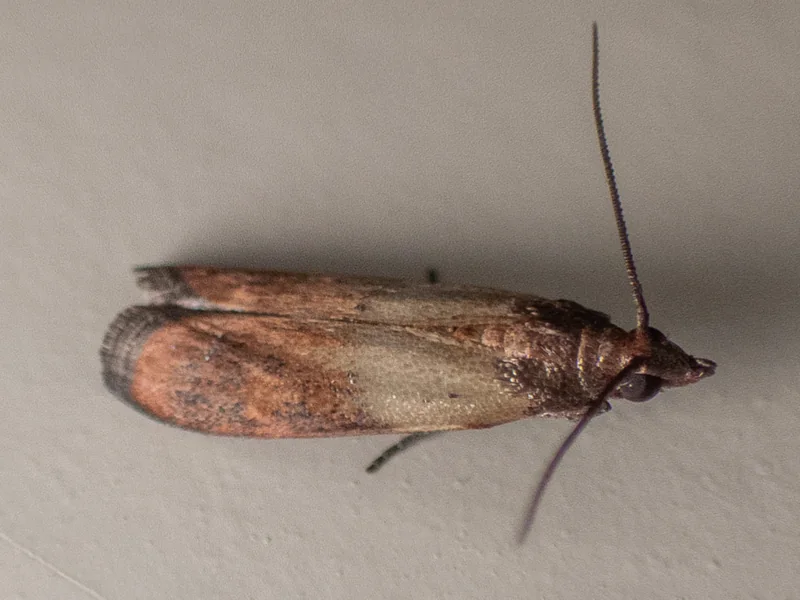
Pantry Moth
Side-by-Side Comparison Table
| Trait | Clothes Moth | Pantry Moth |
|---|---|---|
| Scientific Group | Tineola bisselliella | Plodia interpunctella |
| Category | Insect | Insect |
| Typical Size | 6–8 mm | 8–10 mm |
| Danger Level | Nuisance | Nuisance |
| Bites or Stings? | No | No |
| Peak US Months | February, March, May, September | April, July, August, September |
| Key ID Trait | Tiny uniformly shiny pale-gold moth with fringed narrow wings and reddish-gold head tuft | Distinctive two-toned wings: pale grayish-tan inner third and coppery reddish-brown outer two-thirds |
Clothes Moth vs. Pantry Moth: True Size Comparison
Side-by-Side Anatomy Blueprint
Compare body segments, antennae, leg count, and key markings directly before treating or removing either species.
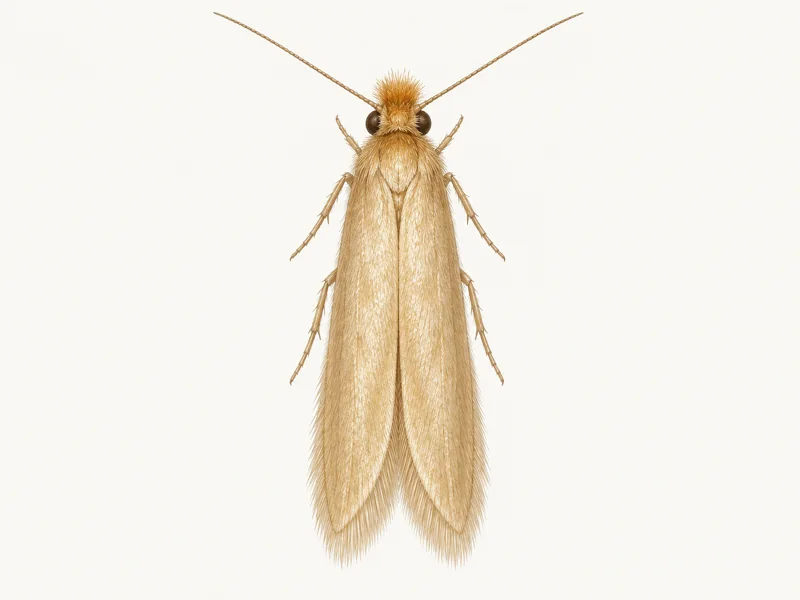
- Reddish-gold head tuft: Tiny spiky tuft of reddish-orange hairs crowns the head between fine antennae.
- Solid satin-gold wings: Uniformly shiny pale golden-buff narrow wings (6–8 mm)—zero spots or two-tone bands.
- Light-shy closet habit: Avoids bright lights; creeps into dark wool, cashmere, and felt storage folds.
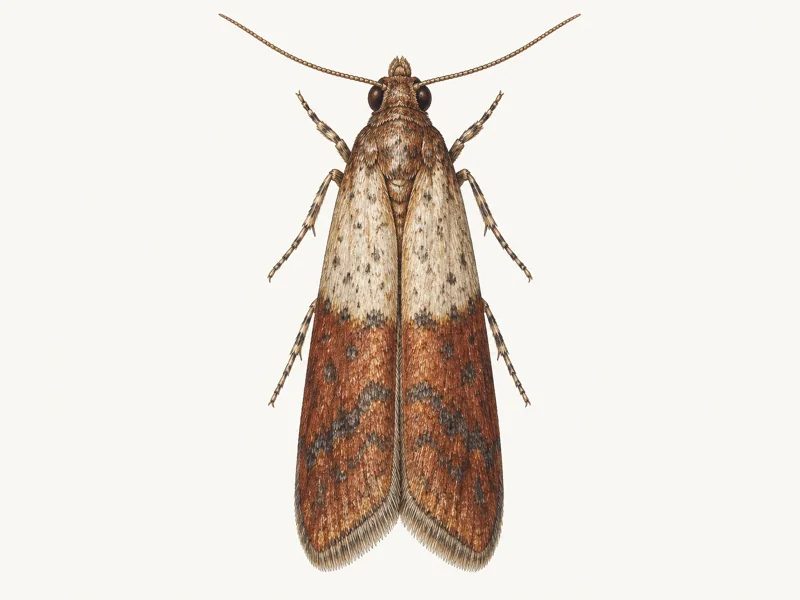
- Swept-back antennae: Slender thread-like antennae held back over narrow folded wings (8–10 mm).
- Pale cream wing base: Inner third of forewings nearest the head is distinctly pale grayish-cream.
- Coppery-bronze outer wings: Outer two-thirds shift sharply to rich coppery reddish-brown with dark flecks.
Quick ID verdict: A tiny, uniformly shiny pale-gold moth with a reddish-gold head tuft is a clothes moth. A slightly larger moth with two-toned wings, pale grayish-tan near the body and coppery reddish-brown on the outer two-thirds, is a pantry moth (Indianmeal moth).
Clothes Moth or Pantry Moth? Quick Identification Guide
The most reliable difference between clothes moth and pantry moth adults is wing color and pattern. Both are harmless to people, but they damage very different things, so correct identification saves time and money.
What Adult Moths Look Like
FeatureClothes MothPantry Moth (Indianmeal)Scientific nameTineola bisselliellaPlodia interpunctellaSize6–8 mm8–10 mmWing colorUniformly shiny pale goldTwo-toned: grayish-tan inner third, coppery reddish-brown outer two-thirdsHeadReddish-gold tuftNo distinct tuftWingsNarrow and fringedBroader, banded look at restFlightWeak: avoids light, often runs or hidesFlies readily, often zigzags around kitchens at duskA practical clue: clothes moths are rarely seen flying in the open. If a moth is cruising across the living room toward a lamp, it's far more likely a pantry moth.
Larvae, Webbing, and Damage Signs
The adults don't eat anything. The larvae cause the damage, and their signs are often easier to spot than the moths themselves.
- Clothes moth larvae: Creamy white caterpillars that leave irregular holes in wool, silk, fur, and felt. Look for silken feeding tubes, fine webbing, and sandy frass in folds and seams.
- Pantry moth larvae: Off-white caterpillars, sometimes with a pinkish or greenish tint, that spin clumpy webbing inside food. Grain, flour, or cereal sticking together in silky clumps is a classic sign, along with larvae wandering up walls to pupate.
Where Each Moth Lives and What It Eats
Clothes moths feed on keratin, the protein in animal fibers. They favor dark, undisturbed spots: the back of closets, stored sweaters, wool rugs under furniture, and taxidermy. Soiled fabric, with sweat or food stains, is especially attractive.
Pantry moths live where dried food is stored. Their larvae eat grains, flour, cereal, nuts, dried fruit, spices, chocolate, and birdseed. Dry pet food is one of the most common hidden sources.
Which one is worse for homeowners? Both are rated nuisance pests with no bite, sting, or disease risk. Clothes moths usually cost more, since one season can ruin heirloom wool or an expensive rug. Pantry moths spread faster and are more visible, but losses are typically limited to contaminated food.
Seasonal Activity and Where They Show Up Across the US
Both species are found throughout the continental US and are indoor pests first. Climate-controlled homes let them breed year-round, so infestations can appear in any state and any month.
That said, activity usually peaks from late spring through early fall, when warmer indoor temperatures speed up development. Homeowners often notice clothes moth damage when pulling out winter clothing in autumn. Pantry moth sightings tend to follow a new purchase of bulk grain, birdseed, or pet food, since eggs and larvae frequently arrive inside packaging.
Safe IPM Steps to Get Rid of Clothes Moths
Integrated Pest Management starts with sanitation and exclusion, not sprays. These steps handle most clothes moth problems:
- Find the source. Check wool, silk, cashmere, and fur items, plus rug edges and closet corners.
- Clean infested items. Wash in hot water, dry clean, or freeze sealed items at 0°F or colder for at least 72 hours to kill all life stages.
- Vacuum thoroughly. Focus on baseboards, closet floors, and under furniture, then empty the vacuum outdoors.
- Store smart. Keep clean natural-fiber clothing in airtight bins or zippered garment bags.
- Monitor. Pheromone traps for webbing clothes moths help confirm activity, though they catch only males and won't solve an infestation alone.
If an insecticide is ever needed, choose one labeled for fabric pests and always follow the EPA product label exactly.
Safe IPM Steps to Get Rid of Pantry Moths
Pantry moths are usually solved with a thorough cleanout. Sprays aren't recommended in food areas.
- Inspect everything. Open all dry goods, including spices, pet food, and birdseed. Discard anything with webbing, larvae, or clumping.
- Clean shelves. Vacuum cracks, shelf-pin holes, and corners, then wipe with soapy water. Larvae often pupate along shelf edges and ceilings.
- Treat questionable food. Freezing items at 0°F for several days kills eggs and larvae in goods worth keeping.
- Seal storage. Move dry foods into glass, metal, or thick plastic airtight containers.
- Monitor and rotate. Use Indianmeal moth pheromone traps to track activity, and buy bulk products in smaller amounts.
When clothes moth vs pantry moth identification is still uncertain, placing a trap in both the closet and the kitchen quickly narrows it down. Any pest control product used nearby should be applied strictly according to its EPA label.
Frequently Asked Questions
What's the easiest way to tell a clothes moth from a pantry moth?
The key difference is wing color. Clothes moths have uniformly shiny pale-gold wings with a reddish-gold head tuft and are weak fliers that avoid light. Pantry moths are slightly larger with two-toned wings—grayish-tan near the body and coppery reddish-brown on the outer edges—and fly readily around kitchens.
How do clothes moth larvae damage fabrics?
Clothes moth larvae are creamy-white caterpillars that feed on keratin, the protein in animal fibers like wool, silk, and fur. They create irregular holes in fabric, leave silken feeding tubes, fine webbing, and sandy frass in folds and seams of dark, undisturbed areas like closets and stored items.
What do pantry moth larvae eat and how can I spot them?
Pantry moth larvae eat grains, flour, cereal, nuts, dried fruit, and pet food. Look for off-white caterpillars with possible pinkish or greenish tints, clumpy webbing inside food containers, grain clumping together, and larvae crawling up walls to pupate.
Can I use the same treatment for both clothes moths and pantry moths?
No. Clothes moths require pheromone traps and deep cleaning of closets, storage, and fabrics. Pantry moths need thorough food inspection, shelf cleaning, and food storage in airtight containers. Sprays aren't recommended in food areas, and treatments must follow EPA labels for the specific pest.
What's the most common hidden source of pantry moth infestations?
Dry pet food is one of the most common hidden sources of pantry moth infestations. Eggs and larvae frequently arrive inside bulk grain, birdseed, and pet food packaging, making these items a frequent entry point for new infestations.
When is clothes moth vs pantry moth activity highest in US homes?
Both species are active year-round in climate-controlled homes, but activity typically peaks from late spring through early fall when warmer temperatures speed development. Clothes moth damage is often noticed when pulling out winter clothing in autumn, while pantry moths appear after purchasing bulk foods.